Walking into a local these days can feel like stepping into two completely different worlds depending on which end of the bar you’re standing at.
There’s a specific set of unwritten rules that the older crowd has been following since the ’70s, from the way they stake out “their” stool to the silent stand-off over who gets served next. To anyone under 30, some of these habits look less like tradition and more like a bizarre performance art piece. It’s not that the younger lot don’t enjoy a pint; it’s just that they’re usually baffled by the level of commitment some people have to a very specific, and often quite loud, way of spending an afternoon down the pub. These are some of the biggest pub generational gaps.
Ordering a round without asking what anyone wants first
For boomers, this is basic pub etiquette, a gesture of generosity so ingrained it doesn’t require discussion. You get up, you go to the bar, you come back with drinks for everyone whether they’d finished the last one or not. Younger generations, many of whom might be on their second soft drink of the night or nursing a half-pint they’re still working through, find the arrival of an unrequested pint both socially pressuring and mildly baffling.
The round system assumes everyone is drinking at the same pace, in the same quantities, and wants the same kind of thing, and none of those assumptions hold the way they once did.
Staying in one pub for the entire evening
The boomer approach to a night out often involves finding a pub, sitting down, and remaining there for four or five hours without any particular urge to go anywhere else. The pub is the destination rather than one stop on a route, and the idea of leaving while you’re perfectly comfortable would have seemed strange.
Younger people tend to think of a night out as something with movement in it, different venues, different atmospheres, the pub as one part of a wider evening rather than the whole of it. Watching an older group settle into the same corner booth from seven until last orders and seem genuinely content is something younger pub-goers find slightly difficult to relate to.
Talking to strangers at the bar entirely without warning or invitation
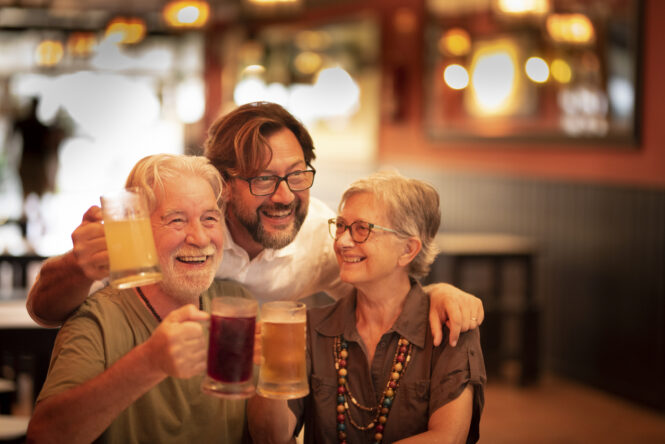
Boomers grew up in a pub culture where striking up conversation with whoever happened to be standing next to you at the bar was a normal and expected part of the experience. The bar itself was a social space, not just a place to wait for your drinks, and making small talk with a stranger was considered friendly rather than intrusive.
For younger generations who’ve largely grown up with the understanding that unsolicited conversation from a stranger requires careful navigation, being engaged in cheerful chat about the football by someone they’ve never met while waiting for a gin and tonic lands somewhere between charming and mildly alarming depending on the day.
Drinking considerably more than everyone else at the table
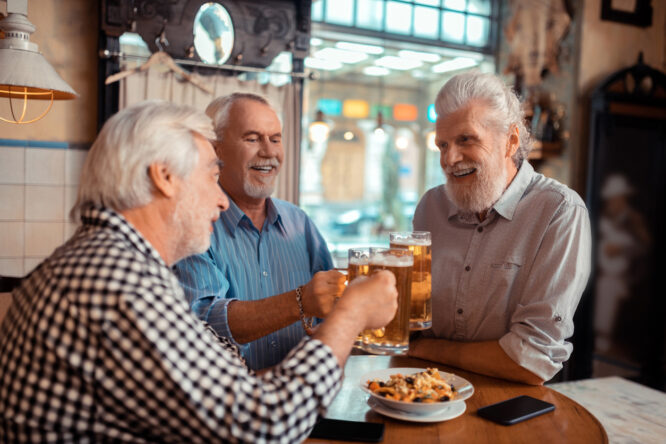
The data on this is fairly consistent. The 55 to 64 age group remains the most likely to drink heavily and the least likely to abstain from alcohol, while abstinence and moderation among younger people has been rising steadily for years. The practical result of this at a table with mixed generations is that boomers are frequently on their fourth pint while their younger companions are still on their first, or have switched to water, or weren’t drinking at all.
Many boomers simply can’t imagine socialising without alcohol, having grown up in a culture where it was the glue that bonded almost every social experience. The mismatch in pace creates a dynamic that nobody necessarily planned for.
Paying in cash and expecting everyone else to as well
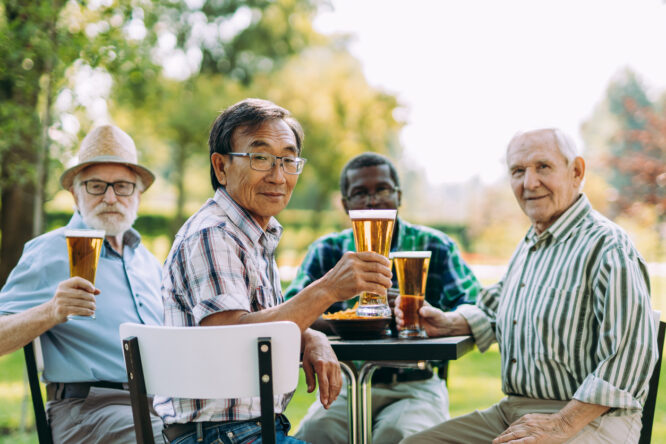
A boomer heading to the bar will often pull out a wallet containing actual notes, and may be faintly surprised that the person next to them is tapping a phone against a reader. The cash-based round system worked neatly when everyone carried it, but in a group where half the people are paying by card and the other half by phone, the mental arithmetic of who owes what becomes considerably more complicated.
The expectation that a pub transaction requires physical money and a degree of change-counting is something younger generations find more quaint than anything else, but it does slow down the round considerably.
Refusing to look at the menu and just knowing what they want
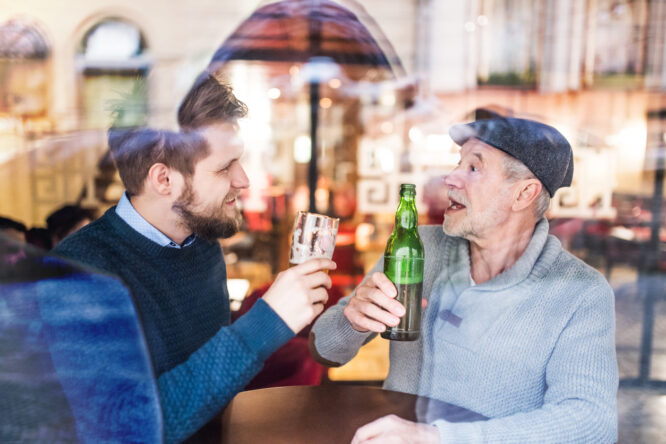
Walking into a pub and ordering a pint of bitter or a gin and tonic without consulting anything is standard boomer operating procedure. The menu, if they look at it at all, is for food. Their drink is a known quantity and has been for decades. Younger people in the same pub might spend several minutes examining the craft beer list, asking about the botanicals in a particular gin, or checking whether the bar does a specific type of natural wine.
The boomer watching this process from the other end of the bar experiences it as an unnecessarily complicated relationship with a fairly simple transaction.
Talking loudly enough for most of the pub to hear

Volume calibration in pubs works differently across generations. Boomers grew up in pubs that were often loud, and they learned to project accordingly, and that projection tends to stay even when the pub is relatively quiet. Younger generations are often more conscious of the social space around them and the awareness that other people can hear the conversation, which connects to a broader difference in how public and private communication are understood.
Sitting near a group of boomers in a quiet Sunday afternoon pub means you will know their opinions on the council, their neighbour’s new fence, and at least two ongoing family situations before you finish your drink.
Treating the pub quiz as a serious competitive endeavour

The boomer approach to a pub quiz involves arriving early to secure the right table, bringing a pen, taking the answer sheet with a level of gravity that the occasion may not strictly warrant, and being genuinely put out if a younger team member wants to look something up on their phone.
For younger people who’ve grown up with all information immediately available and who experience the quiz more as a social occasion with a loose competitive element, the intensity that some older players bring to a Tuesday night quiz at the local is something they find both impressive and slightly difficult to account for.
Expecting the pub to be quiet enough for actual conversation.
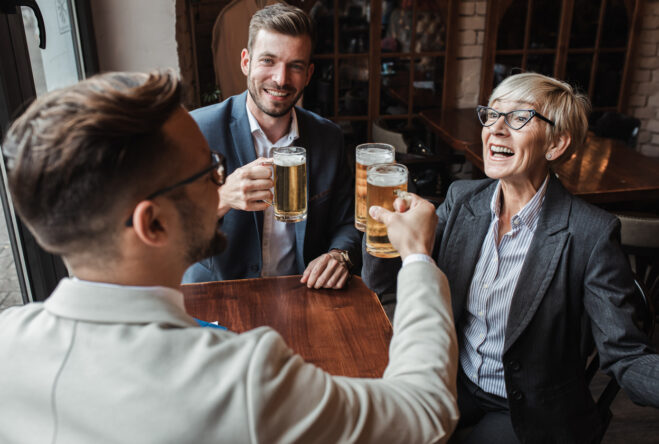
Boomers tend to want to talk in pubs and expect the acoustic conditions to support this. Loud music, particularly anything that requires raising your voice to be heard, is experienced as an affront rather than an atmosphere. The expectation that a pub is fundamentally a place for conversation, and that everything else including the music serves that purpose rather than competing with it, is something younger generations don’t always share. They’re often comfortable with higher noise levels and understand loud music as part of the venue’s character rather than an obstacle to enjoying it.
Arriving when the pub opens and treating that as completely normal.

A boomer walking into a pub at twelve on a Saturday afternoon and ordering a pint without any sense that this requires explanation or justification is exercising a cultural right that simply doesn’t translate to all younger drinkers in the same way.
Younger customers are increasingly prioritising experience-led socialising over alcohol-focused activities, and the idea of structuring a day around pub opening hours the way a previous generation might have done is something that requires a slightly different relationship with drinking as a central leisure activity. The midday pint isn’t shocking to anyone, but the complete absence of self-consciousness about it is something younger people notice and find mildly fascinating.
Knowing the landlord personally and expecting that to count for something
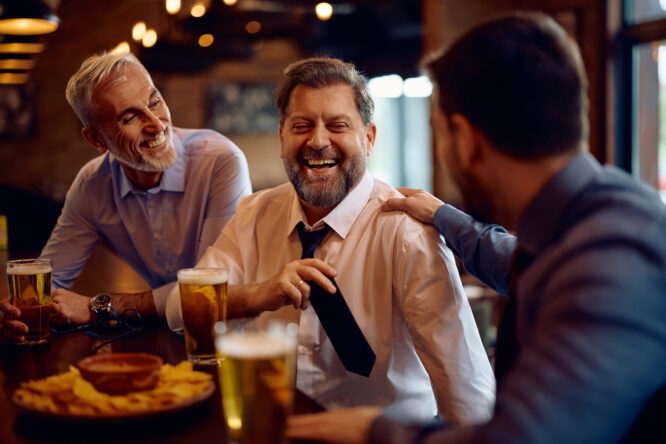
The relationship between a boomer regular and the landlord or landlady of their local is often something that was built over years and that carries genuine social weight. Being known at a pub, having your usual remembered, being acknowledged when you walk in, these things matter and were part of what made a local a local.
Younger people who are more likely to order through an app, pay by phone, and visit a wider range of venues rather than returning to the same one week after week don’t always have the same investment in that relationship, and the idea that knowing the landlord should affect how quickly your drink arrives is something that belongs to a social contract they’ve largely inherited rather than signed up for.