It sounds like something you’d scroll past and immediately screenshot to send to a friend.
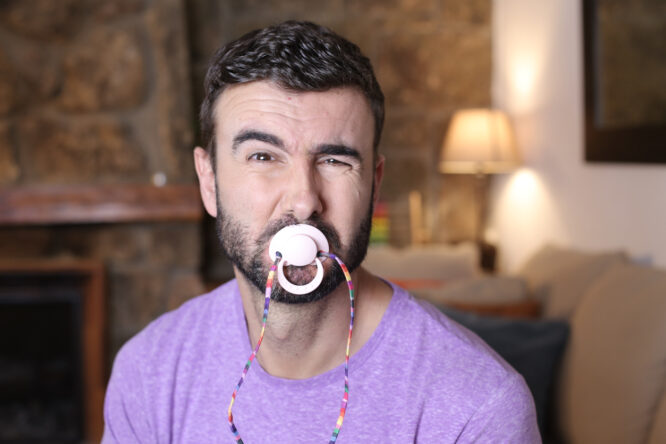
Adults—fully grown ones, we should clarify—are buying pacifiers, popping them in, and going about their day. And before you write it off as another bizarre internet moment that will disappear in a week, it’s worth knowing that this one has some genuine staying power and a more interesting backstory than it first appears.
The trend started in China, where stressed adults began posting online about turning to adult pacifiers as a way of managing anxiety and daily pressure. It spread quickly. Retailers were reportedly selling thousands every month, e-commerce platforms saw a surge in listings, and the content kept coming. By the time it crossed into Europe and the US, it had picked up enough momentum to become a full conversation rather than just a passing curiosity.
What makes an adult pacifier different?
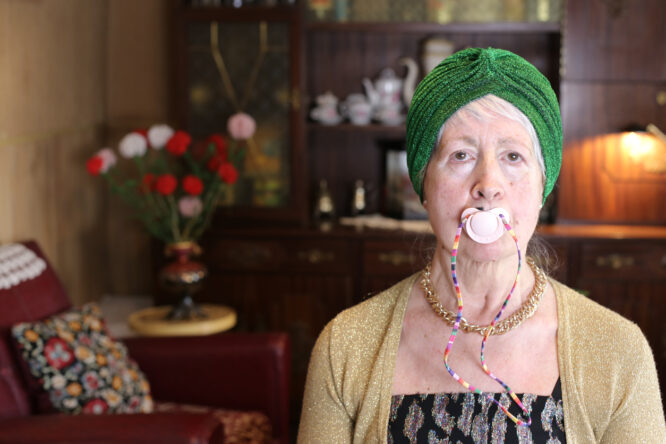
Adult pacifiers aren’t just children’s dummies scaled up, though that’s essentially the idea. They’re larger, designed to fit an adult mouth, and often marketed specifically around stress relief and anxiety management. Prices vary, but some are selling for upwards of £50, which is a significant amount to spend on something that will raise eyebrows at the office.
The people buying them aren’t describing the experience as silly or embarrassing. Online, users talk about them being soothing and grounding, with some claiming they’ve helped with sleep and others crediting them with reducing the urge to smoke. Whether those claims hold up is another matter, but the appetite for something, anything, that takes the edge off daily life is clearly very real.
Why are adults are drawn to self-soothing this way?
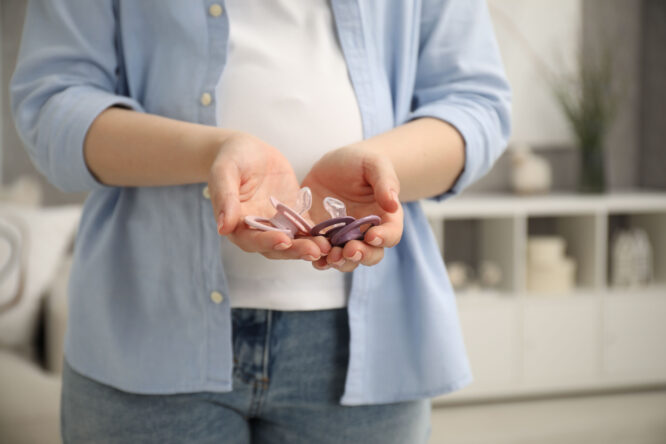
There’s actually a psychological explanation for why this kind of behaviour appeals to people under stress, and it goes beyond trend-chasing. Psychologists refer to it as regression, which is when adults revert to behaviours associated with earlier, safer stages of life as a way of coping with overwhelming feelings. It’s a defence mechanism, not a character flaw, and it shows up in all kinds of ways that we don’t tend to question nearly as much.
Think about comfort eating, curling up under a weighted blanket, rewatching a childhood film when everything feels like too much. The pacifier is a more literal version of the same impulse, reaching back toward something associated with safety and calm. It’s more visible than most coping strategies, which is probably why it attracts more judgement, but the underlying psychology is fairly familiar territory.
The medical community has its own opinions on the trend.

Dentists and health professionals have been fairly vocal about their concerns, and they’re worth taking seriously. Prolonged use can cause jaw strain, teeth misalignment, and oral infections, and sleeping with one in carries a suffocation risk that manufacturers don’t tend to highlight prominently. One dentist warned that using a pacifier for more than three hours a day could visibly shift the position of your teeth within a year.
The French Orthodontic Federation went further, stating that the claimed benefits around stress relief and smoking cessation are based on individual testimonials rather than scientific evidence, and that any effect is likely placebo. Psychologists have also raised concerns that using a pacifier as a coping tool could become a way of avoiding the underlying causes of anxiety rather than actually addressing them. It masks the feeling without touching what’s creating it.
The smoking angle is particularly interesting.

Several people using adult pacifiers have mentioned them as an aid for quitting smoking, which makes a certain kind of sense. A lot of what people miss about smoking isn’t the nicotine itself, but the physical habit, something to do with your hands and mouth during moments of stress or boredom. A pacifier replicates that oral fixation without the health consequences of cigarettes, though dentists would argue it comes with its own set of risks.
Whether it actually works as a quitting tool in any sustained way isn’t something research has caught up with yet. But given the cost of cigarettes and the difficulty of quitting through conventional methods, it’s not hard to understand why people are experimenting. If it helps someone put down a twenty-a-day habit, the conversation around it becomes considerably more complicated.
The internet has made it easier to try without shame.
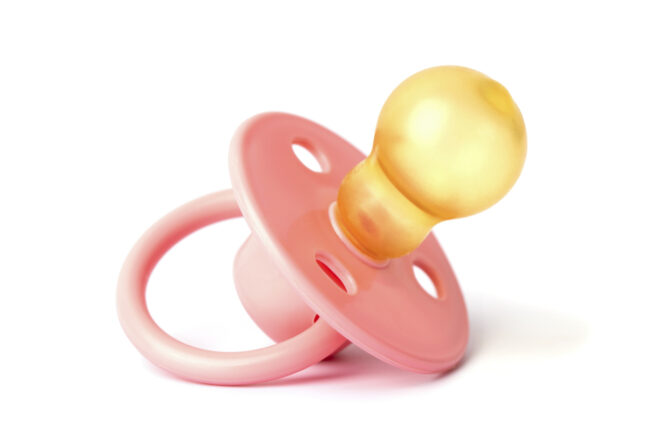
Part of what’s driven this trend is simply that social media has created communities around it. When you see thousands of people openly talking about something that would have felt mortifying to admit to even a decade ago, the barrier to trying it yourself drops considerably. TikTok in particular has given the adult pacifier a platform that makes it feel like a lifestyle choice rather than something to hide.
The comments sections under these videos are worth a look, not for the debate, but for the sheer variety of people involved. People with ADHD describing how it helps them focus. Anxious commuters using one during rush hour. Night-shift workers saying it helps them wind down. Whatever the science says about the long-term effects, the people using them are not a fringe group and their reasons are not trivial.
The wider point it’s making about modern stress can’t be ignored.
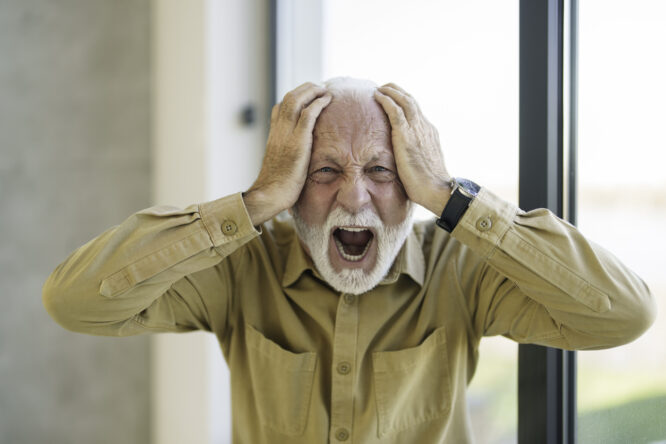
It would be easy to mock this trend and move on, but it’s probably more honest to sit with what it’s actually saying. The fact that adults are spending a lot of money on pacifiers, and that the market for them is growing, tells you something about the collective state of stress people are living with right now. Therapy is expensive and often has long waiting lists. Exercise requires energy many people don’t have at the end of a long day. Medication isn’t right for everyone.
People are filling the gap with whatever they can find, and the adult pacifier is simply the most visually striking version of that. Vapes, weighted blankets, stress balls, doom-scrolling, a large glass of wine on a Tuesday. Most adults have something they reach for when the pressure builds, and very few of those things would look entirely dignified under close examination, either.
Should you try one?
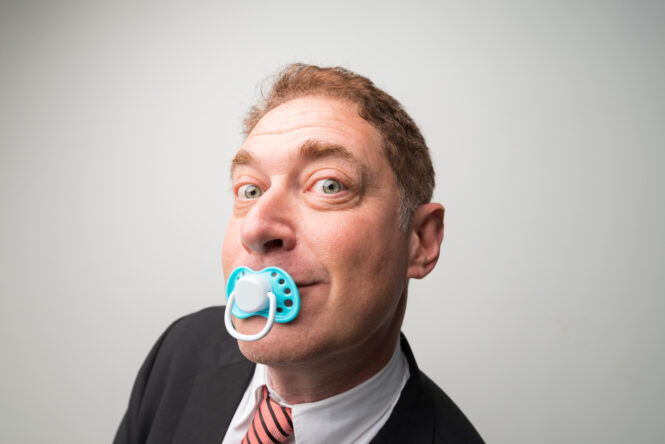
If you’re curious, the honest answer is that it probably won’t do any harm in moderation, as long as you’re not sleeping with it in or using it for hours at a stretch. The dental risks are real, but they’re also mostly tied to excessive use, so occasional stress-relief dummies are a different proposition to all-day wear. It’s also worth being honest with yourself about whether it’s helping you feel better or just helping you avoid feeling at all, which is the question psychologists would most want you to sit with.
What’s certain is that this trend isn’t going away quickly, and the conversation it’s opened up about how adults manage stress in an increasingly demanding world is a genuinely useful one. Whether you find the whole thing ridiculous or quietly relatable probably says more about your own coping mechanisms than it does about anyone sucking on a dummy.