Self-esteem isn’t about empty affirmations or chasing perfection.

It’s a deeper sense of self-worth that comes from knowing your strengths, embracing your imperfections, and treating yourself with kindness. If you’re looking for ways to cultivate a stronger sense of self, forget the clichés and try these unconventional approaches.
1. Learn a skill no one expects you to have.

There’s something deeply satisfying about being competent in a way that surprises people, including yourself. Not because you want approval, but because it messes with the box you’ve quietly put yourself in. You stop thinking of yourself as “the type who can’t do X” and start realising you’re more flexible than you thought.
It doesn’t need to be impressive in a traditional sense. Something niche, odd, or impractical works even better. The confidence boost comes from knowing you stuck with something, learned it from scratch, and can now do a thing you couldn’t before. That sense of “oh, I actually did that” sticks around longer than you’d expect.
2. Create a “Ta-Da!” list.
 Source: Unsplash
 To-do lists are brutal when your confidence is already wobbly. They only show what you haven’t done yet, which is rarely motivating. A Ta-Da list flips that on its head by keeping a running record of what you’ve already managed, including the boring or unglamorous stuff.
As time goes on, it builds evidence that you’re actually getting through things, even on days that feel unproductive. When your brain starts telling you that you never finish anything or don’t do enough, you’ve got receipts. It’s harder to argue with a page full of proof.
3. Spend time with animals.

Animals are excellent for your self-esteem because they don’t care about your job title, productivity, or social awkwardness. They respond to presence, tone, and consistency, which makes interactions feel uncomplicated and grounding.
Whether it’s your own pet, a friend’s dog, or volunteering somewhere, that connection reminds you that you’re capable of care and gentleness without having to perform. There’s something very steadying about being accepted without commentary, especially if you spend a lot of time second-guessing yourself around people.
4. Write a letter to your inner critic.
 Source: Unsplash
 Your inner critic usually gets free rein to say whatever it wants without challenge. Writing to it forces it out into the open, where it suddenly sounds a lot less all-knowing and a lot more repetitive. Putting its words on paper can be oddly revealing.
Once it’s written down, you can respond to it like you would to a particularly unhelpful acquaintance. You don’t need to be aggressive, just honest. You’ll probably notice that this voice isn’t always protecting you or telling the truth. Seeing that clearly can take away a surprising amount of its power.
5. Challenge yourself physically.
 Source: Unsplash
 You don’t need to become a gym person or chase personal bests. Physical challenges work because they give you immediate feedback. You either did the thing or you didn’t, and improvement shows up in real, tangible ways.
There’s something grounding about learning what your body can handle. It builds trust in yourself, especially if your confidence has taken hits elsewhere. When you realise you can push through discomfort or stick with something that feels hard, that belief starts spilling into other areas of your life.
6. Curate your social media feed.
 Source: Unsplash
 Most people underestimate how much low-level comparison they’re doing online. Even content that looks harmless can quietly chip away at how you feel about your own life, body, or progress. Cleaning up your feed isn’t dramatic, it’s practical.
Following people who make you feel inspired, entertained, or informed changes the tone of your scrolling. It stops being a catalogue of what you’re supposedly missing and becomes something closer to background noise you actually enjoy. That change alone can lift your baseline mood more than you’d expect.
7. Practise self-compassion in real situations.
 Source: Unsplash
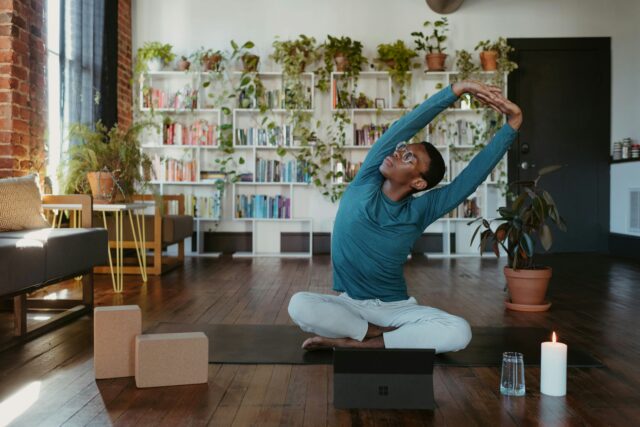
 Being kind to yourself isn’t about repeating nice phrases in the mirror. It shows up when you mess something up and decide not to pile on. It’s choosing not to replay mistakes on a loop or speak to yourself in ways you’d never use with anyone else.
That doesn’t mean avoiding responsibility or pretending everything’s fine. It means recognising that mistakes don’t define you and discomfort doesn’t mean failure. Over time, that gentler internal response builds a much more stable sense of self than constant self-criticism ever could.
8. Find a creative outlet that’s just yours.
 Source: Unsplash
 Creative outlets are brilliant for self-esteem because they don’t need to be good to be worthwhile. You’re doing something for the sake of expression rather than outcome, which takes the pressure off entirely.
Whether it’s writing, drawing, cooking, music, or something else entirely, having a space where you can experiment without judgement builds confidence quietly. You start trusting your instincts more. You also get the satisfaction of making something exist that didn’t before, which is more powerful than it sounds.
9. Do something nice for a stranger.

There’s a calm confidence that comes from knowing you showed up decently in the world when you didn’t have to. Not the performative kind that ends up online, but the small, ordinary stuff that no one applauds. Paying for someone’s coffee, helping someone with a buggy, leaving a note that makes someone’s day slightly easier.
Those moments remind you that you’re capable of warmth and decency without needing recognition. That knowledge sticks. It builds a steady sense of self that doesn’t depend on approval or praise, which is exactly where real confidence tends to live.
10. Celebrate your quirks.

Most people spend years trying to be more palatable, more normal, more whatever they think will make life easier. The problem is that constantly editing yourself sends a quiet message that who you are, as-is, isn’t quite enough.
When you stop hiding the odd interests, strange habits, or niche passions, something changes. You don’t just feel freer around people, you start respecting yourself more. Owning the bits that make you different isn’t bravado. It’s relief. And that relief does wonders for self-esteem.
11. Change how you talk to yourself when no one’s listening.
 Source: Unsplash
 The conversations you have in your own head shape everything, especially on bad days. If your internal voice jumps straight to blame, shame, or catastrophising, confidence doesn’t stand a chance.
Changing that voice doesn’t mean swinging to forced positivity. It’s more about fairness. Talking to yourself like someone you actually care about. Correcting harsh thoughts instead of letting them run wild. Over time, that change becomes automatic, and the steady self-respect that follows feels earned rather than fragile.
12. Surround yourself with supportive people.

There’s a difference between people who look good on paper and people who make you feel settled. Confidence grows faster around the second group. The ones who don’t keep score, don’t compete, and don’t make you feel like you need to perform to belong.
Being around people who accept you without commentary helps you accept yourself more easily, too. You stop second-guessing your words, your reactions, your presence. That sense of ease becomes part of how you see yourself, even when those people aren’t around.
13. Learn to say no without explaining yourself to death.

Over-explaining is often a sign that you don’t fully trust your own choices. You feel like you need to justify every boundary so no one gets annoyed or disappointed. That habit slowly drains your confidence.
Saying no clearly, kindly, and without a five-paragraph defence builds self-respect fast. Each time you protect your time or energy, you reinforce the idea that your needs matter too. That belief doesn’t make you selfish. It makes you grounded.
14. Take a break from social media, not half-hearted ones.

If you keep “taking breaks” while still lurking, comparing, and scrolling out of habit, it doesn’t really count. A proper pause gives your brain space to reset its expectations and stop measuring your life against a highlight reel.
When you step away for a while, you often notice how much quieter your thoughts become. Less comparison, fewer assumptions, more presence. That clarity helps you reconnect with what actually matters to you, which strengthens your sense of self in a way scrolling never does.
15. Get real help when you’re stuck.
 Source: Unsplash
 Struggling with confidence doesn’t mean you’re broken or weak. Sometimes it just means you’ve been carrying the same patterns for too long without help. Talking to a therapist or counsellor isn’t a last resort. It’s a way of understanding yourself more clearly.
Having someone help you untangle old beliefs, habits, or experiences can be a turning point. Not because they hand you confidence, but because they help you stop undermining it. And once that weight lifts, self-esteem has room to grow properly.