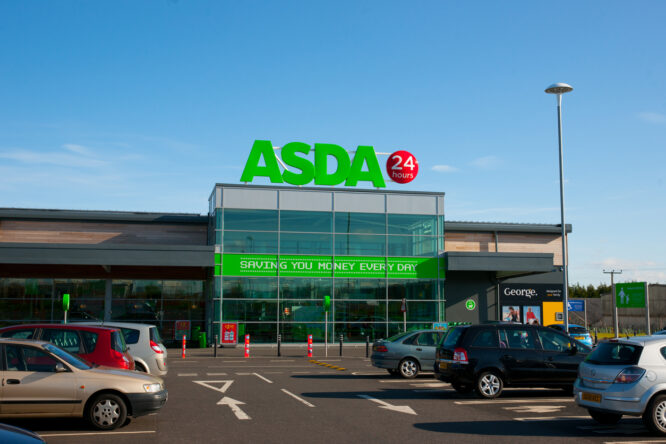
The final hearing in Asda’s long-running equal pay case is now under way, more than a decade after shop floor workers first took the supermarket to an employment tribunal. Around 60,000 current and former staff are involved, and the hearing at Manchester Employment Tribunal, which began on Monday 23 November, is due to run until 18 December, with a judgement expected in early 2027. If the workers win, the compensation bill could reach up to £1.2bn, but Asda says its pay rates have nothing to do with gender, and a recent ruling in a similar case against Next went the retailer’s way.
What the case is about & how it got this far
The claim was launched in 2014 by the law firm Leigh Day, which represents the workers. It argues that Asda’s shop floor staff, who are mainly women, have been paid less than staff in its distribution centres, who are mainly men, even though their work is of equal value.
Under equal pay law, men and women must get equal pay for doing equal work. Acas explains that this doesn’t just mean doing the same job, as two quite different roles, such as working on a till and working in a warehouse, can count as equal work if they need a similar level of skill, effort, responsibility, or demands.
Equal pay claims of this kind go through three stages, and the Asda workers have already won the first two. The first was about whether shop staff could compare themselves with warehouse staff at all, and after Asda appealed, the Supreme Court ruled in 2021 that they could.
The second stage looked at whether the jobs were actually of equal value. In February 2025, the tribunal found in favour of 12 of the 14 women acting as lead claimants, deciding that their store roles were of equal value to certain higher-paid jobs in the distribution centres, for the period between August 2008 and June 2014. Two roles, personal shopper and one shop floor assistant role, weren’t found to be of equal value for that period.
View this post on Instagram
What the final hearing decides
The hearing that started this week is the third and final stage. Asda now has to show that the difference in pay between the two groups was down to a genuine reason that had nothing to do with sex, which is known in law as a “material factor defence”.
The hearing is due to run until Friday 18 December. The tribunal won’t give its decision on the day, and a judgement isn’t expected until early 2027, so the workers involved face another wait after more than 10 years of legal proceedings.
What Asda says
Asda has always rejected the claims. It told Retail Gazette that it “strongly believes it can defend the pay difference because retail and distribution are two different industry sectors, each with its own market rates and distinct pay structures”.
It added that it’s “commonplace to pay market rates in order to attract labour” and that this “has absolutely nothing to do with gender”. In other words, Asda’s argument is that it pays warehouse staff more because that’s what it takes to recruit them, not because most of them are men.
What the workers could get
The overall bill for Asda could be as much as £1.2bn if the workers win. When the February 2025 ruling came out, Leigh Day said individual claims could be worth around £20,000, although the final amount for each person would depend on their role and how long they’d worked there.
When the second stage began in 2024, the GMB union said shop floor staff were being paid up to £3.74 an hour less than warehouse staff. The case covers both current and former employees, which is why the number of people involved is so high.
View this post on Instagram
Why the Next case is relevant here
In September 2026, the fashion retailer Next won an appeal in its own equal pay case, which had followed a very similar path. A tribunal had ruled in 2024 that Next’s store staff should get the same basic pay as its warehouse workers, but the Employment Appeal Tribunal overturned that part of the decision.
The appeal tribunal accepted that Next could pay warehouse staff more because of recruitment and retention pressures that didn’t apply in its shops. That’s close to the argument Asda is now making, although every case is decided on its own facts, and lawyers for the Next workers said they intend to appeal.
Other supermarkets are waiting too.
Asda isn’t the only supermarket facing these claims. In 2025, Leigh Day said it was representing more than 37,000 workers in similar cases against Tesco, Sainsbury’s, Morrisons, and the Co-op, which are at different stages of the legal process.
That’s why the outcome of the Asda case is being watched closely across the retail industry. A win for the workers could strengthen the other claims, while a win for Asda would make it harder for them to succeed.
What to do if you think you’re not paid equally.
Acas advises talking to your employer first if you think you’re paid less than someone of the opposite sex doing equal work. You can ask for information about how your pay is made up, and compare it with the pay and benefits of colleagues you think are doing equal work.
If that doesn’t sort it out, you can raise a formal grievance, and you might be able to make a claim to an employment tribunal, where you’d usually need to contact Acas for early conciliation first. Acas says equal pay is a complex area, so it’s a good idea to get legal advice, and you can call its free helpline on 0300 123 1100.