More of us are putting down our phones and reaching for the radio, according to a new report.

The demand for radios, CDs, cassettes, and vinyl has been consistently rising as people try to spend less time staring at screens. The report, from radio makers Pure and TEAC, found that more than half of Gen Z now have a dedicated space at home just for listening to music or radio.
With official Rajar figures showing that radio still reaches 87% of UK adults every week, it seems the humble wireless is far from finished. Here’s what’s behind the trend, why so many people are going back to older ways of listening, and how you can cut down on screen time yourself.
Consumers are going analogue when it comes to consuming music.

The report says UK demand for radios, vinyl, cassettes, and CDs is growing, and that a big part of the reason is people wanting a break from their phones and other screens. One of the most striking findings is that 52% of Gen Z, the generation who grew up with smartphones, now have a dedicated listening space at home, somewhere they go to put music or the radio on rather than scroll.
The findings fit with other figures too. Market researcher GfK found that sales of DAB+ digital radios grew by 5.5% last year, and Pure says interest in radios jumped sharply in late October, after a government campaign on being prepared for emergencies, which suggests keeping a battery or wind-up radio at home in case the power or internet goes down. It’s worth remembering that the report comes from companies that make and sell radios, but the wider listening figures from Rajar back up the idea that radio is holding its own.
Radio is still a big part of British life.
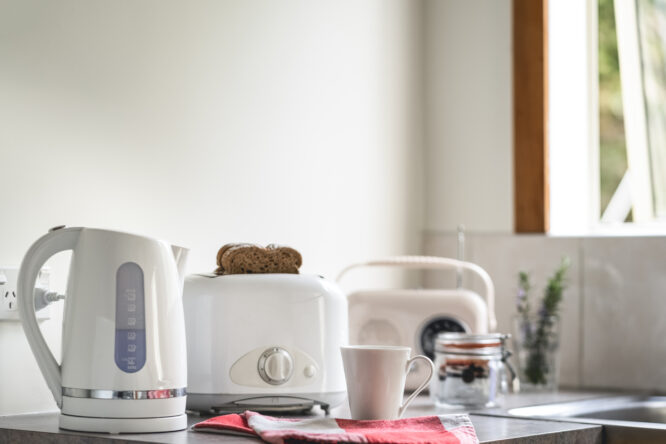
Rajar, the organisation that measures radio audiences in the UK, says 51.1 million adults listened to the radio every week in the second quarter of 2026. That’s 87% of the adult population, which is a remarkable figure in an age of streaming services, podcasts and endless apps competing for our attention.
Part of radio’s appeal is that it asks very little of you. You can switch it on while you cook, drive, work or get ready in the morning, and it keeps you company without needing you to look at it. For many people, a familiar presenter’s voice in the background feels more personal and relaxing than a playlist picked by an algorithm.
There’s a reason people are going back to older formats.

There’s something about choosing a CD or a cassette, putting it on and listening from start to finish that feels very different to tapping through songs on a phone. It slows you down and makes listening an activity in its own right, rather than something going on in the background while you check messages or social media.
Younger people in particular seem drawn to the physical side of it, from the artwork and sleeve notes to the satisfaction of owning a collection you can hold. For older listeners, it can be a welcome bit of nostalgia, a reminder of making mixtapes or listening to the charts on a Sunday evening. Either way, a CD or a cassette can’t send you notifications, which is a big part of the appeal.
How much time we spend on screens is concerning.

Most of us check our phones far more often than we realise, and it’s easy to lose an hour to scrolling without meaning to. Your phone can tell you exactly how much time you spend on it each day and which apps take up the most of it, through the Screen Time setting on an iPhone or Digital Wellbeing on most Android phones.
Looking at those numbers can be a real eye-opener, and it’s often the first step in cutting back. Many people find that a large part of their screen time happens at moments when they’d be just as happy, or happier, doing something else, such as first thing in the morning, during meals or in bed at night.
There are some simple ways to cut your screen time.

Start by swapping one habit, rather than trying to change everything at once. If you usually scroll through your phone while you have breakfast, try putting the radio on instead. If you listen to music on your phone in the evening, a CD player or radio in the living room means you can leave your phone in another room and still enjoy your music.
Setting limits can help too. Both iPhones and Android phones let you set daily time limits on certain apps, and you can turn off notifications for anything that isn’t important. Charging your phone outside the bedroom is one of the simplest changes you can make, and an old-fashioned alarm clock or clock radio means you won’t need your phone to wake you up.
Make a listening space at home to enhance the experience.

You don’t need a dedicated room or expensive equipment to create your own listening space. A comfy chair, a radio or CD player, and a few favourite albums are enough. The point is to have a spot where you go to listen and relax, rather than to check your phone.
It can work well as a family habit too. A regular phone-free hour in the evening, with the radio or some music on, gives everyone a chance to chat, read or play a game together. Children often enjoy picking the music, and it’s a gentle way to show them there’s more to listening than a screen.
How to build a collection without spending much

If you’d like to start collecting CDs or cassettes, you can do it cheaply. Charity shops often have boxes of CDs for a pound or two, and car boot sales and second-hand shops are good places to look for both CDs and players. Many local libraries also lend CDs and audiobooks for free with a library card.
If you already have an old CD player or stereo in the loft, it’s worth digging it out and checking whether it still works. A lot of older equipment just needs a dust and a good clean. And if you only want a radio, a simple DAB or FM set needn’t cost much, and a battery or wind-up model is a handy thing to have at home anyway.
Give it a try this week.

Pick one part of your day, such as breakfast, your commute, or the hour before bed, and replace your phone with the radio or an album for a week. Notice how it feels, and whether you get through the day with a little less of that urge to keep checking your screen.
You might find, like millions of other people across the UK, that switching on the radio or putting on a CD is one of the easiest ways to take a proper break, and enjoy a bit more peace and quiet in a busy, always-on world.