We’re used to hearing that body mass index is the holy grail doctors lean on to judge whether someone’s carrying a healthy amount of weight.
Step onto the GP’s scales, have your height measured, and within five seconds you’re handed a blunt numerical score that supposedly sums up your general wellbeing. Yet, medical experts’ve argued for years that this rigid calculation leaves an enormous amount out of the picture, regularly mislabelling muscular athletes as overweight while completely missing health vulnerabilities in slimmer people.
Fresh research now suggests there’s a far sharper method for spotting who’s actually facing higher health dangers, and it has nothing to do with standard BMI charts at all. By looking past an outdated formula from the 19th century, scientists have pinpointed a much more accurate marker that reveals what’s really happening inside the body.
Researchers dug deep to uncover the truth about people’s health.

A team of scientists tracked the health of more than 5,500 adults in the United States over almost seven years. During that time, just over 370 of the people involved in the study passed away, giving researchers a solid amount of data to work with.
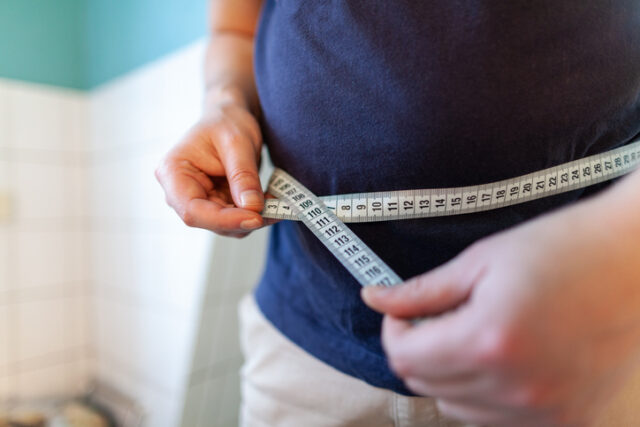
Rather than focusing on weight alone, the team looked at two very different measurements together, how much fat someone carried around their middle, and how strong their grip was compared with their overall body size. It’s an unusual pairing, but the results turned out to be far more telling than either measurement on its own.
There were two measurements that made the biggest difference.

People who had both extra fat around their tummy and a relatively weak grip were the ones facing the highest risk by far. According to the findings, this group had nearly double the chance of dying during the study period compared with people who didn’t have either of those two traits.
Interestingly, tummy fat on its own didn’t seem to make much difference to someone’s risk when it was looked at by itself. It was only once it was combined with weak grip strength that the risk shot up so noticeably, which suggests it’s really the combination of the two that matters most rather than either factor alone.
Grip strength turned out to be incredibly important.

Grip strength has come up in health research before, but this study did something a little different by comparing people’s grip strength relative to their own body size, rather than just looking at raw strength on its own. That distinction turned out to be important.
People with the weakest grip relative to their size had a much higher risk of dying during the study, around 60 percent higher than those with stronger relative grip strength. Since weaker muscles are often an early sign that something’s off with someone’s overall health, it makes sense that this kind of measurement could flag problems that weight alone might miss completely.
Tummy fat and weak muscles together are a major warning sign.
When someone has both extra fat around the middle and weak muscles at the same time, it’s sometimes referred to as a specific kind of unhealthy body composition, since the two problems tend to feed into each other. Carrying extra fat can make it harder to stay physically active, and reduced activity in turn makes it easier to lose muscle strength over time.
This pattern has shown up in other research too, with previous studies finding a similarly raised risk when using different ways of measuring both fat and strength. It all points to the same underlying idea, that having weak muscles alongside extra fat tends to be a stronger warning sign than looking at body weight by itself ever could be.
BMI alone might not tell the full story.
BMI has been the standard measurement doctors rely on for years, mainly because it’s quick, cheap and doesn’t need any special equipment. However, it only really looks at height and weight, without taking into account where fat is stored on the body or how strong someone’s muscles actually are.
Other research has even found that people with a slightly higher BMI sometimes had a lower risk of death compared with those in the so-called healthy range, particularly among older adults. That doesn’t mean BMI is useless, but it does suggest it works best when it’s looked at alongside other measurements rather than being treated as the whole picture on its own.
What this could mean for how health gets checked in future

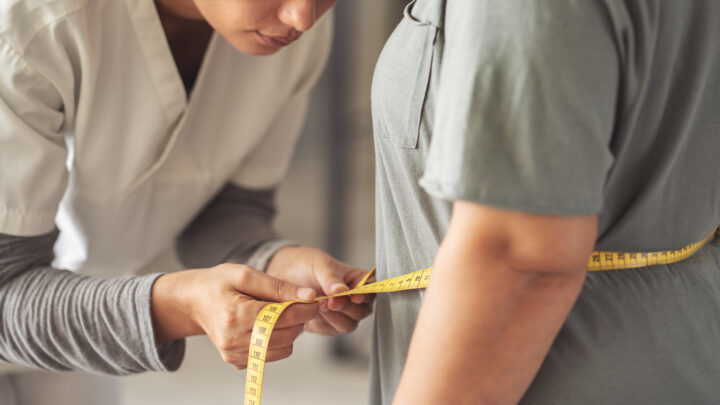
Both of the measurements used in this study, waist size and grip strength, are simple enough to test without any complicated equipment, which makes them realistic options for doctors to start using more regularly. Neither one requires anything more advanced than a basic tape measure and a grip strength device.
That said, the researchers were clear that more studies are needed before either measurement becomes a standard part of every checkup. Still, the fact that this combination showed a stronger link to mortality risk than some of the more traditional measurements suggests it’s an area worth watching closely in the years ahead.
No single number can tell you everything about your health.
As tempting as it is to want one simple number that sums up your overall health, researchers keep finding that it’s rarely that straightforward. Weight, muscle strength, mobility and general wellbeing all seem to play a part, and focusing on just one of these factors risks missing something important about the others.
For older adults especially, holding onto muscle and staying mobile appears to matter just as much as keeping an eye on body weight, if not more. Unexpected weight loss in particular shouldn’t automatically be seen as a good thing, since it can sometimes be a sign that muscle and strength are declining rather than a positive change in itself.
If you’re curious about your own risk factors, a simple grip strength test alongside a waist measurement might give a more useful picture than stepping on the scales alone, and it’s something worth asking a doctor or nurse about at your next checkup.