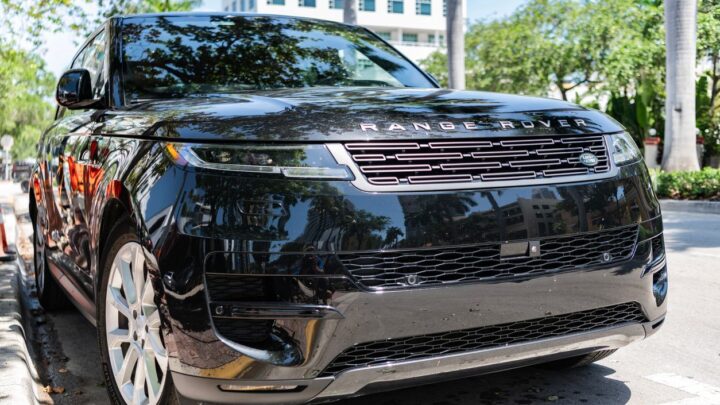
Range Rover has finally unveiled its first fully electric vehicle, arriving a full year later than originally planned, giving fans of the brand’s enormous British-built SUVs a greener option without straying too far from the classic Range Rover experience. The new model will be built in Solihull, home to the marque since 1970, and comes with an eye-watering starting price of £154,070, a figure that firmly positions this as a luxury purchase rather than an everyday electric car.
Range Rover’s new electric vehicle is a big shift for the brand.
Despite the delay, this launch marks a real turning point for Jaguar Land Rover, moving the company away from its long-standing reliance on petrol and diesel vehicles and into a new chapter of its history. JLR is owned by India’s Tata Motors but remains headquartered in Coventry in the UK, and has built its reputation over decades on powerful combustion engines rather than battery power, which makes this shift all the more notable for a brand so closely tied to traditional motoring.
The timing is particularly welcome for the company, which reported falling profits earlier this year after absorbing the cost of tariff disputes tied to Donald Trump’s trade policies, alongside supply chain disruption caused by a damaging cyberattack last year. That combination of external pressures has weighed heavily on the business over recent months, so this launch offers a much-needed dose of positive news after a difficult stretch, and a chance to shift the narrative toward innovation rather than setbacks.
View this post on Instagram
How the vehicle was developed
JLR says it provided extra training to 10,500 staff involved in the project, reflecting just how significant a shift building an electric Range Rover represents for a workforce more accustomed to traditional engine manufacturing. The vehicle also underwent testing equivalent to 38 trips around the world, more rigorous testing than any previous Range Rover model has gone through, underlining just how much validation work went into getting the new electric powertrain ready for the road.
The company describes the vehicle, which can reach 60mph in just 4.3 seconds, as marking the start of a new era of enhanced refinement and capability for the brand. That kind of acceleration puts the new electric model firmly in performance SUV territory, a notable step up in character from the more stately image traditionally associated with Range Rover.
What this means for the environment
While the electric powertrain will considerably reduce this model’s environmental impact compared to JLR’s existing petrol and diesel vehicles, cutting out tailpipe emissions entirely during driving, it’s worth noting that SUVs of this size have consistently been linked to higher rates of road deaths in accidents involving pedestrians, regardless of what powers them. The sheer scale and weight of vehicles in this category means that going electric addresses one part of the environmental and safety conversation around large SUVs, without necessarily resolving concerns tied to their physical size on the road.
Customisation options for buyers
True to Range Rover’s reputation for luxury, the brand’s bespoke commissioning service gives buyers access to what the company describes as a near-limitless choice of paint colours and finishes, along with premium materials, tailored colour combinations, and personalisation touches including unique embroidery. This level of customisation has long been part of what separates Range Rover from more mainstream SUV manufacturers, and the electric model appears to carry that same bespoke approach forward rather than treating the new powertrain as a reason to simplify the ordering process.
What Range Rover’s leadership has said
Martin Limpert, managing director of Range Rover, described the new vehicle as the result of a decade of considered engineering and technological development, language that reflects just how long this project has been in the works behind the scenes, even before the public delay of the past year became apparent to buyers waiting for the model to arrive.
Manufacturing at the Solihull plant will be supported by JLR’s propulsion manufacturing centre in Wolverhampton, which produces battery packs and electric drive units alongside the company’s traditional internal combustion engines. Keeping both electric and combustion engine production running side by side at the same facility reflects the broader transitional period the entire automotive industry currently finds itself in, with manufacturers needing to support both types of vehicle simultaneously as demand for electric models continues to grow alongside existing petrol and diesel lines.