Snoring in dogs is extremely common, especially in breeds with narrow nasal passages and longer soft palates that make breathing that little bit harder.
French Bulldogs are famously loud sleepers, while Pugs, Boxers, English Bulldogs, Shih Tzus, and Boston Terriers all tend to follow suit. Even bigger dogs like Rottweilers, Saint Bernards, and heavier Great Danes often make a serious racket once they drift off.
While listening to your dog saw logs from across the room can be pretty funny, a sudden change in volume or a constant nocturnal racket isn’t always down to their breed alone. If your pet’s bedtime noise is keeping the whole house awake, here’s what might actually be causing it and when you should think about getting them checked over.
Some breeds snore more than others.
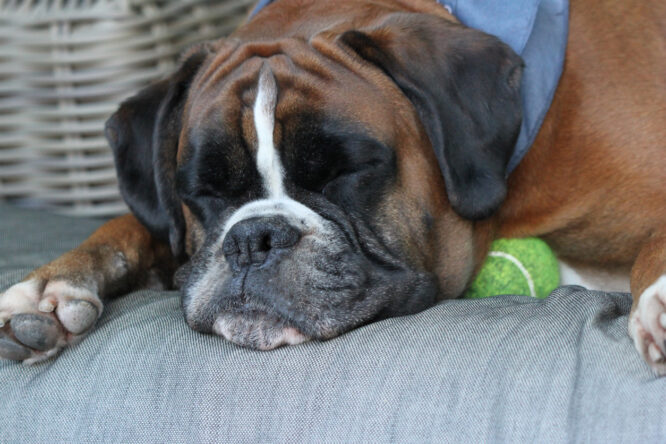
Breeds prone to loud snoring often have shorter snouts, which naturally restricts airflow and creates that familiar rattling sound during sleep. Dogs without this shorter snout structure, including most Pit Bulls, don’t typically snore unless they’ve got an unusually short muzzle similar to a Boxer’s.
Shar Peis fall into an interesting middle ground here. They can sometimes be prone to snoring and grunting during play, particularly if they have a very short nose and suffer from brachycephalic airway obstruction syndrome, often shortened to BAOS. This condition tends to only affect dogs whose noses measure roughly a third of a normal length, meaning most Shar Peis are perfectly fine and unaffected.
One helpful sign to watch for is whether a dog stands around with its mouth open just to breathe comfortably. A dog that closes its mouth while resting is unlikely to be dealing with this particular condition.
Your dog could be suffering from a respiratory infection.
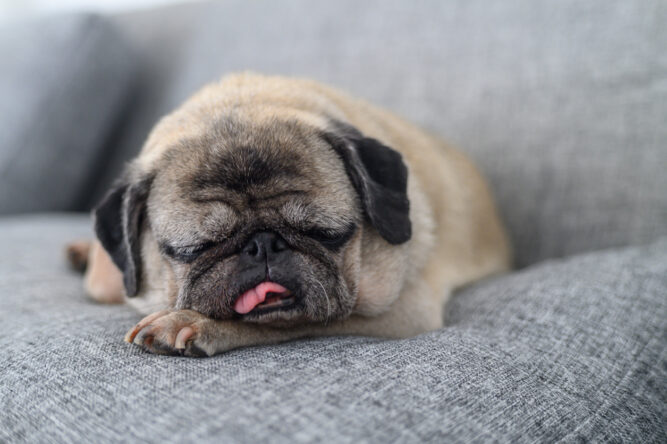
A respiratory infection is one of the most important things to rule out, and it’s well worth booking a trip to the vet if the snoring shows up alongside a runny nose, wheezing, or a sudden lack of energy. Just like us, when a dog catches a cold or picks up something like kennel cough, the tissues inside their airways swell up and fill with mucus, making every breath sound a lot heavier.
Puppies and young dogs are particularly prone to picking up bugs from puppy classes or the park, so if you notice thick snot, sneezing, or watery eyes alongside the nocturnal racket, you shouldn’t put off getting them checked over.
Their sleeping position might be making them snore more.
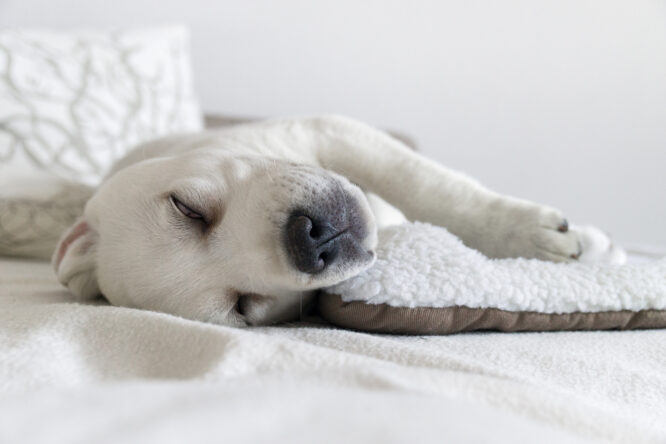
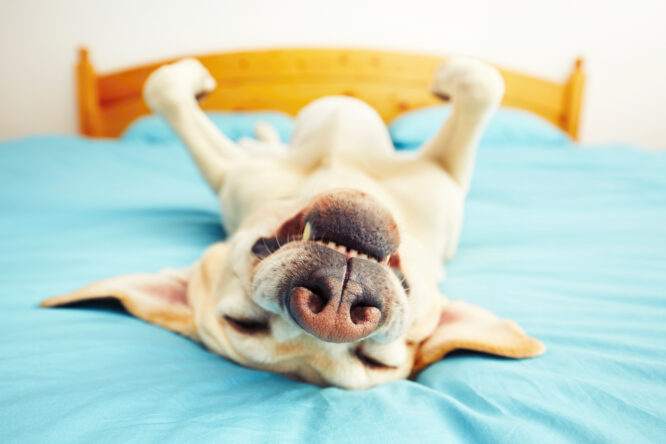
The way your dog chooses to conk out on the rug can directly affect how much noise they make. When a dog sprawls out flat on their back, their tongue and the soft tissue around the roof of their mouth can slide back and partially block the windpipe, leading to loud, comical snorts.
Once they roll over onto their side or curl into a ball, the airway clears up, and the room goes completely quiet again. Pay attention to whether the snoring only happens when they’re in awkward positions, as a gentle nudge to get them to change angles might be all it takes to stop the racket.
An obstruction could be obstructing their airway and making them snore.
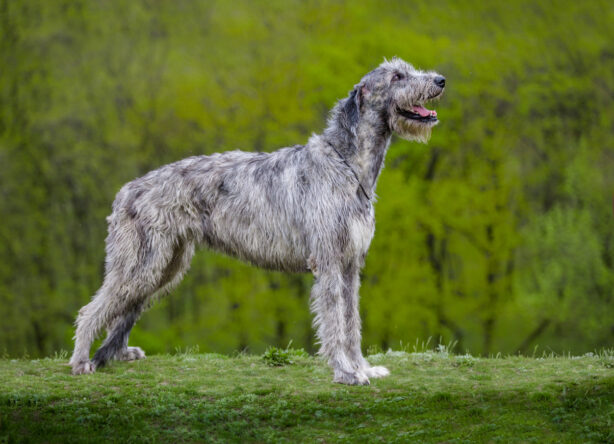
Physical blockages are another major worry, especially if you have an adventurous dog that loves diving nose-first into thick hedgerows, woodland scrub, or tall summer meadows. Things like sharp grass seeds, twigs, or stray bits of stick can easily get sniffed up the snout, getting lodged inside the nasal passage and causing immediate swelling and irritation.
If your dog suddenly starts snoring out of nowhere, particularly if they’re also pawing furiously at their face or having violent sneezing fits, it’s a clear sign there might be something stuck up there that needs a vet to fish out.
Allergies play a role in nasal airflow.
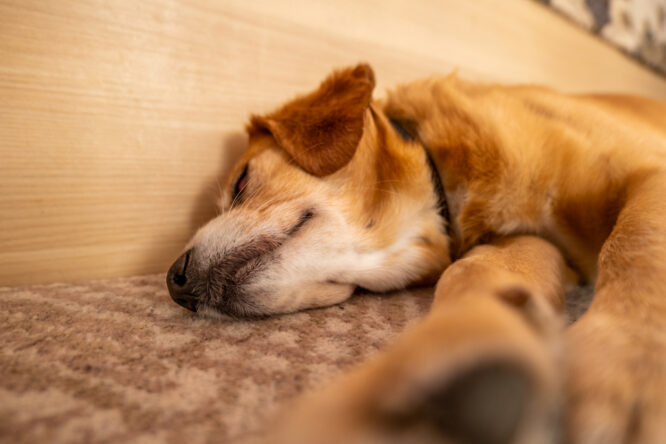
Allergies aren’t the most common trigger on the list, but environmental irritants can still inflame a dog’s nasal lining enough to restrict airflow and set off snoring. Dust, pollen, household cleaning chemicals, or even strong room sprays can cause the soft tissues inside their nose to flare up and swell.
While most dogs react to allergies by constantly scratching their skin, licking their paws, or rubbing their faces against the carpet, some will develop swollen airways that make breathing noticeably louder whenever they drift off to sleep.
Their snoring could be caused by an abscessed tooth.

A severe dental issue can easily lead to noisy breathing behind the scenes. An untreated cracked tooth, deep decay, or a nasty root abscess can cause painful swelling that pushes straight up into the surrounding tissues and affects the nasal passage just above it. It’s one of the rarer causes of snoring, but if the noise is accompanied by foul breath, a reluctance to eat crunchy kibble, or tenderness around the jaw, a thorough dental check from the vet should be high on your list.
Obesity can cause snoring just like it does in humans.
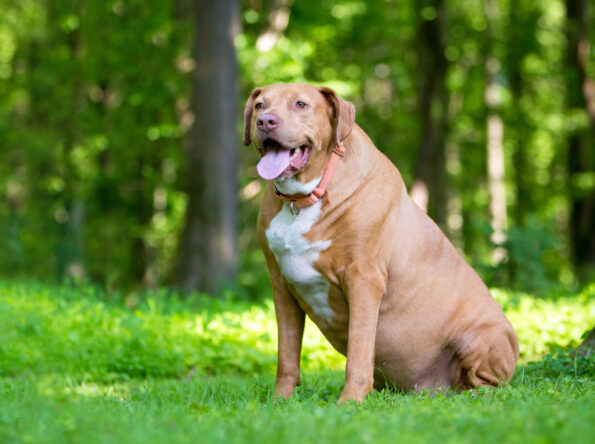
Carrying too much weight is a massive driver of canine snoring, particularly as dogs get older and naturally slow down. When a dog packs on extra bulk, fat doesn’t just sit on their belly; it builds up around the neck and throat as well. When they relax and fall asleep, that extra tissue presses down on their windpipe, narrowing the passage and creating loud vibrations with every single breath.
If your pet’s been looking a bit rounder around the middle, getting them onto a sensible, vet-approved diet is usually the best way to clear up their breathing and help them sleep quietly again.
Hypothyroidism could be to blame.
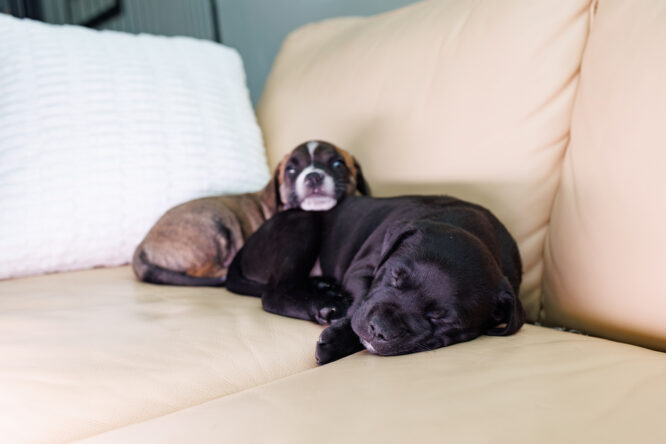
Hypothyroidism is an underactive thyroid condition that pops up mostly in middle-aged and older dogs, usually from around four years old. When the thyroid gland slows down, it drags the dog’s whole metabolism down with it, often leading to muscle weakness, lethargy, and weight gain that directly impacts their airway function.
While loud snoring can be an early symptom, it’s rarely the only warning sign; you’ll typically notice other red flags like heavy coat thinning, dry and flaky skin, frequent ear infections, and a pet that suddenly seems exhausted after a short walk around the block.
What to actually do about a snoring dog
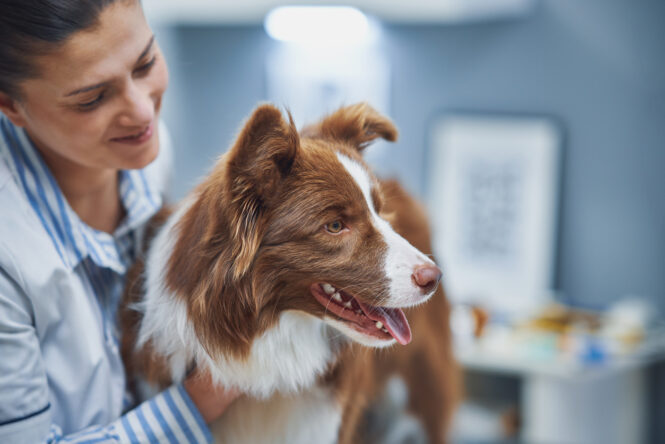
Despite this long list of possible causes, snoring is rarely an emergency situation. Breeds like Shar Peis rarely have the kind of elongated soft palate that requires surgical correction, unlike some other brachycephalic breeds such as English Bulldogs.
In most cases, mentioning the snoring to a vet during a routine check-up, such as when a puppy goes in for vaccinations, is entirely sufficient. A vet can examine how the nostrils are structured and listen to the lungs with a stethoscope as part of that routine visit. If everything checks out normally, further testing like bloodwork to rule out infection, or an endoscopic look at the nasal passages to check for something like a grass awn, might be suggested, though it’s unlikely anything serious will turn up.
If snoring does worsen over time, medication for coughing or antibiotics for a respiratory infection might eventually be needed. But for most dogs showing no other symptoms, particularly puppies without any nasal discharge, there’s usually little cause for concern.