Every time you scroll through social media or read about nutrition, someone is going on about the importance of hitting your daily protein and fibre targets.

You know it keeps you full, sorts out your gut, and stops that mid-afternoon energy slump, but actually putting it into practice often feels like a massive chore. Nobody wants to live on dry chicken breasts, chalky protein shakes, or endless bowls of bland bran flakes just to tick a nutritional box.
Eating well doesn’t mean completely overhauling your weekly shop or cooking separate, complicated meals from scratch. With a few dead simple swaps and handy staples chucked into the dishes you already make, you can easily bump up the numbers without ruining your dinner.
Protein doesn’t need to come from a tub.
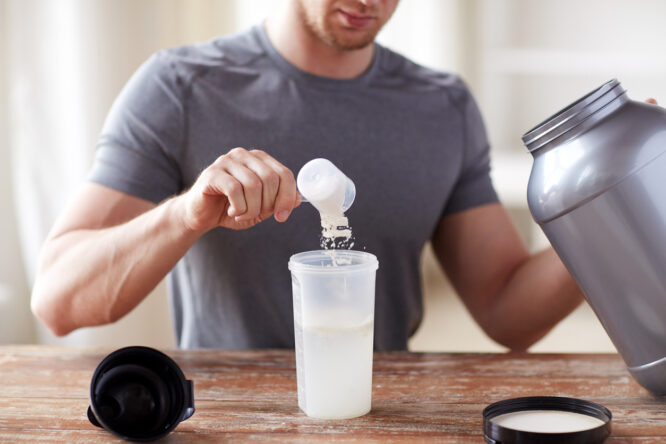
Protein powder isn’t the enemy, but proper cooking should come first. Protein already shows up naturally across a huge range of everyday ingredients, from eggs, cottage cheese, Greek yoghurt, lentils and tofu, right through to meat, fish, and dairy.
Simple recipes built around these everyday ingredients offer a more natural way to build protein and fibre into meals without needing specialist products. Both nutrients matter regardless of whether someone trains regularly or not, since protein helps repair and rebuild muscles and cells, while fibre slows digestion and helps keep you feeling fuller for longer.
Add to your meals rather than stripping them back.
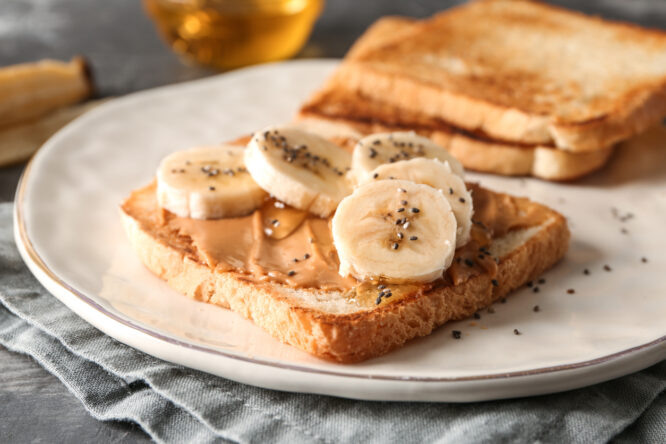
A lot of us have been taught that eating healthily means cutting things out, fewer carbs, less fat, fewer calories, less sugar. A more sustainable approach is adding to a meal to make it properly balanced instead.
Take toast as an example: a slice with just a smear of butter leaves you hungry again within the hour, but the same slice topped with chia jam and peanut butter brings in healthy fats and carbohydrates that actually keep you satisfied. It’s not about restriction, it’s about building a more complete, well-rounded meal.
Start the day with a proper breakfast.
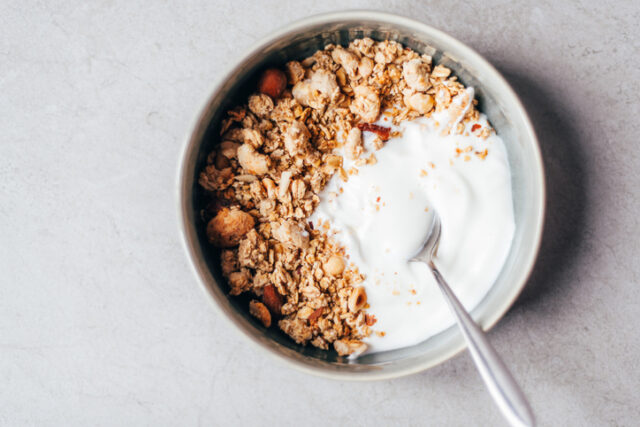
Homemade granola made weekly is a simple way to build a flexible base recipe that can be adapted depending on what’s already in the cupboard. A vanilla, cardamom, and apricot version works well, though any dried fruit works as a swap if apricots aren’t available.
A single batch of granola like this can provide seven grams of protein on its own, and paired with yoghurt and a few extra bits, it turns into a high-protein breakfast. It can also deliver around five grams of fibre, a fifth of a typical daily target, before any fresh fruit even gets added on top.
Keep lunch simple with stuffable fillings.
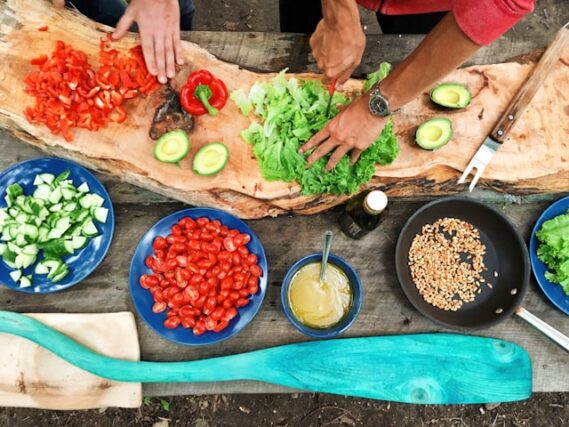
For an easy midweek lunch, sandwiches and pitas stuffed with generous fillings are hard to beat. A chicken salad mixed with pickles and dill, all finely chopped together so it becomes easily spoonable, works particularly well kept as a batch in the fridge. For anyone wanting to make their own bread base from scratch, a simple two-ingredient bagel recipe using just yoghurt and self-raising flour needs no yeast, proving or complicated technique at all.
Make healthy food more enjoyable to eat.

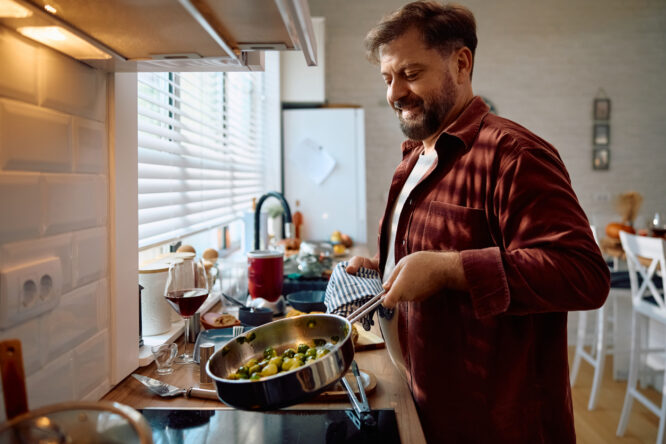
Healthy eating doesn’t have to taste bland or boring. Nobody gets excited about a plate of plain steamed vegetables, but roast the same vegetables until properly crispy, then finish with seasoning, feta, and something crunchy, and suddenly the whole tray disappears. That focus on flavour matters just as much as nutrition, rather than something to sacrifice in pursuit of eating well.
Leave room for the odd treat.
Not everything needs to be nutritionally perfect all the time. If you’re truly craving pasta, the better approach is simply eating pasta, rather than forcing yourself through a salad instead. Making the meal you actually want a bit more balanced and satisfying works far better than avoiding it altogether.
Starting with what you already love, rather than overhauling your entire way of eating overnight, tends to work far better long term. Building outward from real enjoyment, while still leaving room for the occasional less-than-perfect choice, makes healthy eating something you can actually stick with.
Ditch the guilt and focus on balance instead.

It really comes down to finding a middle ground between food that makes you feel good physically and food that simply makes you happy in the moment. There’s no need to spiral into guilt or vow to “start again tomorrow” after one indulgent choice.
If a chocolate bar made you happy, that still counts as a small win, even if it wasn’t exactly packed with nutrients. Life needs enjoyable things alongside the balanced ones, since a rigid, guilt-driven approach to food rarely lasts as long as one that leaves room for both.