Tattoos have been a part of human culture for thousands of years, moving from ancient tradition right into mainstream fashion.
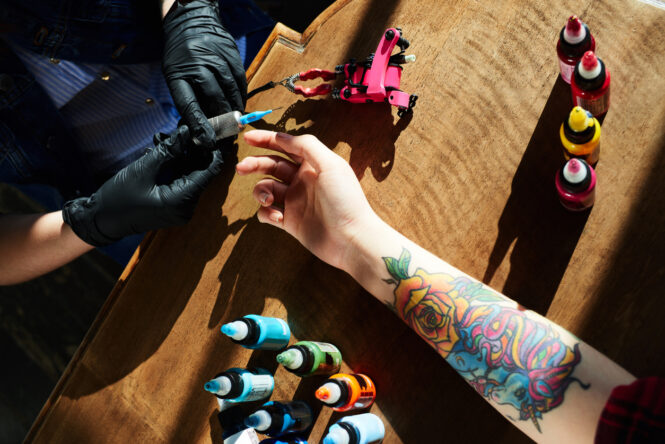
When you’re sitting in the studio chair, you probably pay close attention to fresh needles and clean surfaces, trusting that the pigments going deep under your skin are completely safe. However, a recent wave of lab testing has raised a worrying problem with what’s actually inside those bottles. Even when packaging claims total sterility, researchers are finding that sealed inks often harbour live bacteria, leaving customers and artists facing unexpected contaminants before the needle even starts buzzing.
What the testing actually found
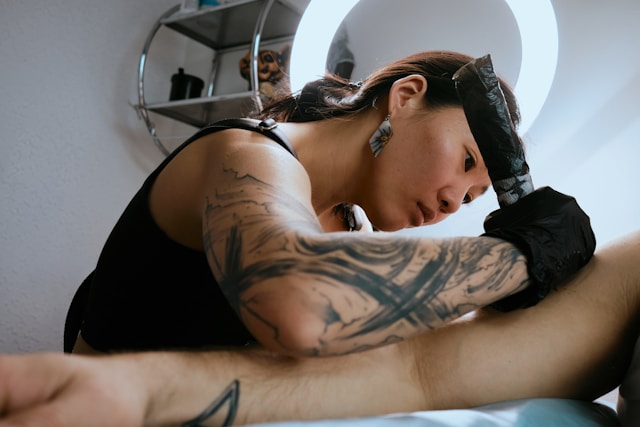
A 2024 investigation by the US Food and Drug Administration tested 75 sealed tattoo and permanent makeup inks and discovered that a third contained bacteria, some capable of making people ill. Rather than treating that as an isolated result, researchers went back and pooled data from four separate FDA investigations carried out between 2018 and 2024.
Across a combined total of 259 unopened jars of ink, roughly a third tested positive for bacterial contamination. That works out to more than 250 individual bacterial isolates spanning 94 different species, some of which are recognised human pathogens. The original 2024 finding, it turns out, was far from a fluke.
Why researchers wanted a bigger picture

Each of the four earlier FDA surveys had already flagged contamination as a real concern, even in products explicitly labelled sterile. But because each survey looked at a different, narrower set of products, several questions remained unanswered.
Researchers wanted to know how consistent contamination rates actually were across different surveys, whether particular product characteristics made contamination more likely, which bacteria kept showing up repeatedly, and how much microbial diversity might still be undiscovered. Perhaps the biggest unanswered question of all was where and how this contamination was actually happening in the first place.
How the combined analysis was carried out
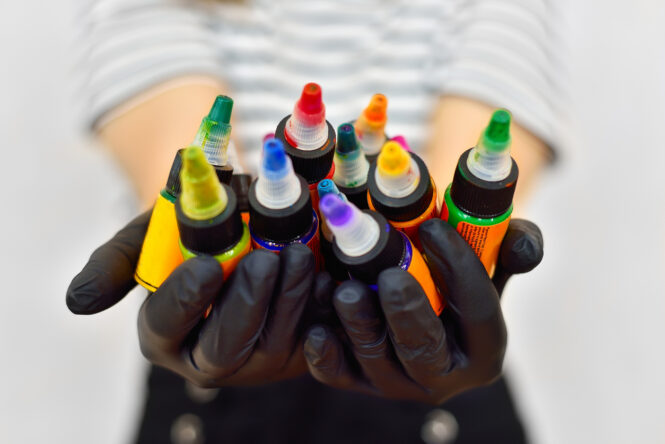
To dig deeper, the team pooled results from all four previous surveys into one dataset covering 259 unopened tattoo and permanent makeup inks, spanning multiple brands, colours, and sterility claims. The original testing had opened each sample under controlled lab conditions, using genetic sequencing to identify bacteria grown from live colonies rather than simply detecting leftover DNA traces.
Applying one consistent analytical approach across this combined dataset let researchers spot patterns that wouldn’t have shown up in any single survey on its own.
Why the “sterile” label didn’t offer much protection
Contamination rates did vary somewhat between the four original surveys, but the pooled figure across all of them landed at 35.4%. One particular result stood out as especially concerning.
Products carrying a sterile label offered surprisingly little actual protection. Of 118 samples marketed as sterile, nearly a third, 30.5%, still tested positive for bacteria, barely different from the 35.5% contamination rate found in products without any sterility claim at all. Neither the product type nor its origin made much difference either. Standard tattoo inks and permanent makeup inks showed almost identical contamination rates, both sitting right around a third, and inks made in the US were contaminated at nearly the same rate as imported ones.
What kind of bacteria was actually present

Beyond just confirming widespread contamination, researchers identified exactly which bacteria were involved. Across the full dataset, they found 94 distinct species spanning 38 different genera, with Bacillus appearing most frequently, followed by Pseudomonas, Staphylococcus and Lysinibacillus.
Of those 94 species, roughly a third, 34 in total, are classified as potential pathogens based on documented links to human disease. Some of the specific bacteria identified included Pseudomonas aeruginosa, Bacillus cereus and Cutibacterium acnes, all of which have established connections to infection in humans.
What this doesn’t necessarily prove
Finding a pathogen present in a bottle of ink isn’t the same as proving it caused an infection. This particular study identified which bacteria were present and alive enough to grow in lab conditions, but it didn’t attempt to track whether any of the contaminated products actually made people sick afterwards.
That said, the researchers point out that their results line up closely with previously documented infection cases and product recalls linked to microbial contamination introduced somewhere during ink manufacturing or distribution.
Why the true scale might be even bigger
There’s a good chance the 94 identified species don’t represent the complete picture, either. As the number of tested samples increased throughout the study, the number of distinct bacterial species kept climbing too, and that curve never fully flattened out, meaning a larger sample size could well reveal even more species.
The testing method also had inherent limits, since it could only detect bacteria capable of growing readily in a lab culture. Slower-growing or particularly fussy bacteria, along with those that are technically alive but resist standard culturing methods, may have gone completely undetected. There have already been documented outbreaks tied to tattoo-associated mycobacteria infections, caused by bacteria requiring specialised growth conditions and considerably longer incubation periods than the methods used across these particular surveys.
What still isn’t known
Despite the scale of this analysis, researchers still can’t pinpoint exactly when or how contamination enters the ink during production. Sterility labelling didn’t reliably predict contamination, and neither did ink type, colour, or country of manufacture.
Right now, there’s no obvious way for either consumers or tattoo practitioners to look at a sealed bottle and judge whether it’s actually safe based on anything printed on the label.
What needs to change going forward
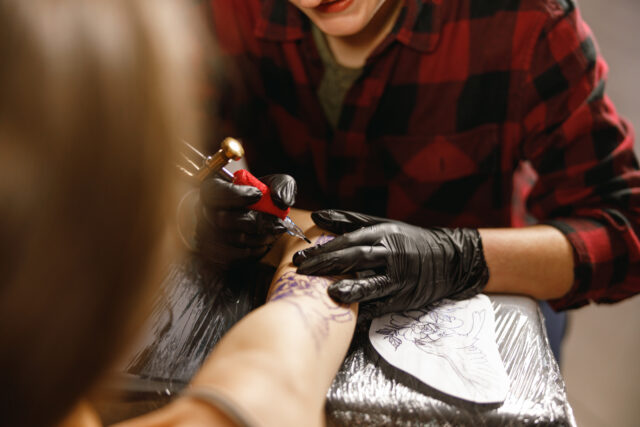
According to the research team, these findings point to real gaps in current manufacturing and quality-control standards across the industry. Their analysis suggests validated sterilisation procedures and stronger controls need to be built directly into the manufacturing process itself, rather than relying purely on end-product labelling.
They’re calling specifically for improved manufacturing oversight, properly validated sterilisation methods, and expanded microbiological surveillance that combines both traditional culture-based testing and newer molecular detection techniques, all aimed at strengthening how contamination risk gets assessed across the industry.
What this means if you’re considering a tattoo
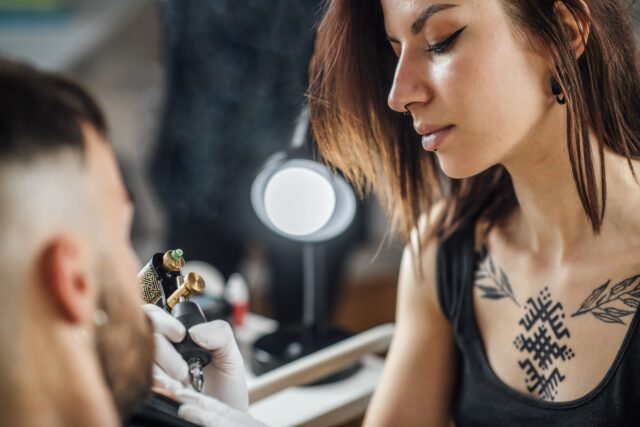
For anyone thinking about getting inked, the practical advice hasn’t really changed. Thoroughly researching a tattoo artist beforehand remains essential, and studios that maintain strict hygiene protocols, stay alert to ink recalls, and pay close attention to packaging integrity are a considerably safer bet than an unlicensed setup with no formal oversight at all.