Cats often get labelled as less affectionate than dogs, but really they just show love in subtler, more subtle ways.
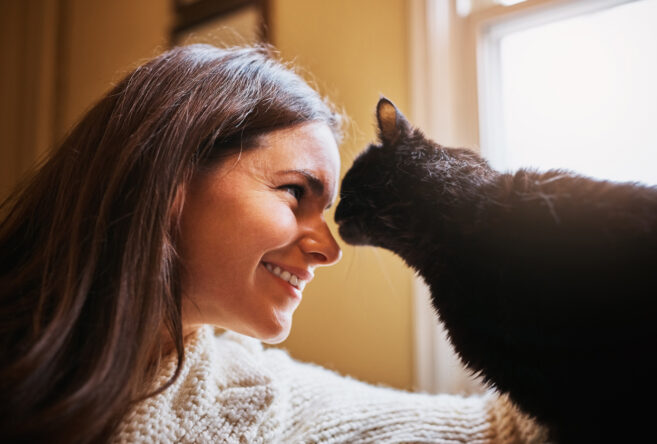
If you’ve ever wondered how to say “I love you” to your cat in a way they’ll actually understand, you’re far from the only one. The tricky part is that cats communicate very differently to people, which can make expressing affection feel harder than it should be. Don’t let that put you off, though. The key lies in learning to speak their language through behaviour, body language and everyday interaction. Here’s how to strengthen your bond with your cat and show them love in a way they’ll recognise.
Try a slow blink.

You don’t need words to tell your cat how you feel. A slow blink is one of the clearest ways to communicate affection, since in feline communication it’s widely seen as a sign of trust, calmness and emotional safety.
Simply make gentle eye contact with your cat, slowly close your eyes for a moment, then look away. If your cat blinks back at you, you’ll know your message landed exactly as intended. It’s a small exchange, but one that can become one of the most reliable ways to say “I love you” in a language your cat naturally understands.
Respect their personal space.

One of the simplest ways to show your cat love is to respect their boundaries. It’s tempting to shower them with constant affection, but plenty of cats actually prefer interaction on their own terms.
Not every cat enjoys being picked up or held, even if physical contact feels like the natural way to express love. Letting your cat choose when they engage, rather than forcing attention or touch, builds trust and helps them feel safe. That doesn’t mean cuddles are off the table entirely, since many cats do crave that closeness, but allowing them to initiate it makes all the difference.
Learn how your cat actually likes to be touched.

Cats may not understand the words “I love you,” but they can certainly feel it through your actions. Paying close attention to your cat’s body language, and learning exactly what kind of physical contact they enjoy, is one of the most effective ways to show affection in a form they’ll respond to.
Some cats love being stroked on the forehead, while others prefer attention around their cheeks or under the chin. Every cat is different, but they’ll usually make their preferences clear if you’re paying attention. Respecting those preferences turns simple petting into something your cat clearly recognises as care.
Let them come to you.

Allowing your cat to take the lead in affection is one of the most meaningful things you can do. Cats feel safest when interaction happens on their own terms, so handing them that control naturally strengthens trust between you.
When your cat chooses to sit beside you, come close, or rub against your leg, they’re communicating comfort and connection in their own way. Responding gently, rather than pushing for more attention than they’re offering, reinforces that bond in a way they recognise as safe. As time goes on, a more laid-back approach becomes a powerful, unspoken form of love.
Make time to play with them daily.

Playing with your cat is one of the easiest and most enjoyable ways to show them love. Interactive play taps into a cat’s natural hunting instincts, giving them valuable mental stimulation alongside physical exercise.
Setting aside a bit of time each day for play supports both their emotional and physical wellbeing, while strengthening the bond between you at the same time. How much active playtime a cat wants will vary depending on their breed, age and general energy levels, but regular enrichment helps create a life where your cat feels both independent and deeply connected to you.
Keep their home calm and predictable.
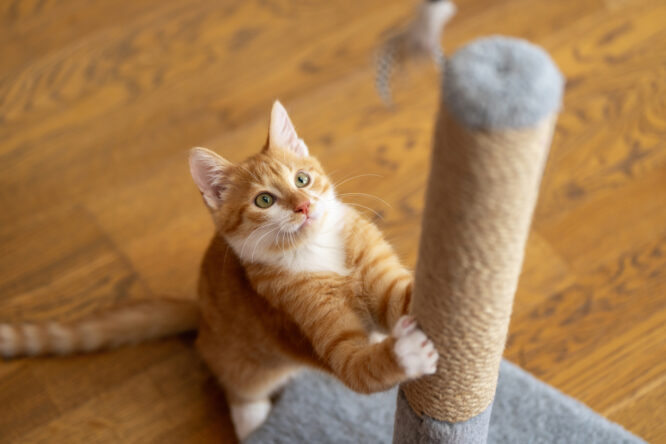
A calm environment goes a long way toward making a cat feel loved and cared for. The more relaxed and settled your cat feels day to day, the more secure their relationship with you tends to become.
Cats are creatures of habit that thrive on routine, and when they feel safe within their own home, they’re far more likely to build strong, trusting relationships with the people around them. At its simplest, that means sticking to regular feeding times, keeping their surroundings familiar, and avoiding unnecessary disruption to their space wherever possible.
Pay attention to their body language.

Cats communicate constantly through posture, movement, ear position, tail position and facial expression, so learning to read these signals is essential for understanding how they’re actually feeling. A relaxed posture, soft eyes and calm movements usually signal comfort and trust.
On the other hand, a tense body, flattened ears or clear avoidance are signs your cat needs a bit of space or is feeling overwhelmed. Noticing these cues and adjusting your behaviour accordingly shows your cat that their communication matters. In the long run, that level of attentiveness builds trust and deepens your bond in a way they naturally understand, without a single word needing to be spoken.