Fairy lights are one of the simplest ways to keep your garden feeling cosy and inviting once the evenings start drawing in, turning a dark patio into a great spot to unwind.
However, before you grab the ladder and start pinning wires along the boundary line, there’s a legal catch around garden fences and nuisance laws that catches out thousands of homeowners every autumn. What feels like harmless outdoor decoration can quickly spark an awkward row with the people next door, and if you end up attaching fixtures to a boundary that isn’t legally yours, you could find yourself facing an unexpected bill to put things right.
First off, do you actually own that fence?
This is the question every gardener needs to ask before hanging anything at all, and the answer isn’t always what people assume. In the UK, a garden fence isn’t automatically owned by whoever’s garden it happens to border.
Ownership comes down to your property deeds, and quite often the boundary between two gardens is the legal responsibility of only one of the two properties. Deeds sometimes include a ‘T’ mark on a boundary plan, and whichever side that mark falls on shows which property is responsible for maintaining it, which usually points to ownership too. If the mark sits on your neighbour’s side, that fence belongs to them, plain and simple.
If your deeds leave things unclear, guidance on boundary disputes is available through GOV.UK, or you can consult a solicitor specialising in property law. Clearing up any confusion before making changes saves a lot of hassle later.
Hanging lights on a shared fence causes problems.
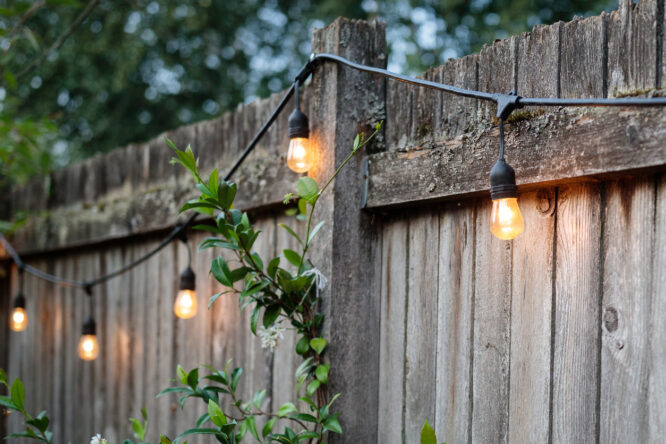
Looping fairy lights over a fence panel feels like no big deal, but if that fence belongs to someone else, you’re technically altering their property without permission. Lighting specialists warn this can quickly become a flashpoint between neighbours.
According to Jon Saeed, managing director of LightingLegends.com, decorating a garden and making it feel inviting is one of the real perks of having outdoor space, and hanging lights from a fence is often a simple way to achieve that. He stresses that if the fence isn’t yours, speaking to whoever owns it before attaching anything can prevent misunderstandings and stop things escalating into a dispute over damage costs.
The physical damage risk is the real concern.
Drilling holes for hooks or screws, using adhesive fixings, or even just adding weight to an ageing panel can all cause structural damage. If the fence belongs to your neighbour, they may be entitled to claim repair costs directly from you.
Even without any drilling involved, putting decorations up without asking first can still create friction, and in the worst cases, tip into a formal boundary dispute, a process that tends to be both slow and expensive to resolve.
Luckily, a quick chat solves most of this.

The simplest fix here is also the most obvious one: ask. A friendly conversation before you put anything up costs nothing and can spare you a lot of stress further down the line. Most people are perfectly happy to say yes to fairy lights, particularly when approached politely.
Even with permission granted, you’ll want to be careful about how you attach anything. Avoid drilling into the panels where possible, choose lightweight string lights that won’t put unnecessary strain on the structure, and take them down at the end of thfe season to limit wear over time. If a dispute does arise despite your best efforts, UK law expects both sides to try resolving things through discussion before heading toward legal action, with mediation services available as a middle ground before court becomes necessary.
What to do if your neighbour says no

A refusal isn’t the end of your garden lighting plans. There are plenty of alternatives that skip the fence question entirely, and several can look just as striking, sometimes better.
Saeed points out that if a neighbour isn’t comfortable with lights on their fence, hanging them on trellises or trees instead brightens an outdoor space without any of the tension. Freestanding garden poles and shepherd’s crook stakes let you position lighting exactly where you want it without touching any shared structure at all. Pergolas and gazebos make strong anchor points too, creating a canopy effect that looks particularly striking on warm evenings. Wrapping strings around tree trunks or threading them through hedges you own are equally straightforward options.
Trellises fixed to your own wall, or to a fence you actually own, offer another flexible solution, doubling up as both a decorative feature and a practical place to hang lights without ever needing anyone else’s permission.