Hamsters are constantly sold as the ultimate low-maintenance starter pet, but anyone who’s actually brought one home knows the reality is pretty different.

Pet shops make them look like simple, easy little creatures that just need a cheap plastic cage, a wheel, and a bag of seed, but there’s far more to these tiny animals than most people expect. From their bizarre sleep patterns to their surprisingly strict housing needs, looking after one properly comes with a few unexpected surprises. If you’re thinking about picking one up for the family, here are seven things nobody bothers to mention before you hand over your cash.
They’re wide awake while you’re asleep.

One of the most common surprises for new owners is discovering their hamster keeps a completely opposite schedule to them. Hamsters are nocturnal, sleeping for up to 14 hours during the day and becoming most active around dusk and dawn.
That mismatch matters more than people expect, especially if the cage ends up in a child’s bedroom. A hamster needs a quiet space to sleep through daylight hours, so a busy bedroom full of daytime noise and activity isn’t always the ideal spot for their enclosure.
They can slip into a dangerous kind of hibernation.

Hamsters can enter a hibernation-like state called torpor if their enclosure gets too cold, typically when temperatures drop below 18 °C alongside shorter daylight hours. In the wild, this is a clever survival trick for getting through periods when food is scarce.
For a pet hamster, though, it’s dangerous, since they simply don’t have enough stored fat to safely sustain themselves through it. It can also be surprisingly hard to tell torpor apart from a hamster that’s passed away, so checking their environment, watching for breathing, and feeling for a heartbeat all matter if something seems off. When in doubt, a vet check is always the safer call.
Their teeth never stop growing.

Dental health is one of the most overlooked parts of hamster care, largely because most new owners don’t realise a hamster’s front teeth grow continuously throughout its entire life. Without enough safe things to chew on regularly, those teeth can overgrow, causing real pain and making it difficult for your hamster to eat properly.
Daily gnawing is essential to keep things in check, and checking their front teeth regularly helps catch any problems early. Left unaddressed, overgrown teeth can even pierce the lip or stop a hamster from opening its mouth properly, so plenty of safe chew toys should be a permanent fixture in their cage.
A condition called wet tail needs fast action.

Wet tail is one of the more serious health issues that can affect a pet hamster, causing severe diarrhoea and dehydration that can turn life-threatening surprisingly fast. It develops when diarrhoea causes the fur around the tail to become damp, often triggered by diet issues, stress, or infection.
Because hamsters are so small, dehydration sets in quickly once diarrhoea starts, meaning immediate veterinary care is essential rather than optional. It’s worth finding a vet who actually treats small animals before bringing a hamster home, since not every practice sees them, and knowing where to go in an emergency can make all the difference.
Setting up their cage takes more thought than expected.

Most hamster breeds strongly prefer living alone, and housing two together often leads to serious fighting, sometimes fatal, since they’re naturally territorial animals. If you’re getting more than one hamster, separate cages are the only sensible option.
Hamsters are also notorious escape artists, so a cage with securely latching doors is essential. They’re sensitive to high-frequency sounds too, meaning a spot near a television or other screens isn’t ideal, however tempting it might be to have them nearby while watching something. On the cleaning front, a light tidy every few days paired with a deeper clean once or twice a month keeps bedding fresh and prevents the damp, smelly conditions hamsters are particularly sensitive to.
Their diet is more varied than you’d think.
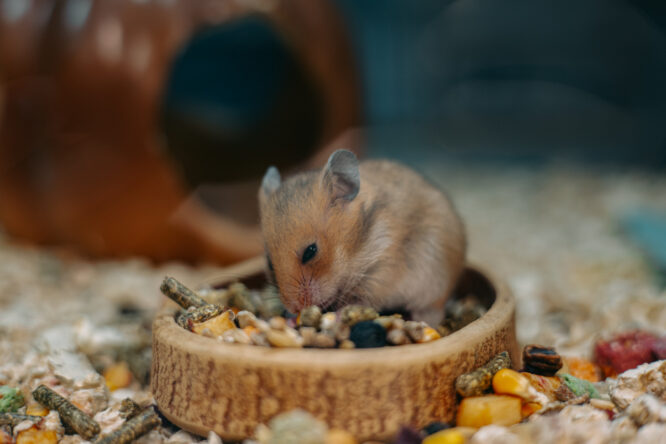
Hamsters actually eat a fairly diverse diet, taking in everything from fruit and vegetables through to seeds, cereals, and even the occasional insect. Specially formulated hamster pellets are the best foundation, since they’re designed to cover all their core nutritional needs.
That base diet can then be supplemented with small amounts of fresh fruit, greens and root vegetables. Hamsters also have special cheek pouches for carrying food back to a hiding spot, storing it away to eat later rather than finishing everything in one sitting.
Their lifespan is shorter than most people expect.
Even with excellent care, pet hamsters simply don’t live very long compared to other common pets. Most will live for around two years, occasionally a little longer, with certain breeds like the desert hamster sometimes reaching closer to three.
It’s an important thing to understand before bringing one home, since it can be an emotionally difficult reality for first time owners, particularly children. At the same time, that shorter lifespan makes hamsters a manageable way to introduce someone to pet ownership, without the decade plus commitment that comes with a dog or cat.