Weeding can turn a peaceful afternoon in the garden into a brutal workout for your lower back, leaving you aching for days after pulling up a few stubborn roots.
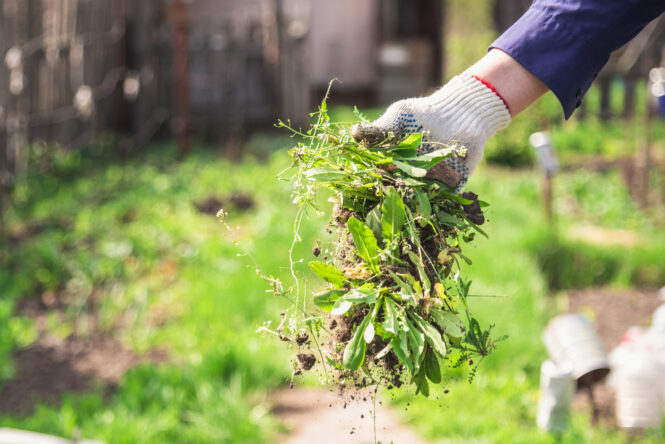
Constant bending, twisting, and kneeling on hard ground puts massive strain on your spine and hips, especially when you’re wrestling with deep-rooted dandelions or overgrown beds. But keeping your garden tidy doesn’t have to mean suffering through a sore back every time the sun comes out.
By tweaking your posture, using the right tools, and changing how you approach the job, you can protect your joints and keep your borders clear without the physical toll. Here’s how to weed your garden comfortably and save your back from taking a beating.
Let a long-handled tool do the heavy lifting.
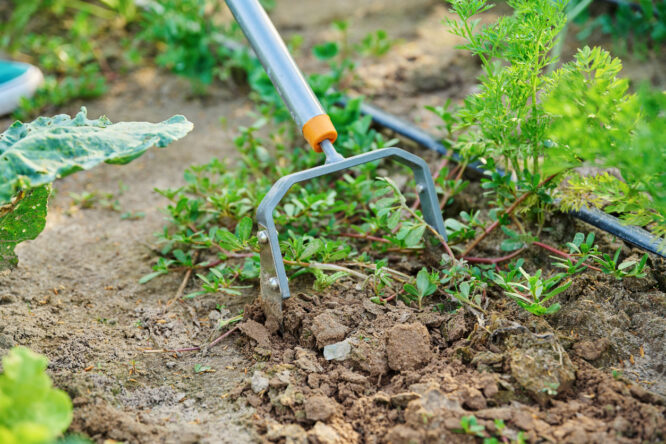
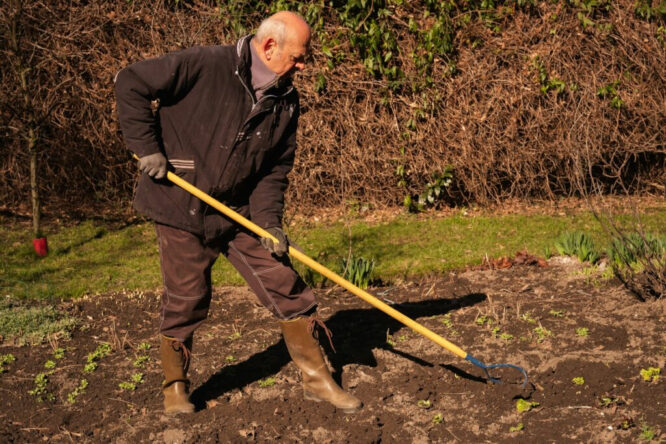
A long-handled weed puller is one of the easiest ways to avoid bending over entirely. These tools use a simple lever mechanism, so you position the spikes over the weed, step down on the foot pedal to drive them into the soil around the roots, then pull the handle toward you to lift the whole thing out, roots and all.
Watering the soil beforehand makes a noticeable difference too, since damp soil releases roots far more easily than dry, compacted ground. It’s a small extra step that saves a surprising amount of effort once you’re actually pulling.
Try a spray for weeds in tricky spots.
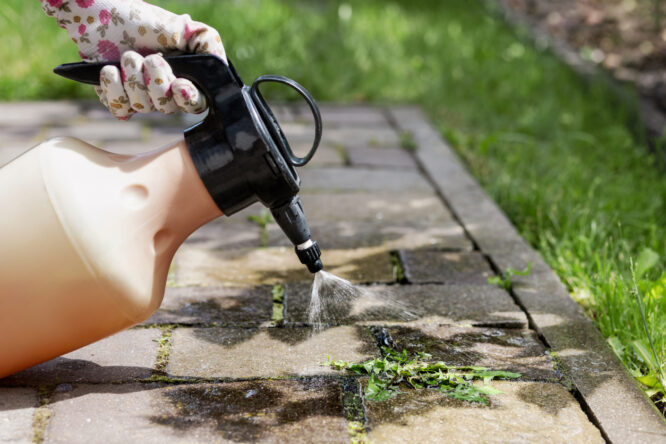
For weeds growing in gravel, walkways or areas away from plants you actually want to keep, a simple spray can work well without any bending at all. A homemade mix of vinegar, salt, and a splash of washing up liquid is a common option, working by burning through the weed’s foliage until it dries out and dies off.
Using a backpack sprayer rather than a handheld one keeps the weight close to your body, which puts far less strain on your spine than carrying it out at arm’s length. Just bear in mind that a gallon of liquid weighs around eight pounds, so even a handheld sprayer isn’t as light as it looks once it’s full. This method works well on shallow rooted weeds, though it’s less effective against established perennial ones.
A regular shovel can do the job too.
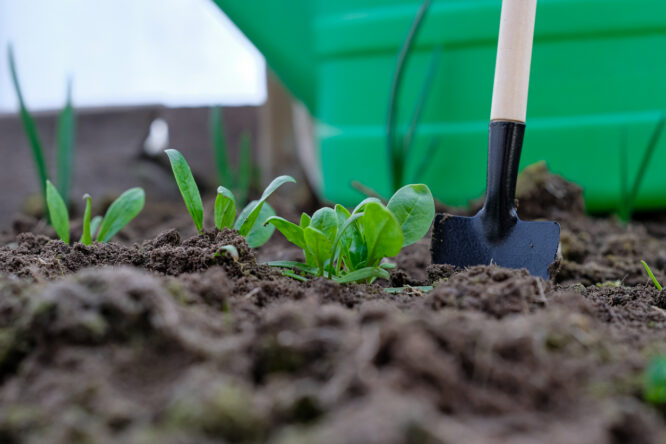
If you don’t have a specialist tool to hand, a narrow trench shovel works surprisingly well for individual weeds. Step onto the shovel to drive the blade beneath the root, then gently rock the handle back and forth to loosen everything before lifting the weed straight out.
Try to disturb as little of the surrounding soil as possible while doing this, since digging around unnecessarily can bring buried weed seeds up to the surface, giving them a much better chance of germinating and creating even more work down the line.
Sit down and let your body stay relaxed.

If standing and bending isn’t comfortable, sitting is a perfectly good alternative. An upturned five gallon bucket makes a cheap, sturdy seat, as long as it’s placed on firm, level ground so it doesn’t wobble or tip while you’re using it.
Tall kneeling is another good option, keeping your knees, hips, and shoulders roughly aligned the way they would be if you were standing, just with your knees resting on the ground instead. Both of these positions work particularly well for weeds sitting between waist and head height, letting you keep your spine in a neutral, comfortable position throughout.
Get lower down for smaller weeds.
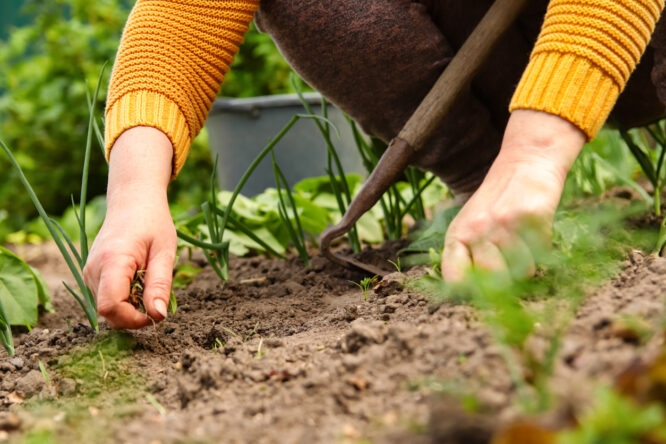
For weeds growing closer to the ground, short kneeling tends to work better, where you sit your hips back onto your heels rather than staying upright. This brings your body much closer to the soil while still keeping your spine in a reasonably neutral position rather than hunching forward.
If getting down onto the ground is difficult, or your knees aren’t up to it, there’s no need to force it. Plenty of the standing methods above will do the job just as well without requiring you to kneel at all.
Don’t rule out crawling for bigger areas.
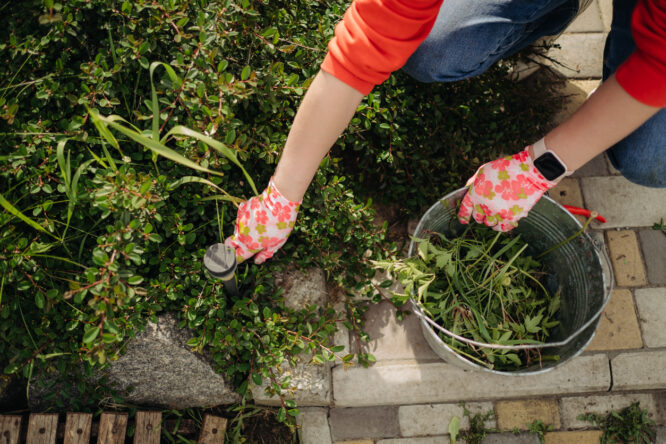
It might sound a bit unconventional, but crawling on your hands and knees is effective for tackling larger patches of weeds. With your knees and one hand staying on the ground while your other hand reaches out to pull weeds, you’ve got multiple points of support taking pressure off your spine at any given time.
Moving slowly through a flower bed this way, making short reaches rather than repeatedly bending up and down from standing, tends to feel far less taxing over a longer session. Whichever position you’re working from, grasping the weed close to its base and rocking it gently before pulling straight up gives you the best chance of getting the whole root out cleanly.
Sort out cracks and crevices separately.
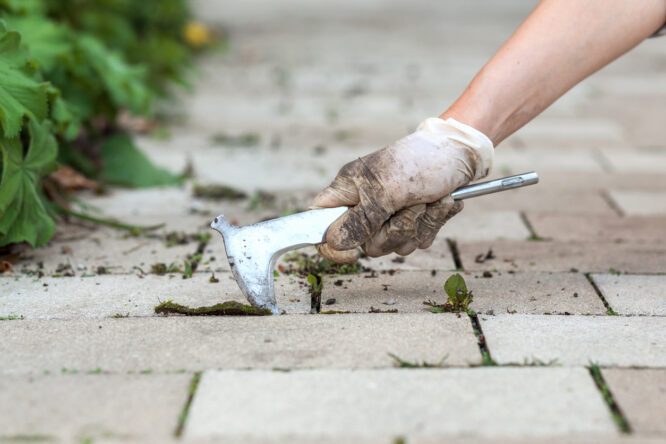
Weeds growing between paving slabs or in pavement cracks need a slightly different approach. A long-handled crack weeder lets you place the metal tip directly into the crack behind the weed, then angle the handle toward you to lever it out.
Keeping your feet shoulder-width apart helps with balance while you do this, and because you’re levering the weed out rather than pulling it directly, there’s no need to lean forward at all. It’s a small tool, but a useful one for anyone with a lot of paving to keep on top of.
The right position makes all the difference.

None of these methods require any special fitness or equipment beyond what’s already sitting in most garden sheds. The real change is simply choosing whichever position keeps your spine neutral and your effort spread across your body, rather than defaulting to the same hunched-over bend every time.
A bit of variety between standing tools, sitting, kneeling, and even crawling means you’re never putting all the strain on one part of your body for too long. Your garden gets just as weed free either way, minus the sore back afterwards.