Some motorways feel like a smooth, easy drive, while others turn into a real test of patience the moment roadworks appear.

A new survey has ranked all 32 of England’s motorways and major A roads from best to worst, based on the experiences of thousands of actual drivers. The results reveal exactly where journeys tend to run smoothly, and where roadworks and delays keep frustrating people the most. Here’s how every road stacked up.
Driver satisfaction is improving overall.

Transport watchdog Transport Focus surveyed more than nine thousand five hundred drivers over the twelve months to the end of March, asking how satisfied they were with their journeys on motorways and major A roads. A considerable 71% of drivers reported being satisfied with their journeys, up from 69% the previous year.
Drivers noted improvements across several areas, including journey times, road surface quality and how roadworks were being managed overall. While there’s clearly still room to improve, the overall trend is heading in a positive direction according to this year’s results.
Kent’s M20 came out as the nation’s favourite.

The M20 in Kent topped the entire ranking with a satisfaction score of 79%, tying with the A30 for the highest score of any road surveyed. Drivers using this route reported a consistently smooth, reliable journey compared to most other major roads across the country. This result puts the M20 firmly ahead of several other well-known motorways, offering a useful benchmark for what a well managed, well-maintained road can feel like for the people using it every day.
The M27 in Hampshire ranked as the least satisfying road in the country.

At the very bottom of the entire ranking sat the M27, with just 56% of drivers reporting satisfaction with their journey. This 28-mile stretch has been plagued by ongoing roadworks, leading to persistent delays for regular users.
One frustrated driver described the roadworks as terrible, pointing to reduced speeds and narrowed lanes, despite very rarely actually seeing any work taking place. The M27 has been undergoing extensive projects, including resurfacing, and junction modifications, which appear to be significantly affecting how drivers experience the road.
Smart motorways are becoming more popular with drivers.

Satisfaction with smart motorway journeys specifically rose from 60% last year to 66% this year, a notable jump. Transport Focus linked this improvement to the completion of work adding one hundred and fifty additional emergency refuge areas along these routes.
That said, drivers using smart motorway sections still reported feeling somewhat less safe compared to those on conventional motorways, with 78% feeling safe on smart motorways against 82% on standard ones. This suggests safety perceptions haven’t fully caught up with the physical safety improvements being made.
England’s road network is entering a major maintenance period.
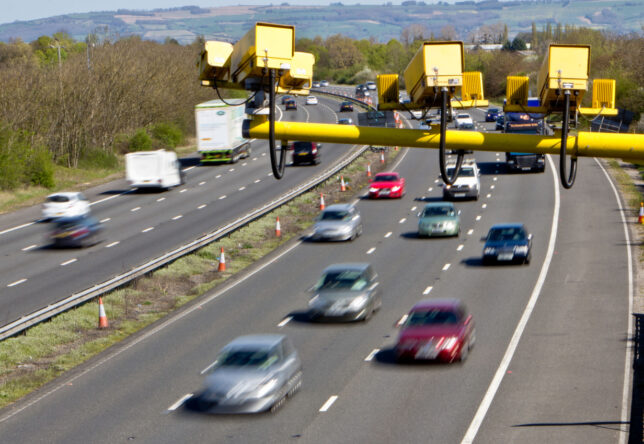
The current network of motorways and major A roads is heading into one of its biggest maintenance periods since much of it was originally built back in the 1960s. National Highways is now beginning a 5-year renewals programme as part of its third Road Investment Strategy.
This likely means more roadworks appearing across the network in the coming years, making it even more important that these projects are planned and communicated well. According to Transport Focus director Louise Collins, drivers consistently say roadworks can make or break how they experience a journey, regardless of how good the road itself might otherwise be.
The best and worst individual A roads were also revealed.

Among major A roads specifically, the A30, running between west London and Cornwall, ranked as the best performing route, with a satisfaction score of 79% percent. Drivers on this stretch reported a consistently smooth journey experience throughout the surveyed period.
At the opposite end, the A12, connecting east London with Suffolk, scored lowest among A roads at just 64%. This places it well below most of the other major A roads included in the survey, suggesting ongoing issues that are noticeably affecting driver experience along that particular route.
National Highways says it remains focused on improving the network.
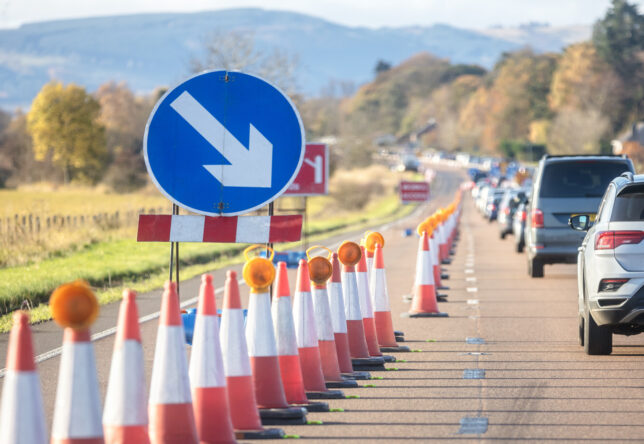
A spokesperson for National Highways said the organisation manages its roads with a focus on maintaining high safety standards while trying to minimise disruption for drivers wherever possible. They pointed to this year’s improved satisfaction scores as evidence that recent efforts to improve road conditions and incident response times are having a positive impact.
The spokesperson added that well-maintained roads benefit both businesses and local communities, and reaffirmed a commitment to tackling the ageing network directly in order to keep the country moving and improve the overall experience for drivers.
The full ranking of England’s motorways and major A roads.
A30 (79%)
M20 (79%)
M56 (78%)
M5 (78%)
A19 (77%)
A23 (77%)
M4 (76%)
A14 (76%)
A303 (74%)
M40 (74%)
M1 (74%)
A1(M) (74%)
M3 (72%)
A5 (72%)
A3 (72%)
A38 (72%)
A2 (72%)
A64 (71%)
A46 (71%)
M61 (70%)
A34 (70%)
M11 (70%)
A1 (69%)
A47 (69%)
A27 (69%)
M62 (68%)
M6 (65%)
M25 (65%)
A12 (64%)
M60 (63%)
M42 (61%)
M27 (56%)
What this means if your daily commute is on the list

If your regular route sits near the bottom of the rankings, it’s worth expecting ongoing disruption over the next few years as National Highways works through its 5-year renewals programme. Planning extra time for journeys on roads like the M27, M42 or M60 could help avoid unnecessary frustration during this period.
For drivers on stronger performing roads like the M20 or A30, this year’s results suggest a generally smoother, more reliable journey, though that could naturally shift as maintenance work spreads further across the network in the coming years.