There’s a small but fascinating study out of Lancaster University and the University of Manchester that’s been looking at Mancunian accents, and one of its findings is surprising.

The way people in Manchester say the end of words like happy, baby, chilly, and city—what linguists call the “happy vowel”—turns out to be a pretty clear signal of social class. Middle-class Mancunians tend to say “happee”, while working-class Mancunians are more likely to say “happeh”. That’s it. That tiny difference at the end of a word carries more social information than most people realise.
It might sound like a small thing, but the researchers say it tells us something real about how class still works in British life, even in a city that’s changed as dramatically as Manchester has over the last few decades.
Manchester has changed a lot, but its working-class accent hasn’t.

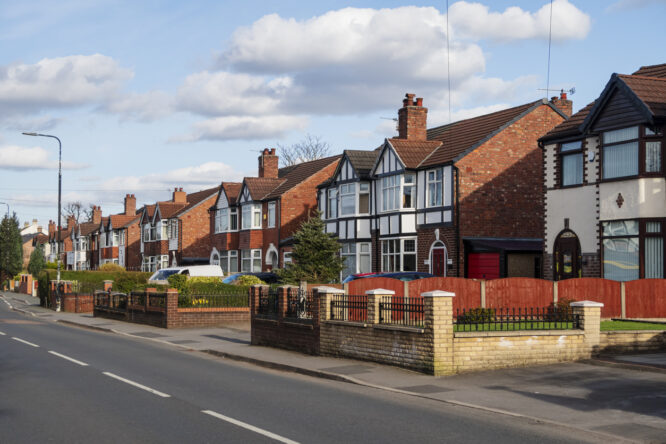
Manchester looks very different now than it did thirty years ago. The economy has changed, whole areas have been redeveloped, and the population is more diverse than ever. And yet, the working-class Mancunian accent has stayed remarkably stable through all of it. The researchers found that certain features, including this happy vowel pattern, have held on even as the city around them transformed.
That’s actually quite meaningful. It suggests that accent isn’t just picked up and dropped with changes in circumstances. It runs deeper than that, especially when it comes to working-class speech, which has often been written off as something people naturally drift away from as they become more educated or move into professional environments.
Ethnicity plays a role too, and it’s not straightforward.

The picture gets more nuanced when you factor in ethnicity. Working-class south Asian Mancunians were more likely to use the “happee” ending, while Black and white Mancunians from the same social class were more likely to say “happeh”. In other words, it’s not purely a class marker in isolation. The way these things interact with ethnic identity and community makes it more complicated, and more interesting.
It’s a reminder that accents aren’t just about geography or money. They’re shaped by community, by who you spend time with, by what sounds feel like home. Two people from the same neighbourhood and the same background can still sound different depending on the communities they move through.
Accents and class are still deeply connected, whether we like it or not.

One of the more thought-provoking things to come out of this research is what it says about class more broadly. There’s a version of the conversation where people say class doesn’t really matter anymore, that we live in a meritocracy where hard work is what counts. But when you look at how people speak across different socioeconomic groups, the patterns are still clearly there. People with money and status don’t just dress differently or live in different areas; they tend to sound different too, in ways that are consistent enough to study.
That’s not a comfortable thing to sit with because it means language is doing some of the same work that other status markers do. How you sound can affect how you’re perceived before you’ve said anything of substance, and that has real consequences for people navigating job interviews, university, or professional settings for the first time.
The pressure to change how you speak is real, and not everyone feels it equally.

Lots of people from working-class or regional backgrounds will recognise this: that moment when you start university or walk into a more professional environment and become suddenly, uncomfortably aware of how you sound. Some people quietly adjust. Some people don’t feel the pressure at all, or actively resist it. On the flip side, some people try to change and find it hard because accent isn’t just a surface thing you can switch on and off.
Some sounds are close enough to the surface that they’re fairly easy to change with practice. Others are so embedded in the way you’ve always spoken that changing them feels almost impossible, especially if you didn’t grow up hearing the alternative. The classic example is the difference between how northerners and southerners pronounce words like “strut” and “foot”. For many northern English speakers, those words rhyme. For southern speakers, they don’t. And if you didn’t grow up making that distinction, making it consistently in adult life is surprisingly difficult.
Adolescence is when most of this gets locked in.
The research points to adolescence as a particularly important window for accent formation. There’s a well-established argument in linguistics that if you don’t acquire certain sounds by a certain age, you’ll never sound fully native in them. It’s similar to the way children pick up languages much more easily than adults do. The sounds you hear and use constantly during your teenage years tend to become the baseline you carry with you.
That’s part of why accent change, when it does happen, tends to be partial rather than complete. People might soften certain features without losing others, or sound different depending on who they’re talking to. It’s not usually a clean switch from one accent to another. It’s more like a gradual, uneven adjustment that plays out over years.
Attitudes towards accents do seem to be changing.

There’s something hopeful in what the research points to about changing attitudes. For a long time, the idea of what “good” or “standard” English sounded like was tied closely to people with money and power, essentially a southern, middle-class accent was treated as the default. But that’s slowly changing, and platforms like TikTok, podcasts, and social media are part of why.
People are hearing a much wider range of accents now than they were twenty years ago, from presenters, creators, comedians, and commentators who aren’t trying to sound like they went to a particular kind of school, and the response is often warm. When an accent isn’t filtered through assumptions about who’s supposed to sound a certain way, people tend to actually enjoy the variety. That’s a real change, and it matters for how regional and working-class voices are perceived in public life going forward.