High blood pressure often causes no obvious symptoms, which is part of what makes it so easy to ignore until something goes wrong.
We all know that keeping an active lifestyle is supposedly good for us, but when you’re looking at a high reading on a blood pressure monitor, it’s easy to wonder if a simple walk or a jog can genuinely change anything. It might be tempting to assume that once your numbers start creeping up, you’re on an unavoidable path straight toward a lifetime of daily prescription pills. However, medical research shows that your heart reacts to physical activity in a much more direct, powerful way than most people realise.
If you’re hoping to manage your cardiovascular health naturally and avoid dependency on medication, looking at what the clinical trials actually prove about working out is a brilliant place to start.
High blood pressure can take a serious toll on the body.

Blood pressure is the force of blood pushing against the walls of blood vessels as the heart pumps it around the body. When that pressure stays consistently high, it puts the heart under constant strain and gradually damages the delicate lining of the arteries, increasing the risk of blocked vessels and heart failure over time.
The problem is that none of this tends to feel like anything day to day. Most people with high blood pressure feel completely normal, which means it can quietly cause damage for years before being picked up, often only discovered at a routine check-up or after something more serious has already happened.
Exercise actually lowers blood pressure.

When you exercise, blood pressure rises temporarily, which is completely normal and expected. What happens afterwards is the important part. Once activity stops, blood pressure often drops below where it started and stays lower for up to 22 hours because exercise triggers the body to release a molecule called nitric oxide that helps blood vessels widen and relax.
As time goes on, these repeated short-term drops build into permanent changes. The heart becomes stronger and more efficient, meaning it doesn’t have to work as hard to push blood around the body. On average, regular aerobic exercise can lower blood pressure by five to seven millimetres of mercury, which is a clinically meaningful reduction.
Which types of exercise work best?

Aerobic exercise, anything that keeps the heart rate elevated for a sustained period, is considered the most effective for lowering blood pressure. Brisk walking, swimming, cycling, running, and even dancing all count, and the key is maintaining a moderate intensity rather than going all out.
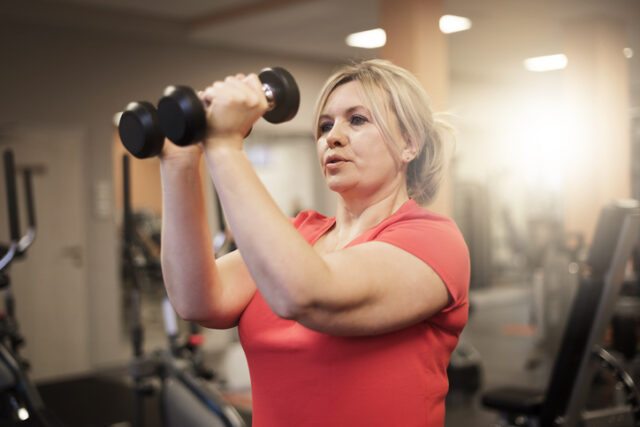
Strength training adds further benefits and is recommended at least two days a week alongside cardio. Mind-body practices like yoga and tai chi are also worth knowing about, since they combine physical movement with breathing and relaxation techniques and have been shown to produce considerable drops in blood pressure, sometimes larger than those from traditional gym workouts.
Exercise works alongside medication in many cases.

If you’re already taking blood pressure medication, exercise doesn’t replace it, and it’s important to keep taking it even as you become more active. What exercise does is strengthen the effects of medication, making it work more effectively rather than simply duplicating its impact.
The longer-term picture is encouraging, too. Research has found that people who maintain a consistent exercise programme over two or more years are often able to reduce how much medication they need to keep their blood pressure in a healthy range. Any changes to medication should always be discussed with a doctor first rather than decided independently.
How much exercise is actually needed to see a difference?
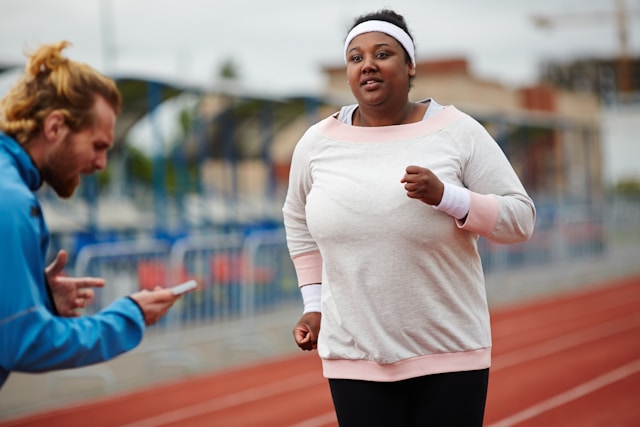
The target that health experts point to is at least 150 minutes of moderate activity per week, which sounds like a lot until you break it down. That’s essentially 30 minutes of movement five days a week, which is manageable for most people once it becomes a habit rather than an effort.
A useful way to check whether you’re working at the right intensity is the talk test. If you can speak in short sentences but couldn’t comfortably sing, the intensity is about right. Combining this kind of aerobic activity with strength training two to three times a week produces the best overall results for heart health.
Staying safe while exercising with high blood pressure is important.

Warming up before exercise and cooling down afterwards both matter more than most people realise when blood pressure is a concern. Stopping exercise suddenly can cause blood pressure to drop too quickly, which may result in dizziness or faintness, so ending sessions with a period of slower movement or gentle stretching gives the body time to adjust.
Breathing steadily throughout exercise is also important, particularly during strength training. Holding the breath while lifting, which many people do without realising, can cause a sharp spike in blood pressure that’s worth avoiding. Anyone who has been inactive for a long period or has an existing heart condition should speak to a doctor before starting a new exercise programme.
You can track whether exercise is making a difference.

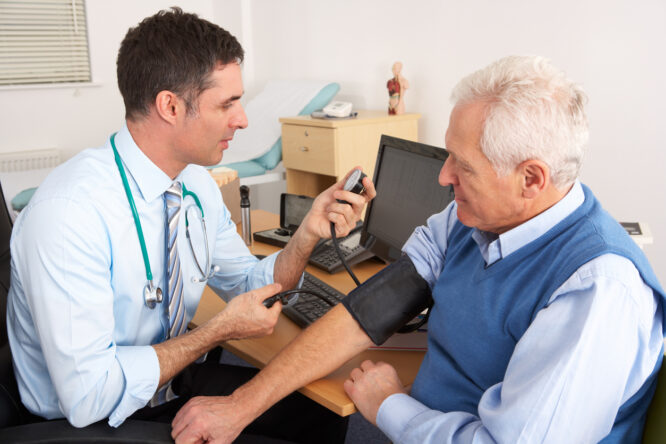
Checking blood pressure regularly at home is the most direct way to see whether exercise is having an effect. A standard blood pressure cuff from a pharmacy works perfectly well for this, and tracking readings over time, either in a written log or through an app, gives a clear picture of progress that’s useful to share with a doctor.
A normal reading sits below 120/80, while anything at 130/80 or above is considered high blood pressure. Readings where the top number stays consistently above 150 or drops below 100 are worth flagging with a doctor, and a reading of 180/120 or above needs immediate medical attention regardless of how a person feels at the time.
How long before results show up?
Results from regular exercise don’t appear overnight, and it’s worth being realistic about the timeline involved. Blood pressure improvements tend to build gradually over weeks and months of consistent activity, rather than appearing after a single good week.
Reducing dependence on blood pressure medication through exercise alone can take 18 to 24 months of sustained effort, which is a long time but represents a genuinely meaningful outcome. Pairing exercise with a diet lower in salt and higher in vegetables, fruit, and whole grains speeds things up considerably and amplifies the benefits that exercise alone delivers.