Sadly, most butterflies live a pretty fleeting existence.
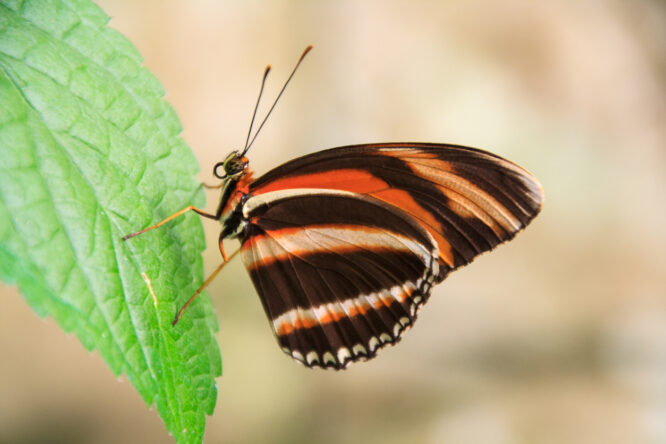
They flutter around for just a few weeks as adults before bowing out, which makes one specific group of tropical species genuinely remarkable. Scientists have found that certain butterflies deep in the rainforests of Central and South America can live for almost a year, and the craziest part is that some of them barely seem to age at all while doing it.
It’s an anomaly that turns what we know about insect lifespans on its head, as these creatures manage to maintain their peak physical health, and vibrancy for months on end. Unlocking the secrets behind how these tiny insects pull off such a massive feat is giving researchers a fresh perspective on biology, and the science behind their longevity is nothing short of fascinating.
Which butterflies are we talking about?
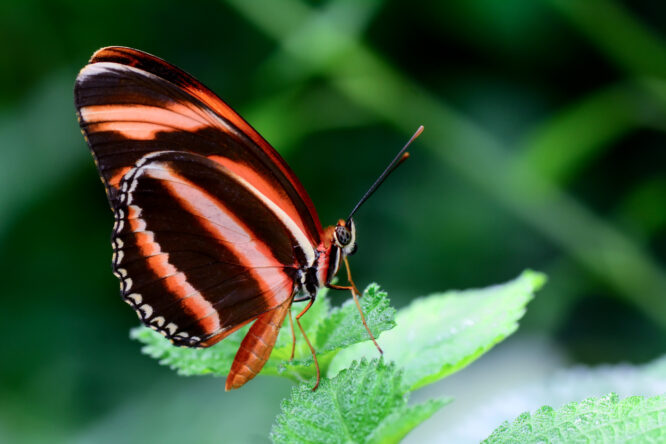
The insects in question belong to a group called Heliconius butterflies, found across the rainforests of Central and South America. Researchers from the University of Bristol studied these butterflies alongside closely related species and found a huge gap in how long they lived compared to their relatives.
One species, Heliconius hewitsoni, reached a maximum recorded lifespan of 348 days. A closely related species called Dione juno lived for just 14 days at most. That’s a 25-fold difference in lifespan between two butterflies that share a recent common ancestor, which is an extraordinary gap by any measure.
What makes this more than just a long life?
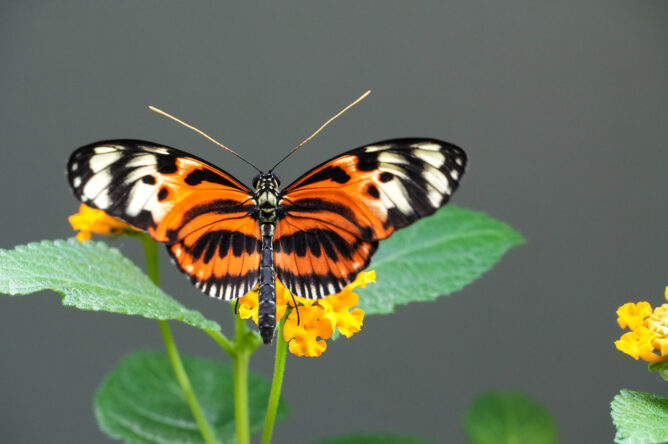
Living a long time is impressive enough, but what really caught scientists’ attention was how well some of these butterflies held up as they aged. Most animals, including most insects, gradually lose physical ability as they get older, becoming weaker and slower over time.
At least one Heliconius species, Heliconius hecale, showed almost no sign of this kind of physical decline at all. Older individuals performed just as well on tests measuring physical grip as younger ones did, while a shorter-lived relative showed the usual clear drop in performance as it aged.
How scientists tested physical ageing in a butterfly

Measuring how well a butterfly ages physically sounds tricky, but researchers used a grip strength test to compare older and younger individuals. The idea is that grip strength gives a reliable indication of general physical condition, and the same principle is used in human ageing research too.
The results were striking. The long-lived Heliconius hecale showed no meaningful difference in grip strength between young and old individuals, suggesting these butterflies maintain their physical condition far into old age rather than declining steadily the way most animals do.
Could diet be the reason they live so long?
One thing that sets Heliconius butterflies apart is that they eat pollen as adults, which is highly unusual. Most adult butterflies feed only on nectar, making this group an outlier in terms of nutrition. Scientists suspected this richer diet might be fuelling their longer lives.
To test the idea, researchers removed pollen from the diet of Heliconius hecale to see what happened. The butterflies still lived much longer than their short-lived relatives even without pollen, which tells scientists that while diet probably helps, it isn’t the whole story. Something deeper in the biology of these butterflies is also playing a role.
What evolution has to do with it

The findings suggest that Heliconius butterflies have evolved in a way that actively slows down the ageing process itself, not just extended how long they happen to survive. This is a meaningful distinction because it means the biology behind their long lives may be fundamentally different to simply having fewer predators or a better food source.
Across the whole Heliconius group, butterflies consistently showed lower death rates, longer average lifespans, and slower rates of physical decline compared to relatives that don’t feed on pollen. The pattern held up across multiple species and multiple types of study, making it difficult to explain away as coincidence.
Why this is important for understanding ageing more broadly

Scientists studying ageing often look to nature for animals that have cracked the problem of staying healthy for longer. Comparing a species that ages slowly with a closely related one that ages quickly is one of the most powerful ways to identify what’s actually driving the difference.
Heliconius butterflies offer exactly this kind of natural comparison. Because these long-lived species and their short-lived relatives diverged relatively recently in evolutionary time, any differences between them are more likely to be directly linked to lifespan, rather than being buried under millions of years of unrelated evolutionary changes.
What scientists hope to learn next

Researchers believe these butterflies could become a valuable tool for studying the biology of ageing, helping scientists understand which genes and biological processes are responsible for keeping an animal healthy for longer. The gap in lifespan between Heliconius butterflies and their relatives is so large and so consistent that it offers a rare chance to study ageing in a controlled, comparable way.
The broader hope is that understanding how these butterflies slow down ageing at a biological level could eventually point towards mechanisms relevant to human health too, since the fundamental processes driving ageing tend to be shared across very different types of animal.