For anyone who’s ever wished they could skip a full night’s sleep and still feel sharp the next morning, science has just nudged that dream slightly closer to reality.

New research out of the University of Oxford suggests it might one day be possible to get some of the benefits of deep sleep while staying wide awake. The early findings, based on a clever experiment with mice, could eventually change how we think about rest, memory and how much sleep we actually need. Here’s what the researchers found, and what it might mean for the rest of us.
What does sleep actually do for the brain?

Sleep does far more than just leave you feeling refreshed in the morning. It’s when the brain quietly carries out most of its essential maintenance work, including a process called synaptic homeostasis. Every day, your brain forms thousands of new connections between neurons as you take in new information. Without sleep, those connections quickly become a tangled mess.
During deep sleep, the brain sorts through all of these new links, keeping the important ones and quietly pruning away the rest. This decluttering is what allows you to wake up able to remember the things that mattered and let go of the noise from the day before. It’s also one of the biggest reasons sleep is so vital for learning, memory and overall brain health.
The science behind deep sleep is fascinating.

The deepest stage of sleep is called non-rapid eye movement sleep, often shortened to NREM, and it makes up around 80 per cent of adult sleep. During NREM, the brain produces a particular kind of activity called slow-wave sleep. Whole groups of neurons in the cortex fire together in a steady rhythm, then go quiet, then fire together again.
This rhythmic pattern is what scientists believe drives much of the brain’s restorative work. The bigger and more regular those slow waves are, the more refreshed and mentally sharp you tend to feel the next day. It’s one of the reasons why a deep, uninterrupted sleep feels so different from a fragmented, restless one, even when you’ve spent the same number of hours in bed.
There are certain animals that already do this naturally.

The idea that you can sleep and stay awake at the same time isn’t quite as wild as it sounds. Some animals already do it, switching one side of their brain into sleep mode while the other remains alert. Dolphins, ducks, and fur seals all use this trick, allowing them to keep an eye out for predators or stay swimming while still resting part of their brain.
Researchers have long been intrigued by whether something similar could be coaxed out of the human brain. Could we trigger the restorative effects of deep sleep in one specific area, while the rest of the brain stays awake and gets on with daily life? The latest study has taken a meaningful step towards answering that question.
A clever experiment with mice was particularly illuminating.
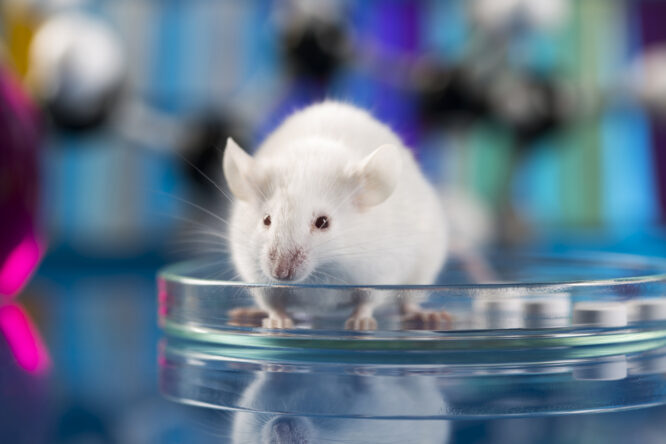
A team of researchers used genetically modified mice whose neurons could be switched on and off using light. They implanted a tiny probe into one half of each mouse’s brain and kept the mice awake for five hours by giving them new things to explore. Near the end of that time, they used the light probe to repeatedly switch the neurons on and off, mimicking the rhythm of slow-wave activity that happens during deep sleep.
Afterwards, when the mice were finally allowed to sleep, the stimulated half of their brains didn’t show the usual signs of exhaustion you’d expect after being kept awake. The neurons there appeared to have already done their decluttering work while the mice were still awake, which meant they didn’t need extra deep sleep afterwards to catch up. It was a striking result, suggesting that at least some of the brain’s restorative work doesn’t strictly require sleep itself.
One memory test proved the point.
To see whether this artificially induced “sleep” had any practical benefit, the researchers set up a memory test. They placed the mice in a square box with the same texture on the floor of both sides and let them explore for 15 minutes. Some mice were then allowed to sleep, others were kept awake for an hour, and a third group was kept awake but given the slow-wave stimulation.
The next day, the mice went back into the box, but one side now had a different texture. Mice are naturally drawn to anything new, so the researchers measured how much time each animal spent exploring the new side. The sleep-deprived mice that didn’t get any stimulation struggled to tell the difference, while the mice that had either slept normally or received the artificial brain stimulation remembered the original setup clearly and spent more time exploring the new side. The stimulation, it seems, had given them some of the same memory benefits as proper sleep.
Why this matters for humans

The obvious question is whether any of this could be done in people. The researchers are already planning the next step, which involves testing whether non-invasive techniques like transcranial electrical stimulation could trigger similar effects in human brains. This kind of stimulation uses tiny electrical currents applied through the scalp and is already being studied for a range of conditions, including depression and memory issues.
If it works, the potential uses are huge. Imagine being able to give your brain a quick top-up of deep-sleep-like activity during a long day, helping you stay sharp through important meetings or long shifts. It could be particularly useful for people whose jobs make good sleep hard to come by, like medical staff, emergency workers, soldiers, and shift workers. The early-stage nature of the research means it’s still years away from being available, but the direction of travel is really interesting.
Unfortunately for some, sleep probably can’t be fully replaced.

Before anyone gets carried away, scientists are quick to point out that sleep is far too complex to be fully swapped out for a brief brain stimulation. Sleep has two main stages, NREM, and REM, and the alternation between them is what makes a full night’s rest restorative. REM sleep, in particular, is closely linked to dreaming, emotional processing and creativity, and we still don’t fully understand why we need to cycle through both.
So even if the slow-wave benefits could be triggered artificially, the rest of what sleep does for the body and mind would still need to happen the old-fashioned way. Sleep also plays a crucial role in immune function, hormone regulation, heart health, mental wellbeing and physical recovery. None of those benefits seem likely to be replaced by any quick fix, no matter how clever the technology becomes.
What this means for everyday sleep habits

While the research is exciting, it doesn’t change the practical advice for the rest of us in the short term. Sleep is still the single most powerful thing you can do for your brain, your mood, your memory and your overall health. Most adults need seven to nine hours a night to function at their best, and that hasn’t changed because of one experiment in mice.
If anything, this kind of research underlines just how much sleep is doing for you behind the scenes. Every night spent truly resting is repairing your brain, locking in memories and clearing out the clutter from the day before. Even if we eventually develop tools to top up some of those effects, sleep is still the natural and most complete way to get them. The takeaway is to keep prioritising your nightly rest, since for now, it remains by far the most powerful “treatment” you’ve got.
The promise of better sleep without the bed may not be able to deliver.

What makes this research genuinely thrilling is the door it opens. Until recently, the idea that you could replicate even part of sleep’s benefit without actually sleeping felt like science fiction. Now there’s early-stage evidence that the brain can be coaxed into doing some of its restorative work while you’re awake, and that those benefits can be measured in real terms like improved memory.
For now, the dream of skipping a night’s sleep without paying for it the next day remains exactly that. But the idea that science is getting closer to it, even a little, is exciting. Whether the technology takes off in five years, 15, or never quite makes it into everyday life, the deeper understanding of how sleep works could quietly improve everything from sleep disorders to dementia care along the way. And the rest of us can keep cherishing the simple joy of a really good lie-in in the meantime.