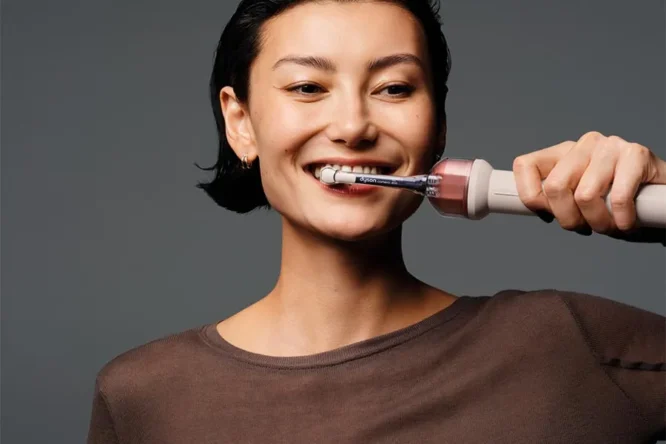
If you’ve spent any time on health or fitness corners of social media, you might have come across a slightly odd claim that’s been doing the rounds.

Your grip strength, the firmness with which you can squeeze something with your hands, is being talked about as a quiet predictor of how long you’ll live. It sounds a bit far-fetched, but the science genuinely supports it, sort of. The full picture is more interesting and more nuanced than the headlines suggest. Here’s what grip strength actually tells you about your health, and what to do with that information.
There’s genuine science behind the claim, for starters.

Research has shown for years that there’s a real link between grip strength and overall health. People with weaker grip strength tend to have a higher risk of dying earlier, of developing heart disease, of suffering strokes and respiratory illnesses, and even of certain cancers. One particularly striking study of around half a million British adults aged 40 to 69 found that a 5 kg drop in grip strength was associated with roughly a 20% higher risk of dying during the 10-year follow-up period.
That’s a significant statistical link, and it’s been replicated in studies across multiple countries. Some researchers have started suggesting that grip strength should be treated as a “new vital sign,” alongside the more familiar ones like blood pressure, pulse, temperature and breathing rate. The evidence behind the connection is solid, which is why it has caught the attention of so many wellness influencers and journalists.
What does grip strength actually measure?
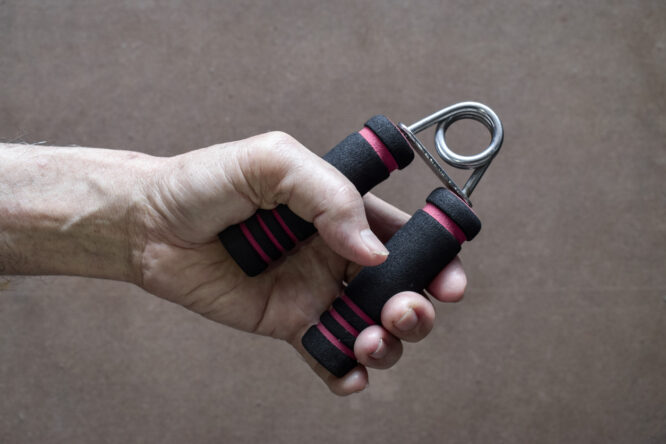
Grip strength isn’t really about your hands at all, even though that’s where it gets measured. The strength in your hand reflects the broader state of your body, including the health of your muscles, nerves, heart, blood vessels and how efficiently your body uses energy. It’s a window into how well the whole system is functioning, rather than a specific measure of how strong your fingers are.
That’s why grip strength turns out to be such a useful indicator. A weak grip in an older adult usually reflects something deeper going on, like age-related muscle loss, declining cardiovascular fitness, or a body that’s no longer bouncing back from stress and illness the way it used to. So when researchers see weaker grip strength linked with shorter life expectancy, they’re really seeing the effects of broader physiological decline showing up in one easy-to-measure spot.
It matters more in older people for a very good reason.
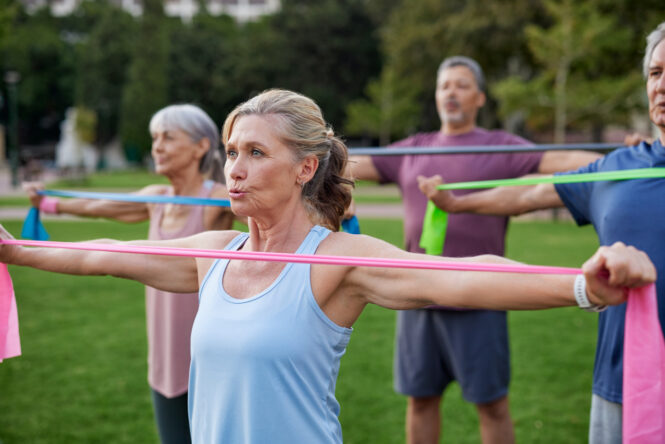
The link between grip strength and longevity isn’t equally strong across all ages. In older adults, the connection is striking, particularly when it comes to predicting heart attacks, strokes, falls and fractures. That’s because grip strength becomes a brilliant indicator of age-related muscle loss, a condition called sarcopenia, which is one of the biggest health risks for older people.
In younger adults, the connection is much weaker. Most younger people are near the top of their physical capability, and small variations in grip strength don’t reveal much about their overall health. So while grip strength tests can be useful at any age, they earn their keep most in older adulthood, where they help spot people who might be quietly slipping into frailty before more obvious symptoms appear.
The wellness world has it wrong in one way.
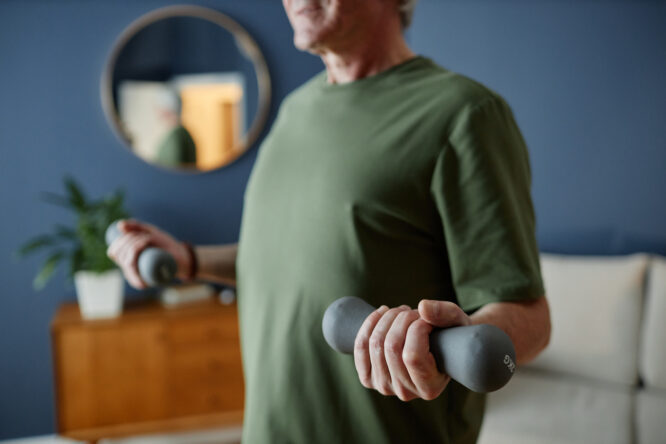
Here’s where the science gets twisted on social media. Because grip strength is linked to longevity, some influencers have leapt to the conclusion that if you just improve your grip strength, you’ll live longer. They’ve started selling grippers, finger trainers and routines promising more years on the clock from squeezing harder. The trouble is, that isn’t how the science actually works.
Grip strength is a marker of good overall health, not a cause of it. Strengthening your hands on its own won’t add years to your life, any more than getting a thermometer reading down to 36.5 degrees will cure you of an illness. The hand strength reflects something deeper that’s already going on inside your body. Treating the proxy without addressing the underlying health is like polishing a clock to make time go slower.
There’s a big correlation versus causation mix-up.

This is a really common mistake in how health science gets communicated, even by people with the best intentions. Just because two things are linked doesn’t mean one causes the other. Grip strength and longevity are correlated, but that doesn’t mean training your grip will make you live longer. Both grip strength and lifespan are influenced by something else, which is your overall physical health.
The reason this confusion matters is that it can lead people to focus on the wrong things. Spending hours each week on grip training won’t add years to your life on its own. But the time, money and effort spent on chasing a quick fix could have been spent on the bigger lifestyle changes that genuinely do improve health, like regular exercise, decent nutrition and good sleep.
How to measure your own grip strength
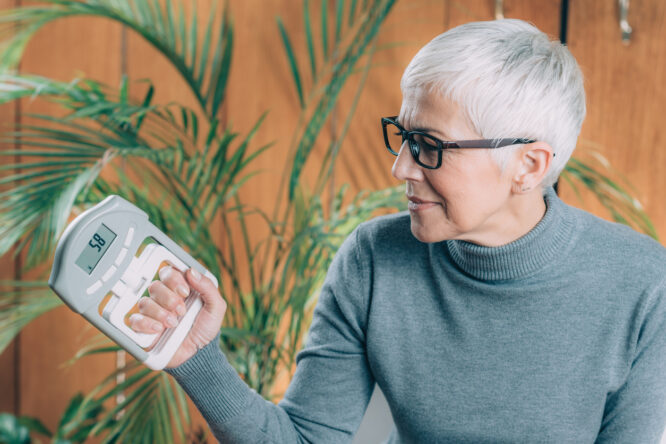
If you’re curious about your own grip strength, the most accurate way to measure it is with a handheld device called a dynamometer. You can buy a basic one online for under £30, and it gives you a clear reading in kilograms when you squeeze. Most research uses this kind of device, with general guidance suggesting that grip strength below 26 kg for men and 16 kg for women is considered weak.
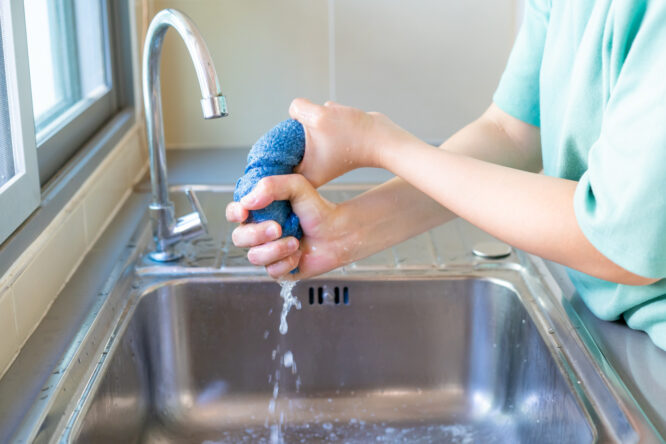
Without a dynamometer, you can still get a rough sense of your grip strength through everyday tasks. If opening jars, carrying shopping or wringing out a wet towel feels noticeably harder than it used to, that’s worth paying attention to. So is struggling to hold heavy objects for any length of time. A decent grip is one of those quiet things you only notice when it starts to slip.
What can you actually do to improve your overall health?

If you want to make a real difference to how long you live and how healthy you feel along the way, the answers haven’t really changed. Regular exercise that includes both cardio and strength training is one of the most powerful things you can do. Brisk walking, swimming, cycling, dancing, and gentle weightlifting all support your heart, muscles, and bones in ways that show up across your whole body, including in your hands.
Alongside exercise, the usual suspects are still the most useful. Eating a balanced diet with plenty of vegetables, fruit, whole grains, and lean protein. Sleeping properly. Managing stress where you can. Keeping up your social connections, since loneliness has been linked to worse health outcomes in older age. Limiting alcohol and not smoking. None of this is dramatic or exciting, but it’s the boring stuff that really makes the difference.
Why we love simple health metrics so much

There’s a reason claims like the grip strength one go viral. We’re naturally drawn to simple numbers that promise quick insights into our health. Steps per day, resting heart rate, body mass index, blood pressure, all of them have at some point been seized on as the magic number that tells you everything about your wellbeing. The reality is always messier.
Grip strength is a useful tool when used correctly, especially for older adults whose doctors are watching for signs of frailty. But it’s not a target to chase in isolation, and it won’t replace the broader habits that actually drive a long and healthy life. The trouble with social media is that nuance doesn’t sell, so the headlines often skip the bit where the experts say it’s just a marker, and jump straight to “here’s how to train your grip in five minutes a day.”
Grip strength isn’t everything, but it’s worth working on.
Grip strength is one of the most interesting little signals your body can give you about its overall condition. It’s useful as a quick check, especially in older age, and it’s a clever way for doctors to spot people at risk of declining health before bigger problems appear. So if you’ve got a dynamometer, and you’re curious, it’s a perfectly reasonable thing to measure now and then.
Just don’t fall for the idea that squeezing a tennis ball every day is going to add years to your life. The real drivers of longevity are the same ones they’ve always been, like moving your body, eating well, sleeping well, and looking after your relationships. If you keep all of those in good shape, your grip strength will quietly look after itself, and so will the rest of you.