Something pretty unsettling is happening in the lives of British twenty-somethings, that much has been made clear in a stark new piece of research.

In response to a survey commissioned by Marmalade Trust, two-thirds of young people now say they cancel social plans so they can spend more time online, with a growing number admitting they find chatbots easier to talk to than real humans. The picture this paints of Gen Z’s social lives is far from the carefree image we might assume, and it has serious implications for how this generation is growing up. Here’s what the research has revealed, and what it might mean for the years ahead.
The headline finding is raising alarm bells.
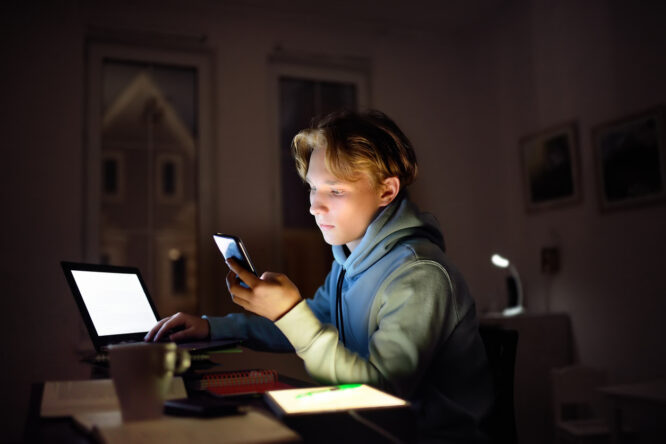
A recent survey of 2,000 UK adults aged between 18 and 29 found that 65% had cancelled social plans in order to stay online instead. The same survey found that a quarter of young people now say it feels easier to talk to an AI chatbot than to another human being, while 14% admit they turn to AI when they’re feeling lonely.
These aren’t fringe behaviours among a small slice of the population. They’re widespread habits among a generation of young adults who are technically more connected than any generation in history, yet feel more alone than the ones that came before. The mismatch between always being plugged in and truly feeling part of a community is at the heart of what’s going on.
The loneliness epidemic is one that nobody saw coming.

The same research found that two-thirds of young adults feel lonely at least once a week. More than one in four said they feel lonely several times a day. That’s a staggering number when you remember that this is the most digitally connected generation in history, with constant access to messaging apps, social media, video calls and online communities.
What makes the figures even more striking is how loneliness is hitting people in unexpected places. Nearly three quarters said they sometimes feel lonely even in social situations, surrounded by other people. Almost half said home is actually where they feel most alone. So this isn’t simply about being physically isolated, it’s about feeling unseen, unheard or disconnected even in rooms full of family or friends.
Chatbots often feel safer than real conversations.

The rise of AI companionship taps into something genuinely difficult for many young people. A chatbot doesn’t judge you, doesn’t get tired of you, doesn’t have a bad day or a busy schedule, and is available at three in the morning when nobody else is. For someone who finds social interaction stressful, the predictability and patience of a chatbot can feel like a welcome relief from the messiness of real human connection.
The trouble is that what feels easier isn’t always what’s good for us. AI conversation can soothe anxiety in the short term, but it doesn’t build the social muscles that human connection depends on. Real relationships require small awkward moments, misunderstandings and shared experiences. Skipping those in favour of a perfectly polished AI chat trains the brain to expect a kind of connection that isn’t actually available in the real world.
The fear of small talk and the phone-call panic are overwhelming for many.

The same research found that more than four in ten young adults find small talk intimidating, and 27% say making or answering phone calls makes them anxious. These two findings on their own paint a picture of a generation that’s grown up communicating mostly by text and video, where you can edit and curate every message before sending it.
Phone calls and small talk both demand the opposite. They’re real-time, unscripted and unpredictable. You can’t pause, delete or rewrite a sentence mid-flow. For young people who’ve been raised on text-based communication, that suddenly feels exposing. The result is a generation that often skips the phone call, ducks the casual chat, and quietly retreats to spaces where everything can be carefully managed.
How social media plays into the loneliness
Social media gets some of the blame here, and the research backs that up. Almost half of young adults said social media makes them feel lonelier, compared with just 30% who said it helps them feel connected. One in three women specifically said comparing themselves to others online adds to their feelings of loneliness, a notably higher figure than for men.
This isn’t surprising once you think about it. Scrolling endlessly through other people’s curated, filtered, best-bits highlights doesn’t bring you closer to anyone. It just makes your own ordinary life feel smaller by comparison. Add in the rise of influencer culture and the steady drip of perfect-looking lives across every feed, and it’s easy to see how social media can make the lonely feel even lonelier.
University life isn’t what it used to be, which doesn’t help.

One of the most quietly heartbreaking findings is how different university now feels from what previous generations remember. Many young people heading off to university expect the experience their parents had, with strong lifelong friendships, late-night chats in shared kitchens and a sense of belonging. Instead, plenty are finding small flatshares, fragmented social groups and lots of evenings spent alone in their rooms with their phones.
Part of this is down to how much of student life has moved online. Lectures are often recorded or hybrid, group projects can be done over video chat, and entertainment is mostly consumed solo through streaming. The casual everyday opportunities to bump into other students and form real friendships have shrunk. The result is a wave of students who feel surrounded by other people but oddly cut off from them.
The mental and physical toll of all this is intense.

Loneliness isn’t a small problem with a few mood-dipping side effects. It has serious knock-on effects across young people’s lives. Almost half of those surveyed said their loneliness has damaged their mental health. Forty-two per cent reported lower confidence and self-esteem. Around three in ten linked their loneliness to physical symptoms like sleep problems and poor eating.
It also affects practical life. Eighteen percent said loneliness had affected their studies, while 16% felt it had hurt their career prospects. In other words, this isn’t just a quiet personal struggle, it’s quietly shaping how this generation is performing at school, at work and in the rest of their lives. The cost over the years will be far higher than the headline numbers suggest.
Very few young people actually talk about it.

Despite how widespread loneliness has become, it remains heavily stigmatised. Nearly half of young adults said they’d rather admit to feeling anxious than admit to feeling lonely. Just 28% said they felt comfortable discussing loneliness with their own partner. That alone tells you how much shame still sits around this particular feeling.
Part of the problem is that loneliness feels like a personal failure, even though it isn’t. Saying “I’m anxious” feels like a recognised condition with sympathy attached. Saying “I’m lonely” feels like an admission that nobody wants to spend time with you. Until that shame fades, plenty of young people will keep struggling in silence, and the problem will keep getting worse rather than better.
There needs to be a bigger conversation about social media and young people.

This research has landed at a moment when the wider conversation about social media and young people is genuinely changing. There’s growing public support for tighter rules around how children and teenagers use online platforms, including suggestions of bans for under-16s, app curfews, and limits on addictive features like endless scrolling. Other countries have already started moving in that direction, and the UK appears to be looking carefully at similar moves.
Whether outright bans are the answer is up for debate, but the bigger picture is hard to dismiss. A generation raised on infinite scrolling and instant digital reward is reaching adulthood feeling lonelier, more anxious and more isolated than the generation before. Something has gone wrong in the way our online lives are shaped, and fixing it won’t happen by accident. It’ll take honest conversations from parents, schools, government and young people themselves.
There’s a worry about what comes next.

Perhaps the most sobering finding from the research is that nearly six in ten young adults said they worry loneliness will be an even bigger problem for the generation behind them, known as Generation Alpha. Nearly one in five said they were very worried indeed. That’s a striking thing to hear from the very generation supposedly thriving in the digital world.
If today’s young adults are already this concerned about the children growing up after them, it’s a sign that change can’t come quickly enough. Real human connection, the kind that involves bumping into a stranger, calling a friend without rehearsing what you’ll say, or sitting in a room with people who care about you, can’t be replaced by a chatbot or an endless social feed. Recognising that, and being kinder to ourselves and each other about admitting when we feel alone, might be the most useful first step we have.