There’s a new word doing the rounds in the dating world, and it’s one you’ve almost certainly experienced, even if you’ve never used it.

Wanderlove is the idea of being open to romance while you’re travelling, and it’s recently become one of the biggest dating trends of recent years. No matter what country you come from or where you’re visiting, this seems to be true for most people across the board. So, why do so many of us suddenly feel more open to love when we’re abroad, and is it really as magical as it sounds?
What is wanderlove really?

Wanderlove isn’t quite the same as the better-known word wanderlust, which is the longing for travel itself. Wanderlove is when love and travel start to mix, the state of being more open to meeting someone, falling for someone, or simply having a romance while you’re away from home. It can mean anything from a fling at a beach bar to the start of a serious long-distance relationship.
The thread running through it is the same idea: that there’s something about being away from your usual life that makes people feel more open, more relaxed and more available than they might be back home. Increasing numbers of holidaymakers say they actually hope something might happen on their travels.
Many people feel more attractive on holiday.

Part of what fuels wanderlove is the way travel makes us feel about ourselves. A surprisingly large chunk of people say they feel more attractive when they’re on holiday than they do at home. There are good reasons for that. You’ve usually had a break from your usual stresses, you’re sleeping better, you’ve made an effort with your outfit and you’re a bit sun-kissed.
You’re also smiling more and showing the most playful side of yourself. That tends to be pretty magnetic, both to other travellers and to locals. The version of you that turns up at a rooftop bar in Lisbon isn’t quite the same as the one slumped on the sofa at home in your dressing gown.
Being abroad lowers your guard.

There’s also a psychological side to all this. Back home, dating can feel weighed down by all sorts of considerations, like what your friends will think, whether you’ll bump into them at the supermarket, and whether the relationship will fit around your routine. On holiday, none of that exists.
You’re meeting people with no shared history, no mutual friends, and no need to think about the long-term logistics. That can make conversations feel freer and flirtation more spontaneous. The relaxed setting takes a lot of the pressure off, which is exactly why people who are nervous daters at home often find themselves chatting easily to strangers on a holiday terrace.
The holiday version of you is more appealing for a good reason.

The whole atmosphere of being on holiday tends to bring out the most interesting bits of who you are. You’re saying yes to new things, trying foods you’d never normally pick, going on day trips, and chatting to people you’d usually walk past. You’re more curious, more open and more in the mood for adventure. That’s exactly the energy that draws other people in.
The boring everyday version of yourself, the one stressed about deadlines and laundry, has been left at the airport. The version meeting people abroad is the one running on novelty, sunshine, and a third glass of wine, and it’s genuinely more fun to be around.
Dating apps follow you on holiday too.

Plenty of solo travellers and even people on group trips now use dating apps abroad, sometimes specifically to meet locals. Some swipe to see what’s nearby, others use it as a way to find guides, drinking buddies or even friends. The dating apps themselves have leaned into this with travel modes, letting you set your location to your destination in advance so you can start chatting before you’ve even landed.
It’s certainly more efficient than hoping a stranger catches your eye at the hotel bar. The flip side is that constant app use can pull you out of the experience itself, with one eye on the trip and the other glued to your phone.
The truth about long-distance relationships isn’t great.

One of the worries people have about a holiday romance is that it can never really go anywhere once you’re home. Long-distance relationships have a slightly battered reputation, often viewed as fun in theory but exhausting in practice. The reality is more mixed than that.
Plenty of long-distance relationships work, and the success rate isn’t massively different from relationships where both people live in the same town. What makes the difference is the same as in any relationship, including trust, honesty, communication and a real effort to make it work. The distance itself isn’t the killer, the lack of commitment is.
What actually makes holiday romance work afterwards?

The holiday flings that do make it past the airport tend to have a few things in common. Both people are clear about what they want, rather than letting the moment carry them. They put effort into staying in touch in the early days, with phone calls, voice notes and video chats. They make a plan for the first real visit early on, since having something to look forward to is half the battle.
Also, they’re honest about what they can offer, including how often they can travel, how much they can afford, and how willing they are to take the relationship somewhere serious. The romances that fizzle are usually the ones where nobody had the awkward conversation about what came next.
There’s a trap of bringing the holiday version home.

A common pitfall is mistaking the holiday version of someone for who they actually are. Both of you are on your best behaviour, free from everyday stress, surrounded by stunning scenery and fuelled by long lazy lunches. Of course you both seem amazing.
The challenge comes when you try to fit that connection into your real life, where the magic of Mallorca or Mykonos has been replaced by traffic jams and electricity bills. The romance that felt so easy abroad can suddenly feel like hard work back home. That’s not a sign that the feelings weren’t real, just that they need a chance to translate into ordinary life before you’ll know if they really fit.
The fun of a romance that stays a romance shouldn’t be underestimated.

Not every holiday connection has to become anything more, and there’s nothing wrong with that. Some of the most fondly remembered holiday romances are the ones that lasted exactly as long as the trip did. A few magical days, a real connection, a real goodbye, and a memory that stays with you for years.
That kind of romance doesn’t fail when it ends because it was never meant to last forever. The trick is being honest with yourself and the other person about what you’re looking for, so nobody walks away expecting the airport scene from a film.
How to keep yourself safe while you’re at it
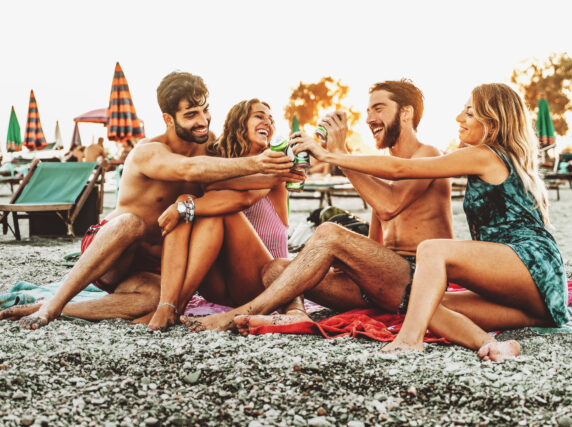
A bit of common sense goes a long way when wanderlove strikes. Meet new people in public places first, let someone back home know where you’re going, and trust your instincts if anything feels off. Be cautious about sharing too much personal information too quickly, including your full address and details about your travels home.
Romance scams aimed at tourists are sadly a real thing, and people in unfamiliar places can be more vulnerable than they realise. Looking after yourself doesn’t make the experience less romantic, it just makes it sensible. You can still have a brilliant time while keeping your wits about you.
Solo travellers in particular love this trend.

Wanderlove has been especially embraced by solo travellers. Going away on your own already opens you up to meeting people in ways you don’t when you’re travelling as a couple or a big group. You’re forced to talk to strangers at breakfast, ask for directions, chat at bus stops and end up in conversations you wouldn’t otherwise have.
Add in a sunny location, a few drinks and an evening with nothing else to do, and the spark for a romance is genuinely there. Plenty of solo travellers say their best stories from a trip involve a person they met along the way, romantic or otherwise.
Where wanderlove fits in the bigger picture

There’s something genuinely lovely about the rise of wanderlove. It’s a reminder that dating doesn’t have to happen on an app, in a city you already know, with someone two streets away. People can still meet across cultures, languages and time zones, and a small percentage of those meetings genuinely change lives. The rest just leave you with great memories and a few good photos.
Either way, going on holiday with an open mind and an open heart means you’re far more likely to bring home something memorable, even if it’s just a brilliant new friend and a slightly suntanned glow.