Stepping into a Pilates studio for the first time can feel incredibly empowering.
Of course, it doesn’t take long before you start wondering when all that intense core burning will actually show up in the mirror. It’s easy to get swept up in the hype and assume you need to live on a reformer machine or spend every single evening on a mat to get that lean, toned look.
However, pushing your body to the absolute limit seven days a week is usually a fast track to burnout and injury, not a stronger physique. Top instructors see people making this classic mistake all the time, and they’ll tell you that consistency matters way more than sheer exhaustion. To actually see your muscles change shape without wrecking your joints, you need to find the exact sweet spot that balances hard work with proper muscle recovery.
The short answer from the instructors
For the best results when it comes to toning your body, most Pilates instructors recommend doing it three to four times a week. That’s the sweet spot where you’ll genuinely start to notice changes in your strength, posture, and muscle definition. Of course, this number can vary from person to person depending on your overall health, fitness level and whether you’re doing any other types of workout alongside it.
The one thing every instructor agrees on, though, is that consistency is what really drives results. Strength is built through repeated effort and gradually challenging your body over time. Doing one intense session and then nothing for a fortnight won’t get you anywhere. It’s the steady, regular practice that quietly reshapes your body week after week.
Can Pilates really change how you look?

The big question everyone wants answered is whether Pilates can actually change the way your body looks, or whether the “Pilates body” is just clever marketing. The honest answer from instructors is that yes, Pilates absolutely can help support a more toned physique, but it works in a slightly different way to how you might expect.
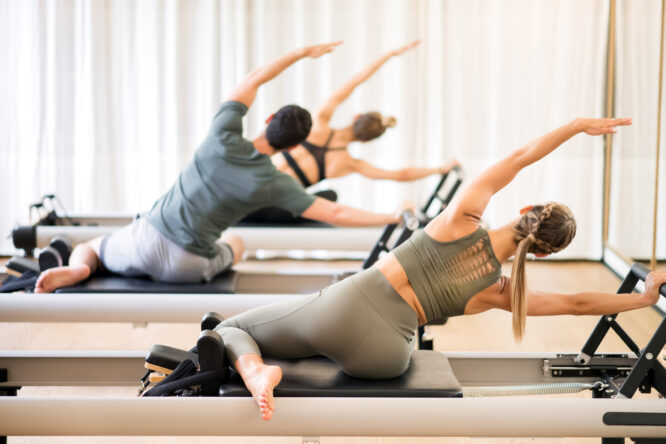
Pilates builds long, lean muscle tone without adding bulk, creating those elongated lines so many people are after. It does this through something called progressive overload, which is the same principle used in any strength training. In Pilates, the resistance comes from spring tension on the reformer machine, your own bodyweight, and carefully structured sequences of movements. Over time, repeatedly challenging your muscles this way builds genuine strength and definition.
The catch about toning and body fat
Here’s something worth being honest about. While Pilates genuinely strengthens and tones your muscles, the visible “toned” look also depends on your overall body composition. Toned muscle only shows when there’s not too much fat sitting on top of it, and Pilates alone isn’t a guaranteed fat-loss solution.
To get that lean, sculpted appearance, instructors are clear that Pilates works best when paired with a balanced diet and some cardiovascular exercise. So if seeing visible definition is your goal, think of Pilates as one important piece of the puzzle rather than the whole picture. Combine regular Pilates with sensible eating and a bit of cardio like walking, and you’ll see far better results than relying on Pilates by itself.
How often beginners should start
If you’re brand new to Pilates, don’t dive straight into five sessions a week. Most instructors recommend that beginners start with two to three sessions per week. This gives your body enough practice to learn proper form and build up foundational strength, while also allowing plenty of recovery time between sessions.
Beginners often feel muscles they never even knew they had, which means you’re likely to feel pretty sore at first. That soreness is completely normal, but it’s exactly why rest days matter so much. Your muscles don’t actually grow stronger during the workout itself. They grow during recovery, when your body repairs and rebuilds the muscle tissue. Pushing too hard too soon just leads to burnout and risks injury.
Stepping it up as you progress
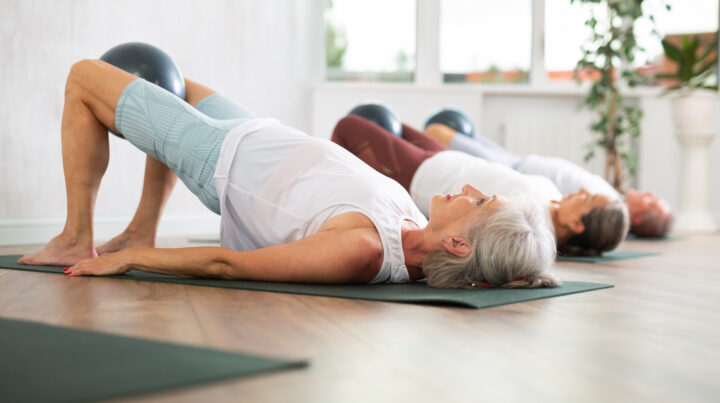
Once your body has adapted and you’ve got the basics down, you can start increasing how often you practise. For people with more ambitious goals, like building noticeable muscle definition and increasing endurance, four to five sessions a week can help accelerate your progress. The more frequently you challenge your muscles, the faster you build that lean tone.
For seasoned Pilates fans who want to deepen their practice and work towards more advanced moves, five to six sessions a week is achievable, as long as you build proper recovery into your routine. At this level, mixing up the type of sessions you do keeps things varied and stops any muscle group from being overworked. Pilates is actually designed not to overstrain or undertrain any particular area, which is part of why it can be done quite frequently when your body is conditioned for it.
When you’ll actually start to see results
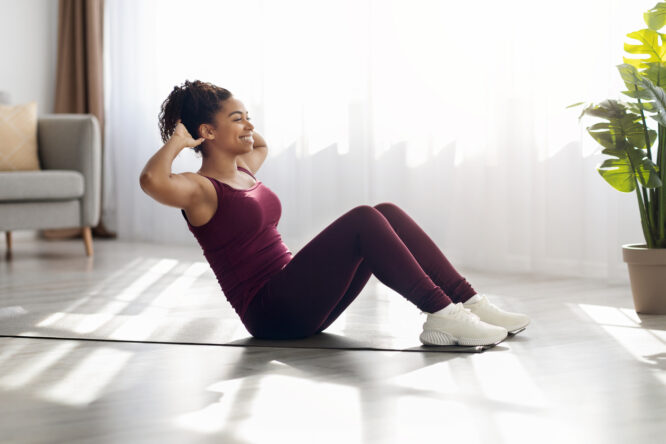
Patience is key because real change doesn’t happen overnight. Most people notice the first subtle differences within two to four weeks of consistent practice. These early changes tend to be things like improved posture awareness, reduced muscle tension and feeling a bit taller and more energised after sessions.
The more visible changes in strength and muscle tone usually start appearing around the six to eight week mark with regular practice. So if you commit to three or four sessions a week, you can realistically expect to see and feel a genuine difference in your body within a couple of months. It’s a brilliant motivator to keep going through those first few weeks when it might feel like nothing’s happening yet.
Can you do Pilates every day?
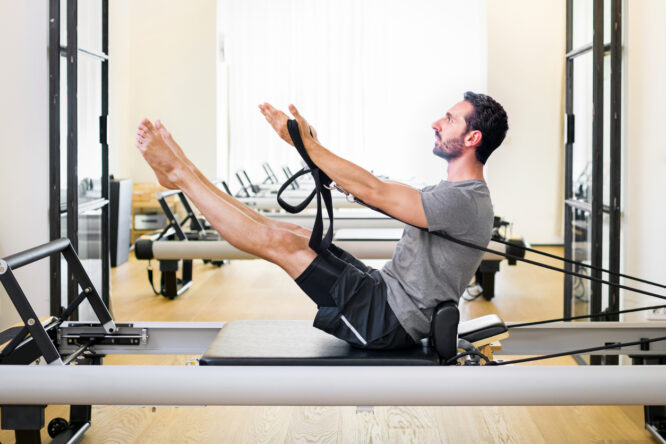
Pilates is gentle on the joints compared to high-intensity workouts, which means it can be done more frequently than something like heavy weightlifting. Some people do practise daily, and because Pilates is designed to balance the body rather than hammer one area, this is possible for conditioned practitioners who vary their intensity throughout the week.
That said, more isn’t always better. Even with a low-impact workout like Pilates, your body still needs recovery to avoid fatigue and overuse injuries. If you’re practising every day, the trick is to alternate harder sessions with gentler ones, and to listen carefully to what your body is telling you. Pushing through pain or exhaustion is never the answer.
The signs you might be overdoing it
Yes, it really is possible to do too much Pilates. Overtraining can lead to symptoms like persistent fatigue, a drop in performance, overuse injuries and even mental burnout. The telltale signs that you’re pushing too hard include feeling weaker rather than stronger, chronic muscle soreness that never seems to ease, and losing your motivation to practise altogether.
If you notice any of these creeping in, the sensible move is to cut back and prioritise recovery. Rest days aren’t a sign of weakness or laziness. They’re an essential part of the process, since that’s when your muscles actually repair and grow stronger. Building rest into your routine is just as important as the sessions themselves.
Why mixing in other movement helps

While Pilates is brilliant, instructors are keen to point out that it works best as part of a wider, active lifestyle rather than in isolation. Pairing it with plenty of everyday movement makes a real difference to your overall strength and endurance. Things like walking, yoga, barre, and even some light strength training all complement Pilates nicely.
This kind of varied approach keeps your body challenged in different ways and helps prevent the boredom that can creep in when you do the exact same thing every day. It also supports better overall fitness, which feeds back into making your Pilates practice stronger too. A well-rounded routine genuinely beats relying on any single type of exercise alone.