Hitting your 40s or 50s usually means juggling a massive amount of responsibility, from managing a career to looking after kids and ageing parents.

Most people just assume that feeling completely wiped out is just part of the bargain when you’re spinning that many plates. However, there’s a point where normal tiredness tips over into actual burnout, and it doesn’t always manifest in a major collapse. Instead, it sneaks up on you through things like constant irritability over tiny problems or a strange feeling of detachment from the stuff you used to love. Spotting the warning signs early is the best way to catch yourself before you completely run out of fuel.
This hits so many people in their 40s and 50s for good reason.
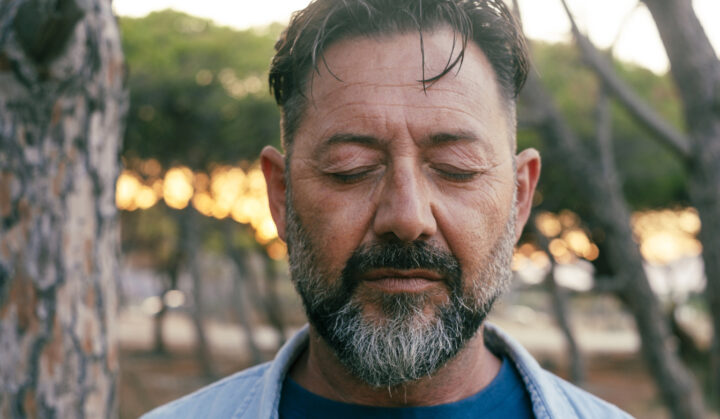
The pattern is so consistent that researchers now talk about a “midlife slump” or a “happiness U-curve,” where wellbeing dips slowly through early adulthood, bottoms out somewhere between the mid-40s and early 50s, and starts to recover later. The reason isn’t a mystery. By midlife, most people are trying to balance work, ageing parents, kids who still need them, mortgages, hormones starting to change, and the slow accumulation of decades of just pushing through.
Recent figures show nearly half of women in their 40s and 50s report feeling burned out at work, with one in three saying they’re emotionally exhausted even when their life “looks fine” from the outside. It’s not weakness, and it’s not a failure of resilience. It’s what happens when you spend 20 or 30 years overriding your body’s signals and your nervous system finally puts its foot down.
These are the red flags you need to be aware of for your own good.
1. The tiredness that doesn’t budge no matter how much you sleep

This is usually the first sign, and the one people are most likely to brush off. You can have a full eight hours, a lie-in at the weekend, even a proper holiday, and still wake up feeling like you’ve been hit by a bus. The exhaustion has nothing to do with the previous night’s sleep; it’s the cumulative weight of years of cortisol, stress, and emotional labour finally showing up in the body.
The trouble is that this kind of tiredness gets blamed on everything except burnout. People put it down to age, to hormones, to a bad mattress, to the kids. Real burnout fatigue has a specific quality. It’s the kind of tired where you can’t quite face the things you used to enjoy, where small tasks feel mountainous, and where rest doesn’t actually rest you. If you can’t remember the last time you genuinely felt energised, that’s worth paying attention to.
2. Feeling flat about things that used to make you happy and excited

This one catches people out because it doesn’t feel like a big deal at first. You haven’t lost your marbles, you haven’t had a breakdown, you’re just sort of going through the motions. The friends you used to love seeing feel like an effort. The hobbies that used to absorb you sit untouched. The holidays you used to look forward to feel like another thing to organise.
Therapists call this anhedonia, and it’s one of the clearest warning signs that burnout has gone further than just being tired. The flatness is a kind of protective shutdown, where your nervous system is trying to conserve energy by dialling down the bits of life that take emotional engagement. It looks lazy from the outside and feels like apathy from the inside, but it’s actually a major sign that something needs to change.
3. Becoming snappier and more irritable than usual

Midlife burnout doesn’t just show up as sadness. For a lot of people, it shows up as irritability. Small things start to feel enormous. Traffic, slow service, your partner leaving the cupboard door open, the children asking what’s for dinner for the third time. You find yourself snapping at people you love, then feeling guilty about it, then snapping again the next day.
The reason is that when your reserves are properly drained, you don’t have the bandwidth to absorb the normal friction of daily life. There’s nothing left in the tank to soften the edges. People around you often notice this change before you do because you’re so deep in it, you’ve started to think of yourself as someone who’s just become “less patient” with age. You haven’t. You’re knackered.
4. Brain fog and forgetting things you’d normally remember

This is the symptom that gets misdiagnosed more than any other. You walk into a room and can’t remember why. You stand at the cooker and forget what you were making. You lose your train of thought mid-sentence. You forget names you’ve known for years. In your 40s and 50s, this often gets blamed on perimenopause, menopause, or just “getting older,” and sometimes that’s part of the picture. However, chronic stress and burnout absolutely cause brain fog too because your body is so busy managing the stress response that it doesn’t have spare resources for memory and concentration.
Brain fog from burnout is a sign you’ve been running on adrenaline for too long, and ignoring it tends to make it worse. If you’ve been telling yourself you’re “just getting older,” it’s worth at least considering whether what you’re really doing is paying the bill on decades of overdrive.
5. Relying on small but unhealthy habits to get through the day

This is one of the sneakier signs. You notice you’re reaching for a glass of wine every night to “switch off.” You’re getting through more coffee than you used to. You’re scrolling on your phone for an hour after you should be asleep. You’re online-shopping more than you can really justify. You’re eating in a way that doesn’t feel quite right.
None of these things look like burnout on their own, but when several of them creep in together, they’re often the body’s way of self-soothing because the proper resources for emotional regulation are exhausted. Substance use, food, screens, and spending all hit the brain’s reward system in ways that briefly take the edge off, and when you’re burned out, briefly is sometimes all you can manage. The pattern is more important than any individual habit. If you’re using several small coping crutches just to function, that’s an alarm worth listening to.
6. The sense that you’ve lost yourself somewhere along the way

This is the deepest one, and the hardest to put into words. People in midlife burnout often describe a vague but persistent feeling that they don’t quite recognise themselves any more. The version of you who had goals, opinions, hobbies, energy, and a sense of who you were has somehow faded into the background, replaced by someone who just keeps the show running. You can’t remember what you used to enjoy. You can’t quite picture what you want from the next 10 years.
You’re so identified with your roles, the parent, the partner, the worker, the carer, that the actual person underneath has gone a bit quiet. Therapists describe this as a kind of identity erosion, and it’s part of why midlife burnout is sometimes confused with a midlife crisis. The difference is that a midlife crisis usually involves big external changes, while midlife burnout is a slow, internal disappearing act. Both deserve attention, but they often need very different kinds of help.
The bit about hormones nobody mentions enough

For women particularly, midlife burnout overlaps significantly with perimenopause and menopause, which can muddy the picture. The fatigue, the brain fog, the mood swings, the sleep disruption, the irritability, all of these can be hormonal as well as burnout-related. A comprehensive blood test, including a full thyroid panel, sex hormones, cortisol, vitamin D, B12, and iron, can pick up issues that get missed in a standard GP appointment.
Burnout and hormonal change are different problems, but they often coexist, and treating one without the other rarely fixes things. If you’ve been feeling like this for months and nothing’s changed, please don’t try to self-diagnose. Get proper bloods done and have a real conversation with someone who’ll take the time to look at the whole picture.
What to actually do about it

The first step is naming what’s happening. You can’t fix something you’re calling “just stress.” Once you’ve recognised that you’re properly burned out, the help available ranges from lifestyle changes to therapy to medical support, depending on how deep you’re in. The basics still apply, even though they sound boring. Get your sleep sorted as a priority because nothing else really works without it.
Cut back on the small habits that are dulling the edge but not actually helping. Move your body regularly, but kindly. Eat properly. Get sunlight. Spend time with people who don’t drain you. Therapy is genuinely useful here, particularly the kind that helps you look at why you’ve been running yourself into the ground in the first place. For some people, medication is the right call, too.
If you or someone you know is struggling with their mental health as a result of burnout, you don’t have to suffer in silence. You can reach the Mental Health Helpline daily between 10 a.m. and 10 p.m. at 0800 0119 100. Samaritans also has a helpline available 24 hours a day at 116 123.