We’ve all had that moment where a quick snack turns into an empty packet before we’ve even finished the intro of a show.

It’s easy to blame a lack of willpower, but the truth is that these snacks are designed to bypass our natural “full” signals entirely. Scientists and food engineers spend years perfecting the exact crunch, saltiness, and sugar hit that keeps the brain’s reward system lighting up like a Christmas tree.
These ultra-processed foods aren’t just convenient; they’re built to be addictive, using a specific chemistry that makes it almost impossible for your body to say enough is enough. Peeling back the curtain on how these products are made reveals why the deck is stacked against us from the very first bite.
What ultra-processed foods actually are
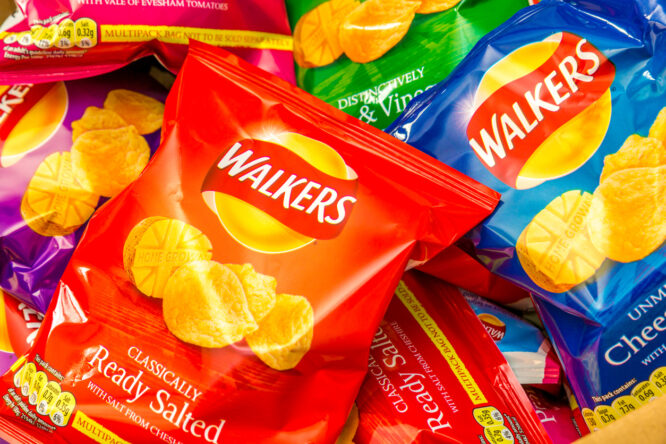
Ultra-processed foods are the stuff in the supermarket with the long ingredient lists full of words you’d never use in your own kitchen. Crisps, biscuits, fizzy drinks, sweets, ready meals, breakfast cereals, sausages, sliced bread, ice cream, frozen pizzas, sauces in jars, and most of the snacks aimed at children.
They’ve been made in a factory using ingredients that have been broken down, recombined, and pumped full of things like added sugars, hydrogenated oils, maltodextrin, flavour enhancers, thickeners, and colourings. The food might look similar to something you could make at home, but the way it’s been put together is completely different.
More than half of the calories the average person in the UK eats now come from ultra-processed foods, which is a properly staggering number when you think about it.
The bit nobody likes to talk about

Here’s the thing the food industry doesn’t shout about: a lot of these products aren’t accidentally hard to stop eating. They’ve been engineered to be. Food companies have spent decades, and millions of pounds, working out exactly how to make their products as moreish as possible.
They’ve tested combinations of sugar, salt, and fat to find what’s called the “bliss point,” which is the perfect ratio of those three things that makes your brain light up and want more. They’ve worked out the right crunch, the right melt-in-the-mouth texture, and the right speed at which the food releases its flavours so you keep reaching for the next bite without thinking. None of this is accidental.
How they hijack your brain

The reason ultra-processed foods feel so hard to stop eating is that they actually mess with the part of your brain that decides when you’ve had enough. Normal foods, like an apple or a piece of chicken, send signals to your brain saying you’re getting full, so you naturally stop eating. Ultra-processed foods short-circuit that system.
The combination of fast-acting sugars and fats gets to your brain so quickly that the satiety signal, the one that tells you to put the fork down, doesn’t kick in properly. By the time it does, you’ve eaten far more than you intended. Researchers have actually compared the way these foods affect the brain to the way nicotine affects a smoker’s brain, and the similarities are uncomfortably close.
The tobacco industry connection most people don’t know about

This is the bit that should make everyone sit up. In the 1980s and 1990s, when smoking laws started getting tighter, the big tobacco companies didn’t just give up. They bought food companies. Philip Morris bought Kraft. R.J. Reynolds bought Nabisco. Suddenly, the people who had spent decades working out how to make cigarettes maximally addictive were in charge of designing biscuits, snacks, and ready meals. They brought all of that knowledge with them.
The way ultra-processed foods deliver their hit of sugar and fat, the way they’re packaged to be eaten quickly, and the way they’re marketed to children, all of it borrows directly from tobacco industry playbooks. Researchers have only recently started naming this out loud, and it’s why some experts now genuinely consider ultra-processed food addiction to be a real condition.
Why willpower isn’t really the issue

One of the cruellest things about how ultra-processed foods work is that people end up blaming themselves for not being able to stop eating them. They think they’re greedy, weak, or lacking self-control. The truth is much simpler. These foods are designed by teams of scientists, food technologists, and marketing experts, all working full-time to make you eat more of them.
Your willpower, fighting against that, is one person against a room full of professionals whose entire job is to get you to keep buying. It’s like trying to outrun a car. The system is rigged from the start, and the fact you struggle isn’t a moral failing, it’s the predictable result of an environment designed to make you struggle.
What the research is actually finding
The science on this has properly caught up in the last few years. A big review of 281 studies from 36 countries found that around 14% of adults and 12% of children show signs of being addicted to ultra-processed foods, using the same kind of scale used for substance addiction.
Other research has found that diets high in ultra-processed foods are linked to obesity, type 2 diabetes, heart disease, certain cancers, and even depression. A famous NIH study in 2019 took two groups of people and fed them either ultra-processed or unprocessed diets with the same number of available calories. The ultra-processed group ate about 500 calories a day more than the other group, without realising they were doing it. The foods were doing the work for them.
The textures and tricks that catch you out

Beyond the chemistry, there’s a load of physical engineering that goes into ultra-processed foods. They’re often soft, easy to chew, and quick to swallow, which means you eat them faster than your brain can register fullness. They’re calorie-dense but low in fibre, so they don’t fill you up. They dissolve in the mouth in a particular way that triggers your brain to want more.
Even the sound of a crisp packet opening and the satisfying crunch when you eat one have been studied and engineered. The whole experience, from picking up the packet to swallowing the last bite, has been designed to make you want to do it all again straight away.
Why this is especially bad for kids

Children are particularly affected by ultra-processed foods, and that isn’t an accident either. Their taste preferences are still developing, and the more sugary, salty, fatty foods they eat early on, the more those foods feel normal to them. Adverts for ultra-processed foods are heavily targeted at children, with cartoon characters, bright colours, and clever marketing designed to build brand loyalty from as young as possible.
It’s the same approach the tobacco industry used to use, before it became illegal. Once a child gets used to a certain level of sweetness or saltiness, real food can taste bland by comparison, which sets them up for a lifetime of struggle.
How to spot ultra-processed foods at the shop
The easiest test is to look at the ingredients list. If it includes things you’d never have in your own kitchen, like high-fructose corn syrup, hydrogenated oils, maltodextrin, emulsifiers, artificial flavours, or any list of words you can’t pronounce, you’re probably looking at an ultra-processed food. The longer and more unfamiliar the ingredient list, the more processed the product.
Foods marketed as “low-fat,” “high-protein,” or “contains whole grains” can still be ultra-processed, because those labels say nothing about how the food was made, just one specific aspect of its nutrition. Some healthy-looking foods, like flavoured yoghurts, granola bars, and shop-bought smoothies, can be just as processed as the obvious culprits.
What you can actually do about it

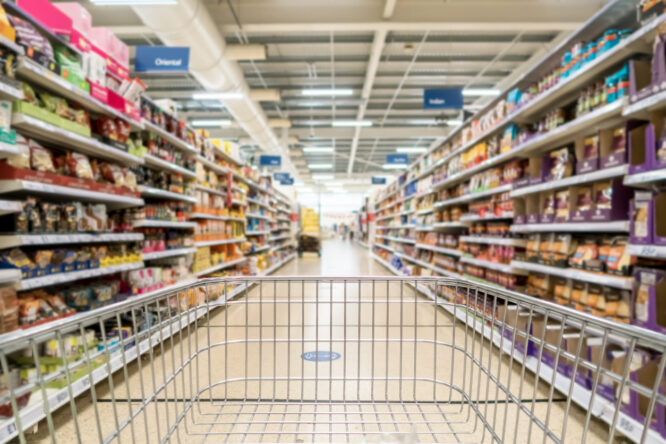
This isn’t about cutting out every ultra-processed food forever because that’s neither practical nor much fun. It’s about being aware of what’s going on so you can make a real choice rather than a compulsive one. Some sensible steps that experts recommend include shopping more around the outside of the supermarket where the fresher, less processed foods tend to live, and less in the middle aisles where the heavily packaged stuff is.
Cooking from scratch even just a few nights a week, however simple, makes a big difference. Reading labels with a more critical eye, especially on products marketed as healthy. Having proper meals so you’re not constantly snacking on engineered foods between them. And being kind to yourself when you do reach for the biscuit tin because the food was designed to make that happen, and beating yourself up about it doesn’t change anything.
The bigger conversation we’re not having

The deeper issue here is that ultra-processed foods are cheaper, more convenient, and more heavily marketed than fresh food. They’re easier to find, faster to eat, and last longer in the cupboard. For families on tight budgets, working long hours, or living in areas with limited fresh food options, ultra-processed foods aren’t a choice, they’re a necessity.
Some experts are now arguing that the conversation needs to move away from blaming individuals for their food choices and towards regulating the industry that’s engineered the problem in the first place. Things like restrictions on advertising to children, clearer labelling, and limits on how addictive food can be made are all being talked about, but progress is slow.
None of this is meant to make you feel guilty about enjoying a packet of crisps or a chocolate bar. The point is just to know what you’re up against. When you find yourself unable to stop eating something, it’s worth remembering that you’re not weak, you’re not greedy, and you don’t have a willpower problem.
You’re up against an industry that has spent decades figuring out how to make food impossible to stop eating, and the fact you sometimes can’t is exactly the outcome they were designing for. Knowing that doesn’t fix the problem, but it does change how you look at it, and that’s the first step in actually doing something about it.