We’ve all become obsessed with the little rings and progress bars on our wrists, treating our smartwatches like infallible medical devices that know our bodies better than we do.

We hit our 10,000 steps and assume we’ve nailed our fitness for the day, or we check our sleep score to decide whether we’re actually tired or not. But while these gadgets are great for motivation, it turns out that the data they’re spitting out is often more of a best guess than a scientific fact.
From accelerometers that mistake a vigorous arm wave for a brisk walk to heart-rate sensors that struggle to keep up during a heavy workout, the margins for error are much wider than the slick marketing suggests. Luckily, understanding where your tech is actually guessing helps move the focus back to how you actually feel, rather than letting a buggy algorithm dictate your health.
Step counts are useful, but not exact.

Most people rely on step counts as their main measure of daily activity, and they’re generally helpful for building consistency. But they’re not perfect. Smartwatches typically rely on arm movement to detect steps, which means certain activities don’t register properly.
Things like pushing a pram, carrying shopping bags, or even walking with your hands in your pockets can throw the numbers off. Research suggests step counts can be off by around 10% in normal conditions. That doesn’t make them useless, but it does mean they’re better treated as a rough guide rather than a precise total.
Calories burned is where things get most misleading.

Calorie tracking is one of the most trusted features, but it’s also one of the least reliable. Smartwatches estimate energy use based on algorithms, and those estimates can be majorly off.
In some cases, calorie burn can be over or underestimated by more than 20%, especially during activities like strength training or high-intensity workouts. The issue is that people often adjust how much they eat based on these numbers. If your watch says you’ve burned more than you actually have, it can quietly lead to weight gain over time.
Heart rate is accurate, but only up to a point.

Heart rate tracking tends to work well when you’re at rest or doing steady, moderate exercise. That’s where most smartwatches are at their most reliable, but once intensity increases, accuracy can drop. Movement, sweat, and even how tightly the watch is worn can affect readings. That’s important if you’re using heart rate zones to guide your workouts because small inaccuracies can mean you’re training harder or easier than you think.
Sleep tracking gives a picture, not the full story.
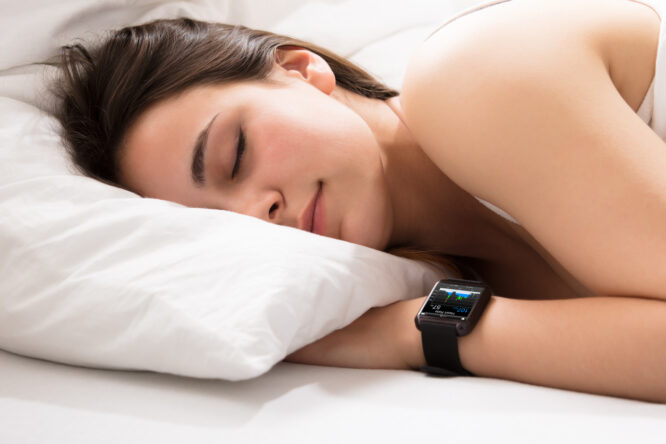
Sleep tracking is another area where smartwatches feel very precise, but the reality is more mixed. They can give a useful overview of how long you’ve slept and general patterns, but they can’t fully measure sleep quality in the way clinical tests can.
Most devices estimate sleep stages based on movement and heart rate, which means they’re making an educated guess rather than giving a perfect read. That’s why you might wake up feeling fine even if your watch says your sleep was poor, or the other way around.
Why the numbers can vary so much
A big reason for these inconsistencies is that smartwatches rely on sensors and algorithms rather than direct measurement. They’re interpreting signals like movement and blood flow, not measuring everything exactly. On top of that, personal factors like skin tone, body composition, and how the device is worn can all affect accuracy. Even two people doing the same workout can get noticeably different results from similar devices.
All that being said, smartwatches are still worth using.

Despite all of this, smartwatches aren’t useless. In fact, they’re still one of the best tools for building awareness and consistency. The key difference is how you use them. They’re far more reliable for spotting trends than giving exact numbers. If your step count is going up over time, or your resting heart rate is improving, that’s meaningful. It’s the direction that matters more than the exact figure.
How to use your smartwatch properly

The simplest way to get value from a smartwatch is to treat it as a guide rather than a scoreboard. Use it to stay consistent, not to chase perfect numbers. In other words, focus on patterns instead of daily totals. Look at your weekly activity, your general sleep habits, and how your body feels alongside the data. If something doesn’t match up, trust your body as well as the device.
Don’t give your watch too much weight, though.

The biggest mistake people make is using smartwatch data as a strict rule, especially with calories. Adjusting your food intake purely based on what your watch says can quickly lead to problems if the numbers are off. You should also avoid the mindset that every target needs to be hit exactly. Missing a step goal or seeing a lower sleep score doesn’t mean something has gone wrong, it just means the data isn’t perfect.
When the data actually becomes useful.

Smartwatch data becomes far more useful over time. Looking at trends across weeks or months gives you a clearer picture than anything you see in a single day.
That’s where it can help you spot real changes, like improving fitness, better sleep routines, or changes in overall activity levels. Used this way, it becomes a helpful tool rather than something that creates unnecessary pressure.
What this really comes down to.
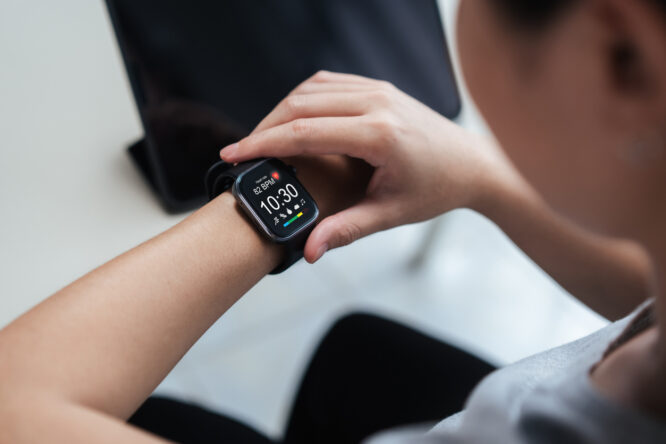
Smartwatches aren’t lying, but they’re not telling the full truth either. They’re giving you an estimate based on patterns, not a perfect measurement of your health.
The difference comes down to how you use that information. If you treat it as guidance, it can be genuinely helpful. If you treat it as exact, it can quietly lead you off track without you realising.