Saving money on everyday shopping isn’t just about cutting back anymore.

Most of us have a set routine when it comes to the big shop, usually involving a frantic dash around the aisles on a Saturday morning or a late-night trip when the cupboards are bare. You’ve probably noticed that by the time you reach the checkout, the total on the screen is a fair bit higher than you’d planned, no matter how many yellow stickers you managed to find.
While we often blame inflation for the rising cost of a trolley, the actual day you choose to grab a basket can make a massive difference to what’s left in your bank account. If you’re willing to move your supermarket run to a Tuesday, there are a few clever tricks and industry secrets that could help you get a lot more for your money.
Timing your shop can make a bigger difference than you think.

One of the simplest ways to lower your food bill is by changing when you shop rather than what you buy. Supermarkets usually reduce items in stages throughout the day, starting with small discounts in the morning and gradually increasing them as the day goes on.
By the late afternoon and early evening, typically between 4pm and 6pm, many items are reduced heavily to clear stock before closing. This is often when you’ll find the biggest discounts, sometimes up to 75 percent off, especially on fresh items that need to be sold quickly.
Evening shopping is especially useful for fresh bakery items.

If you regularly buy bread, pastries, or anything from the bakery section, going later in the day can make a noticeable difference to your weekly spend. These items are among the first to be reduced because they don’t keep well overnight. It’s common to see fresh bread and baked goods marked down in the evening, often by half price or more. Over the course of a week, that small change in timing can quietly save you a decent amount without needing to cut anything out.
The day you shop matters just as much as the time.

Many people don’t think about this, but retailers tend to adjust their sale pricing at the start of the week. After reviewing what hasn’t sold over the weekend, they often increase discounts to move stock more quickly. That’s why Tuesday is often one of the best days to find deeper reductions, especially in clothing, homeware, and non-food items. It’s when those updated discounts have filtered through to stores, giving you a better chance of finding real bargains rather than leftovers.
Reduced items aren’t always in one place.

It’s easy to assume all discounted products will be grouped together, but that isn’t always how supermarkets operate. While some stores do create a reduced section, many items remain on their usual shelves with a sticker added. In other words, the best deals can be scattered around the shop. Taking a bit more time to scan shelves properly can pay off, especially if you’re already walking through those aisles anyway.
Understanding food dates can stop you wasting money.

One of the biggest reasons people avoid reduced food is confusion around expiry dates. There’s a big difference between best before and use by, and knowing that can help you shop with more confidence. Best before dates are about quality, not safety, which means many items are still perfectly fine to eat after that point. Even use by items can often be frozen or cooked on the day and used later, which gives you more flexibility than you might think.
Food apps can unlock cheap or even free groceries.

Apps that focus on reducing food waste have become a popular way to save money, and they’re now widely used across the UK. Shops use them to sell off surplus food at a fraction of the usual price. You don’t always know exactly what you’ll get, which can feel like a bit of a gamble, but that unpredictability can also work in your favour. If you’re open to trying different things, it’s an easy way to cut costs while still getting good-quality food.
Multi-buy deals aren’t always the bargain they seem.

Offers like buy one get one free can look appealing, but they don’t always represent the best value. In some cases, you’ll find that cheaper own-brand alternatives work out better even without a promotion. It’s worth taking a moment to check the price per item rather than relying on the label. A deal only saves money if it fits into what you actually need, otherwise it can end up increasing your overall spend.
Supermarket layouts are designed to guide your choices.

Shops are carefully arranged to influence what you pick up. Higher-priced items are usually placed at eye level where they’re easiest to grab, while cheaper options tend to be placed lower down. Taking a second to look beyond what’s directly in front of you can lead to easy savings. The cheaper version of a product is often right there, just not in the most obvious position.
Loyalty schemes are becoming harder to ignore.

Supermarkets are increasingly putting their best deals behind loyalty schemes and apps. That means the price you see on the shelf isn’t always the lowest one available. Signing up can give you access to personalised offers, member pricing, and occasional freebies. It’s not perfect, but if you’re shopping there regularly anyway, it can make a noticeable difference over time.
The world food aisle is often cheaper for basics.

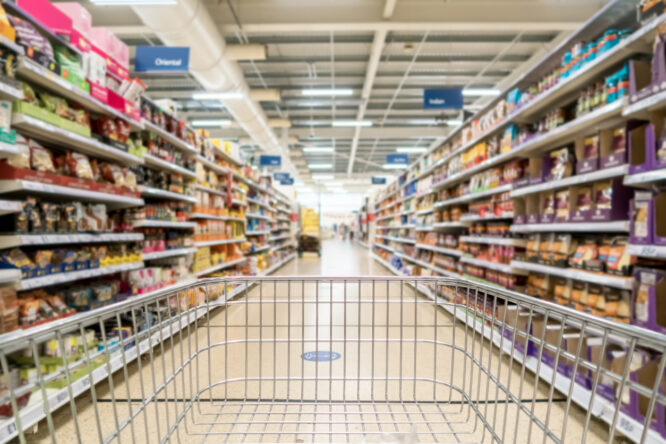
In larger supermarkets, the international section is one of the most overlooked areas when it comes to saving money. Items like rice, spices, and tinned goods are often sold in larger quantities for less. The ingredients are usually the same, but the packaging and branding are different. If you’re happy to switch, it’s an easy way to cut down your spending without changing your meals.
Stacking deals can stretch your budget further.

One of the most effective ways to save is by combining offers. This might mean using a coupon alongside a store discount or taking advantage of cashback deals at the same time. It takes a bit more planning, but the savings can add up quickly, especially if you’re doing a bigger shop or buying things you use every week.
Seasonal produce is usually the better value option.

Fruit and vegetables are generally cheaper when they’re in season, as they’re easier to source and don’t require as much storage or transport. Out-of-season produce often comes with a higher price tag. Buying what’s currently in season can help lower your food bill while also giving you fresher ingredients. It’s one of those simple swaps that makes a difference without feeling restrictive.
Local markets can offer a different kind of value.

Markets and smaller sellers can sometimes offer better prices, especially if you shop there regularly. The produce is often fresher, and there’s less time spent in storage compared to supermarket supply chains. In some cases, you may also come across surplus produce being sold cheaply. Building a bit of a relationship with local sellers can open up more opportunities to save over time.
Charity shops reward consistency more than luck.

When it comes to clothing and household items, charity shops can be one of the best places to find bargains. The key is going regularly rather than expecting to find something on a one-off visit. Midweek tends to be the best time, especially around lunchtime or early afternoon, when new stock has just been put out. Going often increases your chances of finding something worthwhile.
Being flexible makes saving easier.
Going into a shop with a fixed list can sometimes limit your chances of finding better deals. Being open to alternatives makes it easier to take advantage of what’s available. Whether it’s switching brands, trying something new, or picking up a reduced item you hadn’t planned on, small changes like that can build into noticeable savings over time.