A growing number of young people in the UK are starting to rethink what “career” actually looks like, and artificial intelligence is a big part of that change.

What once felt like something happening quietly in the background is now shaping real decisions about careers, degrees, and long-term plans. For Gen Z in particular, the question isn’t just what job they want, it’s whether that job will still exist in the same form a few years from now. With rising rent, higher bills, and a tougher job market already making life feel less predictable, AI is adding another layer of uncertainty that people can’t ignore.
AI is already changing what “safe” work looks like.

There’s been a noticeable change in how younger workers talk about stability. Jobs that once felt reliable, like admin roles, customer service, marketing, and even parts of tech, are now being looked at more carefully. The reason is simple. AI tools are already being used in these areas to handle tasks that used to require a person.
That doesn’t mean these jobs are disappearing overnight, but it does mean they’re changing. Fewer entry-level roles, higher expectations, and a different set of skills are becoming the norm. For someone just starting out, that makes it harder to know where to begin and what path is actually worth committing to.
Getting a foot in the door is starting to feel even harder than before.

One of the biggest concerns isn’t long-term job loss, it’s how people even get started. Entry-level roles have always been the stepping stone into a career, but many of those roles involve tasks that can now be partly automated.
That change doesn’t remove the need for people entirely, but it can reduce the number of openings and raise the bar for applicants. Instead of learning on the job, there’s more pressure to arrive with skills already in place, which makes the whole system feel harder to break into.
University is no longer seen as a guaranteed safety net.

For years, the message in the UK was clear. Go to university, get a degree, and you’ll have better opportunities. That still holds true in many cases, but it doesn’t feel as certain as it once did.
With tuition fees, student debt, and a more competitive graduate market, people are asking harder questions. If the role you’re aiming for might change in a big way over the next few years, it’s reasonable to wonder whether the time and cost are still worth it.
There’s a growing pull towards work that feels harder to replace.

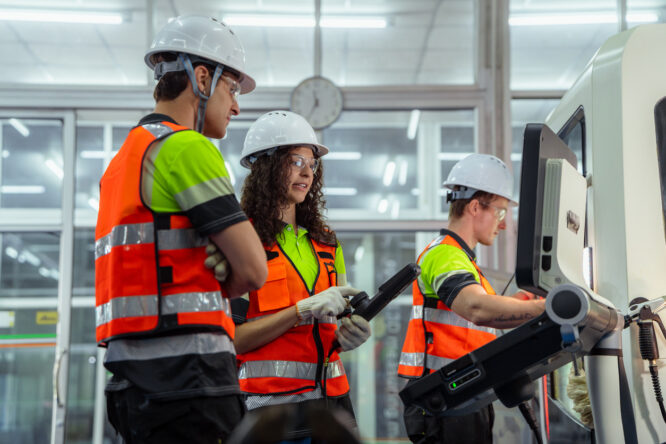
As a result, some people are starting to look more closely at careers that rely on human judgement, physical work, or real-world problem-solving. Jobs in healthcare, skilled trades, and engineering are being viewed through a different lens.
These roles come with their own challenges, but they also involve things that are harder to automate. Dealing with people, handling unpredictable situations, and making decisions in the moment are all areas where human input still matters in a big way.
People are responding to AI in very different ways.

Not everyone is reacting the same way to this development. Some young people are actively avoiding careers that feel heavily exposed to AI, choosing paths that seem more stable or grounded.
Others are doing the opposite. They’re leaning into it, learning how to use AI tools early, and building skills around them. For them, the logic is simple. If the way work is changing, it makes sense to understand it rather than try to avoid it.
Long-term career planning feels less straightforward than it used to.

One of the biggest changes is how uncertain everything feels. It’s not just about one job disappearing, it’s about entire industries changing in ways that aren’t fully clear yet. Because of that, more people are thinking in shorter timeframes. Instead of mapping out a career years in advance, there’s more focus on what works now and what skills might still be useful even if the job itself changes.
The idea of a “good job” is quietly changing.

There’s also been a change in what people actually want from work. It’s less about chasing titles or roles that sound impressive, and more about whether something feels steady and reliable. With the cost of living being what it is, a job that pays consistently and feels secure can be more appealing than one that looks better on paper but comes with more uncertainty.
This change is happening before the full impact has even been felt.
What stands out most is that these changes in thinking are happening before AI has replaced large numbers of jobs in a visible way. It’s the expectation of change that’s already influencing behaviour. Young people aren’t waiting to see what happens. They’re adjusting early, which is starting to shape the job market in subtle ways, even before the biggest changes have fully played out.