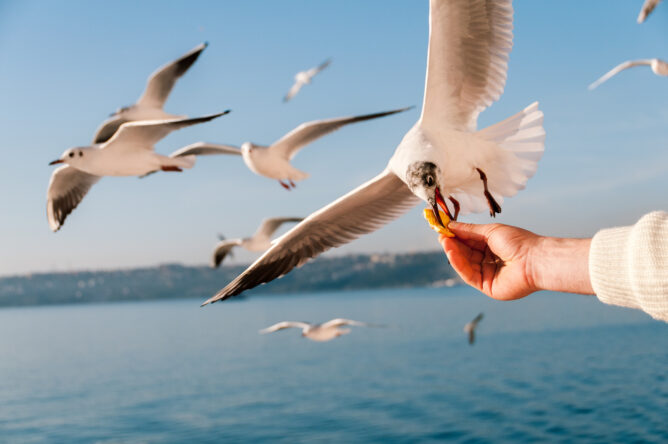
Anyone who’s ever tried to eat chips by the seaside in the UK knows how bold seagulls can be.
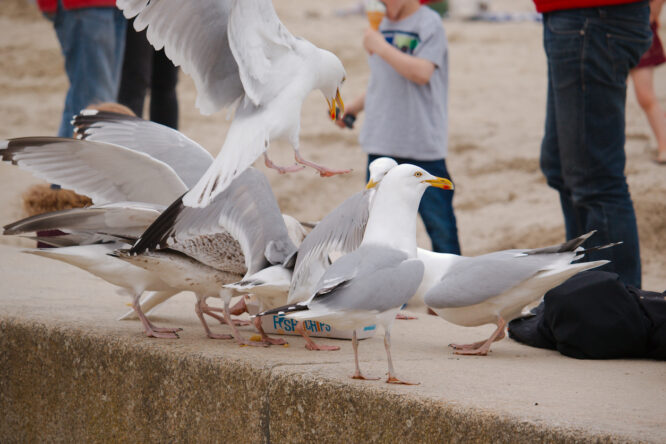
They don’t just hover anymore, they swoop, snatch, and sometimes don’t even wait for you to drop anything. It can turn a relaxed lunch into a bit of a battle, especially in busy coastal spots where the birds have clearly learned the routine. But new research suggests there might be a surprisingly simple way to put them off, and it doesn’t involve chasing them away or guarding your food like your life depends on it.
Seagulls have become experts at stealing food.
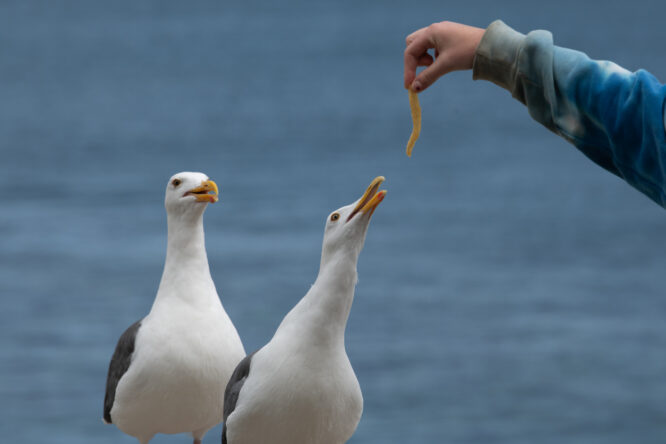
In many coastal towns, seagulls have adapted incredibly well to life around people, and that includes learning exactly how to grab food when the opportunity appears. They’re quick, confident, and often completely unfazed by crowds, which makes them harder to deter than people expect.
It’s not unusual to see them targeting chips, sandwiches, or even rummaging through bags if they’re left unattended for a moment. Over time, they’ve become far more direct and less cautious, which is why so many people feel like they have to stay alert just to eat in peace.
Their behaviour isn’t random, it’s learned.
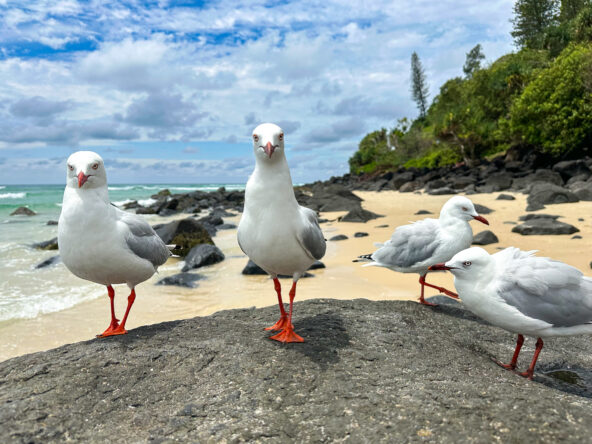
What makes the problem worse is that this behaviour isn’t just instinctive, it’s learned over time. Gulls quickly pick up on patterns, like where people gather to eat and when food is most likely to be left unguarded. Once they realise humans are an easy source of food, they keep coming back and refine their approach. That’s why some locations feel worse than others, as the birds there have had more chances to figure things out.
New research focused on simple ways to deter them.

A scientist from the University of Exeter began looking into this behaviour after seeing how common it had become, particularly in places like Cornwall where gulls are especially bold. Rather than trying to scare them off completely, the research focused on finding subtle ways to make gulls hesitate. The idea was to interrupt their behaviour just enough to stop them going straight in for food.
The solution could be as simple as drawing eyes.
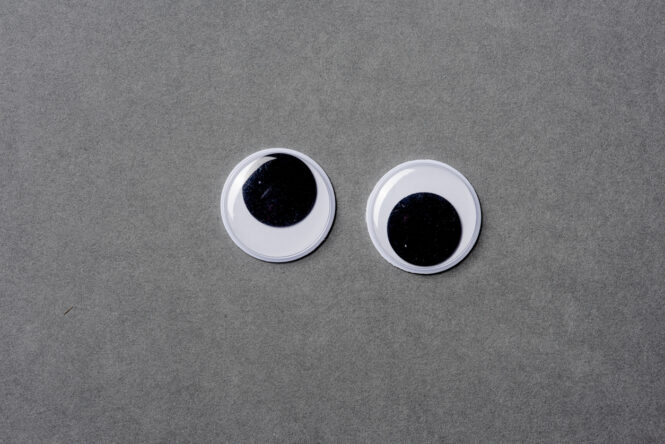
The study found that placing images of eyes on food packaging could help discourage gulls from approaching. Even something as basic as drawing a pair of eyes with a marker can have an effect. It might sound a bit odd, but it plays into how animals react to being watched. For some gulls, that simple visual cue is enough to make them pause or avoid the food entirely.
Gulls are highly aware of human attention.
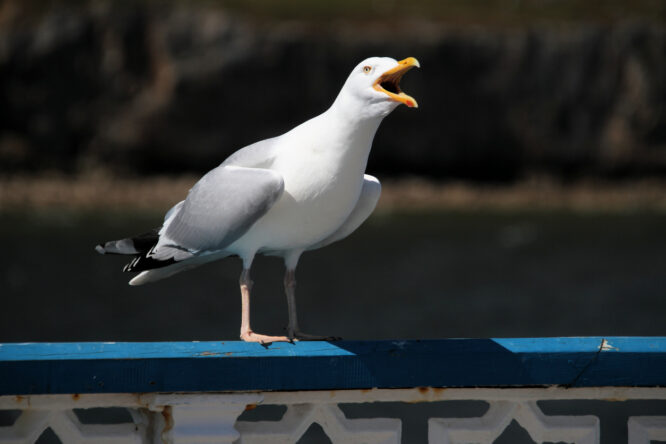
Previous research has shown that gulls behave differently depending on whether they think someone is watching them. When people make direct eye contact, gulls are more cautious and less likely to approach. This awareness is a big part of why the trick works. Even though the eyes on packaging aren’t real, they still trigger that same response, making the bird feel like it’s being observed.
The reaction is linked to basic survival instincts.
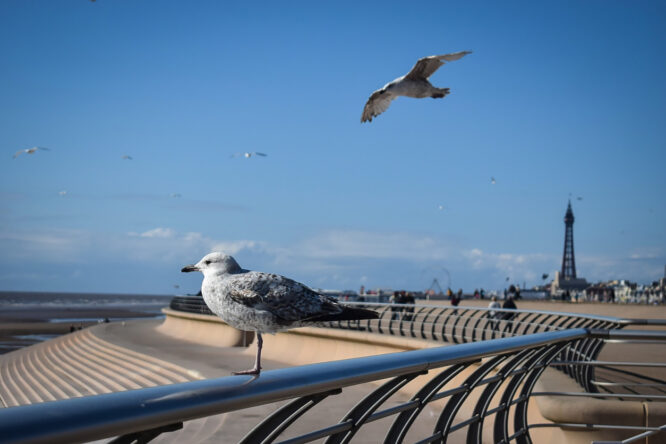
Across the animal world, eyes often signal danger. Many species instinctively react to eye-like patterns because they can indicate the presence of a predator. This is why eye markings appear in nature on insects, fish, and other animals. The goal is usually to make predators hesitate, and in this case, that same instinct is being used to deter gulls.
The study tested how gulls reacted in real situations.
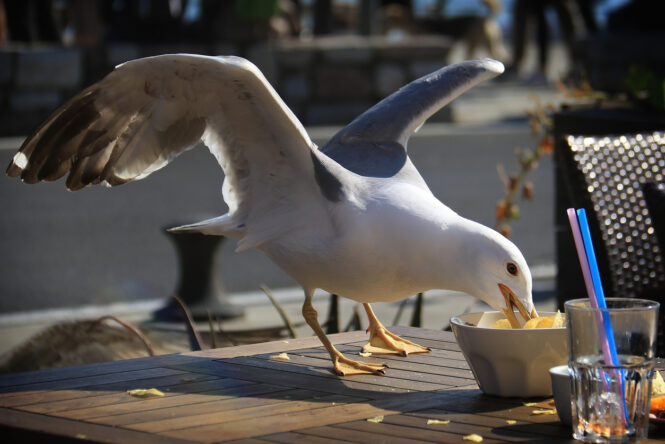
Researchers placed takeaway boxes on the ground, some with eye images and some without, and observed how gulls behaved when given the choice between them. The results showed a clear difference. Gulls were slower to approach the boxes with eyes and were less likely to peck at them, suggesting the visual cue was enough to disrupt their usual behaviour.
Not every gull reacted the same way.
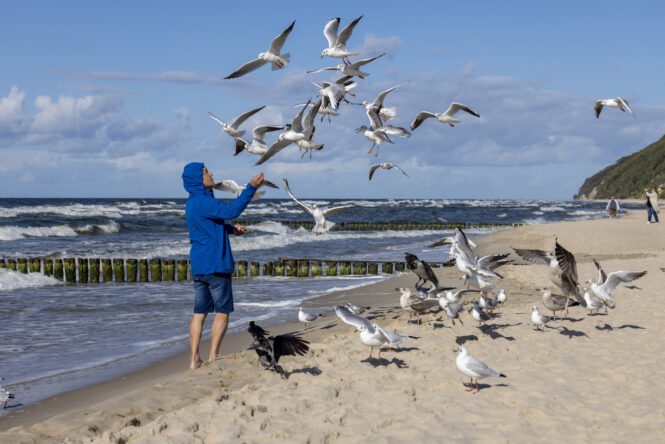
Interestingly, the response wasn’t identical across all birds. Around half avoided the boxes with eyes altogether, while the rest still approached them fairly quickly. This shows the trick isn’t perfect, but it’s effective often enough to be useful. In busy areas with lots of gulls, even reducing the number of attempts can make a noticeable difference.
Some gulls may eventually realise the trick.
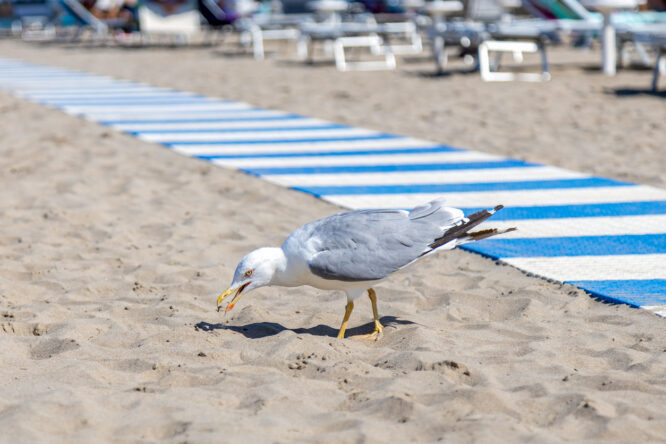
There’s always the possibility that over time, gulls could learn that the eyes aren’t real and stop reacting to them in the same way. However, the research suggests that at least in the short term, the effect holds for many birds. That hesitation can be enough to give people a chance to eat without being targeted straight away.
It could change how takeaway food is packaged.
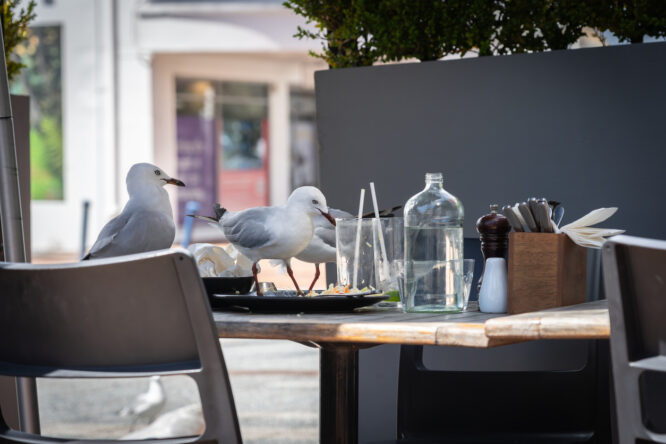
The idea has already sparked interest beyond the research itself. There’s potential for takeaway packaging to include eye designs as a built-in deterrent. If adopted widely, it could become a simple and low-cost way to reduce food theft in coastal areas without needing constant intervention.
It highlights how adaptable these birds have become.
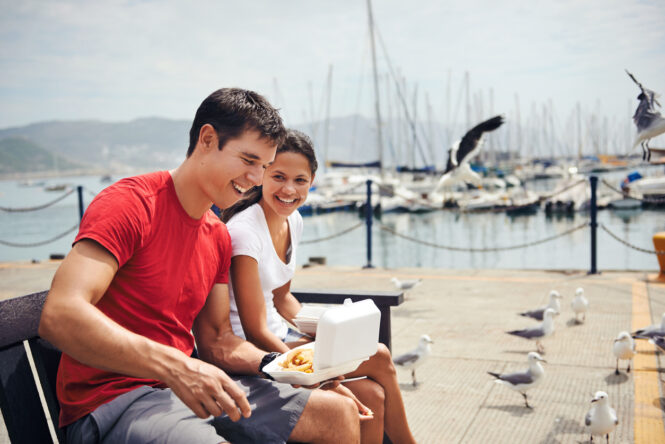
Seagulls aren’t just opportunistic, they’re highly adaptable. Their ability to learn from human behaviour is a big part of why this has become such a common problem. Understanding how they think and react is key to managing that behaviour, which is exactly what this kind of research is trying to do.
Small changes can sometimes work better than big ones.
What makes this approach stand out is how simple it is. There’s no need for complicated deterrents or constant effort to keep gulls away. Instead, it’s about making a small adjustment that taps into natural instincts. In many cases, that’s enough to change behaviour without needing anything more extreme.
It won’t replace common sense, but it helps.
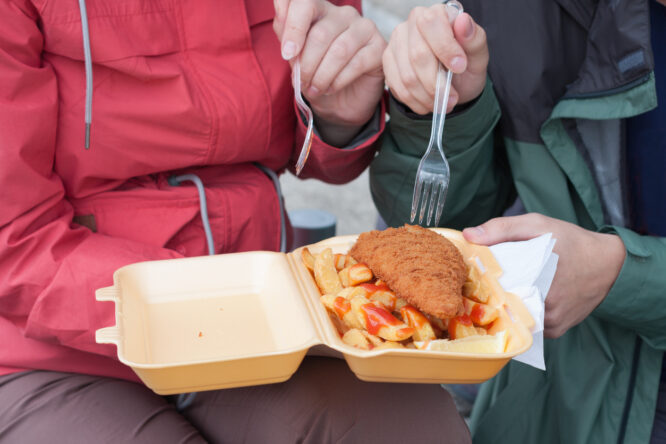
Of course, this doesn’t mean you can leave food unattended and expect it to be completely safe. Gulls are still opportunistic and will take a chance if it’s there, but combining simple awareness with tricks like this can reduce how often you’re targeted, especially in areas where gulls are known to be aggressive.
It’s a practical way to deal with a familiar problem.
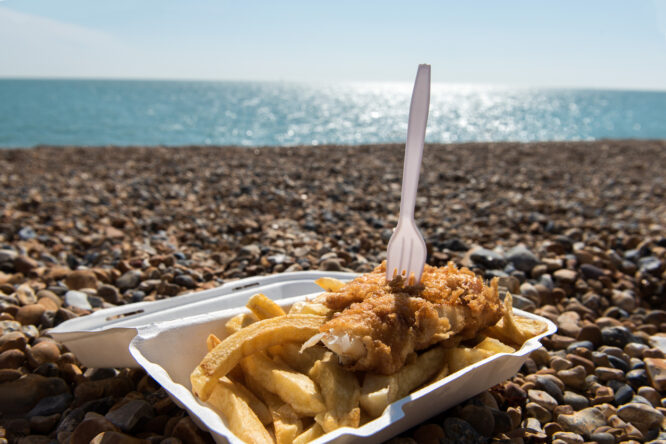
Seagulls aren’t going anywhere, and their behaviour is unlikely to change anytime soon. They’ve adapted too well to life around people, especially in coastal towns. However, small, practical ideas like this offer a way to manage the problem. It’s easy to try, costs nothing, and might just give you enough of an edge to enjoy your food without having to fend off a dive-bombing gull.