Logic is really just a test of whether you can stop your brain from taking the easy way out.
We mostly cruise through life on autopilot, but these 20 questions are designed to snag on those mental shortcuts we use without a second thought. You’ll probably look at the first few and think they’re a doddle, but that’s exactly when the traps start appearing. Getting a score of 12 or more is a genuine sign that you’re capable of unpicking a problem rather than just guessing. If you think your reasoning is as sharp as you say it is, this list is the ultimate reality check.
1. How many months have 28 days?

This is the ultimate opener because it plays on how we categorise the calendar. Most people have a specific knee-jerk reaction to this number because of how we’re taught about the months from a young age. It’s a test of whether you can move past the most famous association and actually look at the 12 months as a whole.
2. You overtake the person in second place. What position are you now?

Our brains tend to overcomplicate rankings the moment we imagine ourselves in a fast-moving scenario. It’s remarkably easy to lose track of the actual order of the pack when you’re focused on the act of passing someone. This is a pure test of your ability to visualise a simple sequence without getting ahead of yourself.
3. A man lives on the 10th floor but only takes the lift to the 7th, then walks. Why?
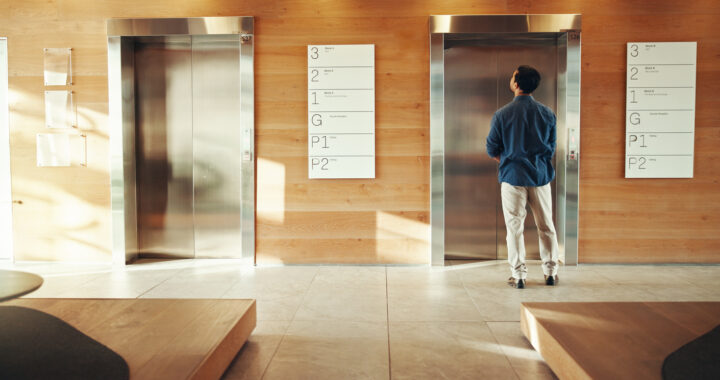
This scenario has stumped people for decades because it seems to defy basic logic. Most people start inventing elaborate backstories or technical failures to explain the man’s behaviour. To get this right, you have to ignore the “why” for a second and look at the physical mechanics of the situation itself.
4. Which is heavier: a kilo of feathers or a kilo of bricks?

This question relies entirely on the mental images we have of the objects involved. We have such a strong internal sense of what “heavy” and “light” feel like that it’s hard to let the actual words on the page lead the way. It’s a classic battle between your sensory instincts and the data right in front of you.
5. If you divide 30 by ½ and add 10, what do you get?
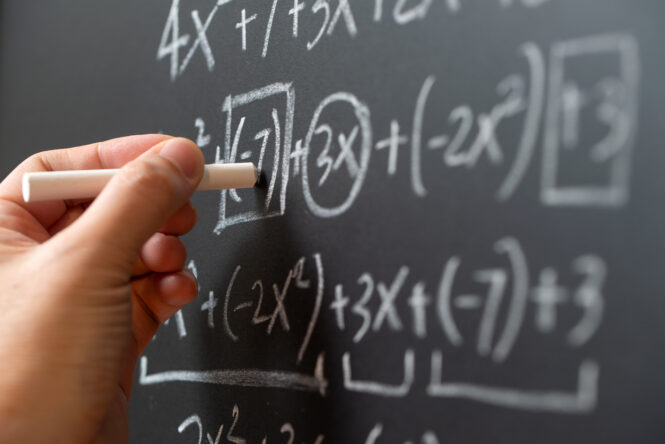
This is where many people’s confidence in their basic arithmetic starts to wobble. It looks like a primary school sum, but the way it’s written is a direct attack on the mental shortcuts we use for everyday calculations. If you’re not careful with how you process the division, you’ll end up with an answer that feels right but is miles off.
6. Rearrange “LISTEN” to form another word.

Anagrams are a direct test of pattern recognition. Your brain is so used to seeing this specific set of letters in this exact order that it becomes a struggle to see any other possibility. Solving it requires you to break the word down into its raw components and wait for a new familiar shape to emerge.
7. If two’s company and three’s a crowd, what are four and five?

This one lures you into a specific way of thinking by using a well-known phrase as the setup. Most people start looking for a clever or philosophical conclusion to the sequence, expecting a punchline that matches the tone of the intro. It’s a test of whether you can stay literal when the question is trying to lead you elsewhere.
8. A farmer has 17 sheep and all but 9 run away. How many are left?

The presence of two different numbers immediately triggers our “maths mode,” and we start looking for a sum to do. It’s a very common trap because we’re so conditioned to treat these types of questions as subtraction problems. The challenge is to stop doing the maths and just listen to the sentence.
9. What gets wetter the more it dries?

This sounds like a complete contradiction, which is why it often leads to a long silence while people try to figure out how something can perform two opposite actions at once. It’s a test of whether you can step away from abstract concepts and think about the actual physical objects you interact with every day.
10. You’re running a race and pass the person in last place. What position are you now?

This one is particularly sneaky because it follows the same logic as the second question, making you think you’ve already mastered the trick. It’s designed to catch people who have stopped being critical because they think they’ve spotted the pattern. It requires a proper “wait a minute” moment to see the reality of the situation.
11. What has keys but can’t open locks?
This is a classic test of how your brain handles fixed meanings. When we hear a word like “keys,” we’ve got a very specific mental image of a bit of metal that opens a door. To get past this one, you’ve got to break that association and think about other ways we use that exact same word in everyday life.
12. If you have one match and a candle, stove, and lamp, what do you light first?

This one plays on our natural tendency to start planning for the future. You’re looking at the three objects and trying to decide which one is the most important or which one will give you the most light. It’s a bit of a trick because it lures you into a survival mindset when the actual solution is much more immediate.
13. What has a neck but no head?
The phrasing here is designed to make you think about something living, or perhaps something a bit macabre. It sounds like a riddle from a fantasy novel, but the answer is sitting in your kitchen or your fridge right now. It’s a test of whether you can stop thinking biologically and start thinking about the shapes of the stuff you use every day.
14. If it rains at midnight, can it be sunny three days later?

This is a great example of how a bit of extra information can completely distract you. Your brain starts thinking about weather patterns, meteorology, and the likelihood of a storm clearing up in three days. To solve it, you’ve got to step back from the “weather” part of the question and look at the actual passage of time.
15. How many sides does a circle have?
If you’re looking for a mathematical formula or a complex geometric definition, you’re going to be sat there for a long time. This is a question of perspective. Most people get stuck on the zero vs infinite debate, but there’s a much more straightforward way to look at a physical object that isn’t about maths at all.
16. What comes once in a minute, twice in a moment, but never in a thousand years?

This one is extra confusing because it sounds like it’s describing a profound cosmic event or a bizarre glitch in time. You’ll probably find yourself trying to count seconds or looking for a historical pattern. The reality is that the answer has nothing to do with time itself, but everything to do with how we write about it.
17. If you drop a yellow hat in the Red Sea, what does it become?

The colours are a massive red herring here. Your brain sees “yellow” and “red” and immediately starts trying to figure out if they mix to make orange, or if there’s some kind of chemical reaction involved. It’s a test of whether you can ignore the fluff in a question and focus on the most basic, literal outcome of the action.
18. What has hands but can’t clap?

Just like the neck and keys questions, this relies on your brain’s refusal to see a word as anything other than a body part. We use these terms so often that we forget they apply to inanimate objects too. You’ve probably looked at the answer to this a dozen times today without even realising it.
19. Before Mount Everest was discovered, what was the highest mountain?

This is a classic logic trap that plays on how we perceive history and “discovery.” It sounds like a trivia question about world geography, and most people start racking their brains for the name of the second highest peak. To get it right, you have to separate what people know from what is actually true.
20. Which direction is the bus going if you can’t see the door?

This is a brilliant test of your awareness of the world around you. It isn’t about abstract logic; it’s about whether you’ve actually paid attention to how things are built in the UK. You have to visualise a standard bus stop and think about which side of the vehicle you’d normally be climbing onto.
Answers
1. All of them – every month has at least 28 days, not just February.
2. Second – if you pass the person in second place, you take their position.
3. He’s too short to reach the button – he can only press up to the 7th floor.
4. They weigh the same – a kilo is a kilo regardless of what it is.
5. 70 – dividing by a half doubles the number before adding 10.
6. Silent – the letters rearrange to form this common word.
7. Nine – it’s a play on words rather than a logical sequence.
8. 9 – all but 9 ran away, so 9 are left.
9. A towel – it gets wetter as it dries things.
10. Impossible – you can’t pass someone who is already in last place.
11. A piano – it has keys, but they don’t open locks.
12. The match – you need to light it before anything else.
13. A bottle – it has a neck but no head.
14. Yes – three days later does not specify an exact time of day, so the weather can certainly be sunny during the day.
15. Two – the inside and the outside are considered its sides.
16. The letter M – it appears in those words in that pattern.
17. Wet – the colour doesn’t matter, it simply gets wet.
18. A clock – it has hands but can’t clap.
19. Everest – it was still the highest, even before it was discovered.
20. Right – in the UK, bus doors are on the left side.