Overthinking often feels like a useful bit of due diligence, but there’s a point where it stops being thorough and starts being a massive drain on your time.

In a world that seems to be moving at 100 miles per hour at all times, the ability to make a call and stick to it is a genuine advantage that most people are struggling to maintain. These 20 questions are pretty lighthearted, but they’re also a quick way to gauge whether your brain is hardwired to trust your gut, or if you’re someone who gets stuck weighing up every possible outcome until the opportunity has passed.
In other words, it’s a sharp look at how you handle pressure and whether your decision-making process is actually helping you or just holding you back. If you want to know if you’re a truly decisive operator or just a professional procrastinator, these questions will give you the answer.
Question 1. Which is the only continent that lies in all four hemispheres?

This one sounds like a geography test, but it’s really about thinking through how the Earth is divided. Picture the equator and the prime meridian crossing through the map, and which landmass sits across both.
A) Asia
B) Africa
C) South America
D) Australia
Question 2. Which of these animals is not a mammal?
Most people go with instinct here, but it helps to remember what defines a mammal rather than guessing based on appearance. One of these breaks that rule completely.
A) Whale
B) Bat
C) Dolphin
D) Crocodile
Question 3. A clock strikes the hour by chiming once at 1:00, twice at 2:00, and so on. If it takes exactly 6 seconds for the clock to strike 3:00, how long will it take to strike 6:00?
This looks like an easy calculation, but there’s a bit more logic required to answer this question than you might think. Instead of multiplying everything, it’s important to think about the info we know for sure.
A) 9 seconds
B) 12 seconds
C) 15 seconds
D) 18 seconds
Question 4. Which letter comes next in this sequence: A, C, F, J, ?
It’s tempting to guess here, but the pattern is consistent. Focus on how far the sequence jumps each time rather than the letters themselves.
A) K
B) L
C) O
D) N
Question 5. What is always in front of you but can’t be seen?

This isn’t about knowledge at all. It’s about how you interpret the question. Try not to overcomplicate it and think in everyday terms.
A) air
B) the future
C) light
D) time
Question 6. Which country has the most time zones in the world?

This one catches people out because they think geographically. The correct answer comes from overseas territories rather than mainland size.
A) USA
B) Russia
C) France
D) China
Question 7. If you drop a red ball and a blue ball from the same height at the same time, which hits the ground first?

This sounds like a trick, but it’s grounded in basic physics. Ignore colour and think about what actually affects falling speed.
A) red ball
B) blue ball
C) both at the same time
D) depends on colour
Question 8. Which planet in our solar system spins the fastest?
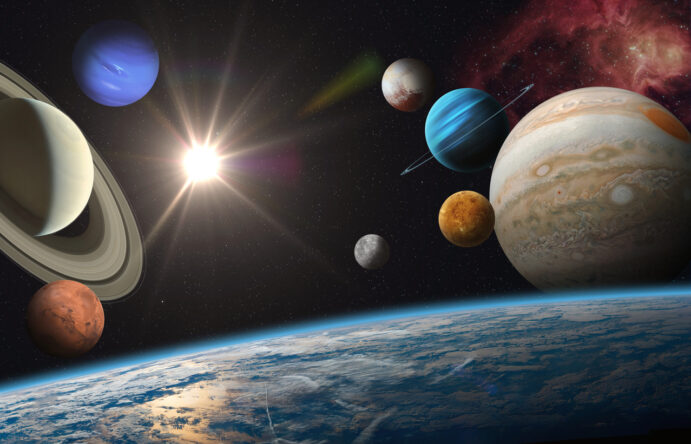
Most people assume it’s the largest or the closest to the sun, but that’s not how rotation works. Think about how long a full day takes on each planet.
A) Earth
B) Mars
C) Jupiter
D) Venus
Question 9. How many sides does a circle have?
This question plays on definitions. If you think in strict geometric terms, the answer isn’t as obvious as it first sounds.
A) 0
B) 1
C) infinite
D) 2
Question 10. Which word is spelled incorrectly in every dictionary?

This is a wording trap more than anything else. Read the question carefully instead of scanning it too fast.
A) incorrectly
B) dictionary
C) spelling
D) none of them
Question 11. What is the capital of Canada?
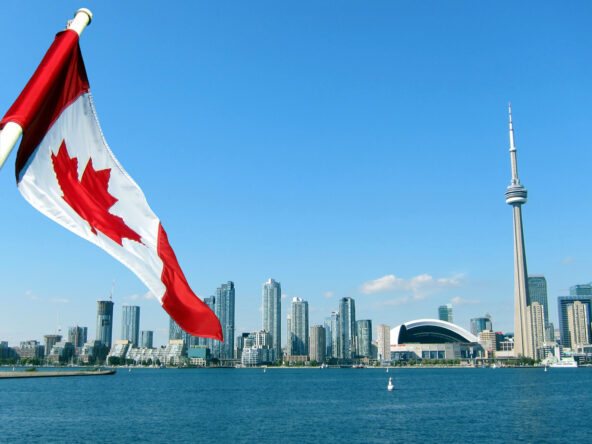
This is a straight knowledge question, but it often trips people up because they go with the most well-known city rather than the actual capital.
A) Toronto
B) Vancouver
C) Ottawa
D) Montreal
Question 12. Which of these words is the odd one out: triangle, circle, cube, square?

This one tests whether you spot the category split fast enough. Most of the options are flat shapes, but one of them belongs in a completely different group.
A) triangle
B) circle
C) cube
D) square
Question 13. Which metal is liquid at room temperature?

This is basic science, but it’s easy to blank if you’re rushing. Think about elements you’ve seen in thermometers or experiments.
A) iron
B) aluminium
C) mercury
D) copper
Question 14. If you have 5 apples and take away 3, how many do you have?
This is a classic wording trick. It’s not asking how many are left, it’s asking something slightly different. Read it properly before answering.
A) 2
B) 3
C) 5
D) 8
Question 15. Which direction does the sun rise from?

This is basic knowledge, but it’s included to see if you rush past simple questions and second-guess yourself unnecessarily.
A) north
B) south
C) east
D) west
Question 16. What is the square root of 81?

This is straightforward maths, but it rewards quick recall rather than working it out slowly step by step.
A) 7
B) 8
C) 9
D) 6
Question 17. Which gas do humans need to breathe to survive?
 Source: Unsplash
 This is basic science, but again, it checks whether you trust obvious answers or start doubting yourself.
A) carbon dioxide
B) oxygen
C) nitrogen
D) helium
Question 18. If you turn a map upside down, which direction is north?

This one is about perspective. The map changes orientation, but the real-world directions don’t change at all.
A) still north
B) south
C) east
D) west
Question 19. How many days are there in a leap year?

This is general knowledge, but it’s easy to hesitate if you start second-guessing instead of trusting what you already know.
A) 365
B) 366
C) 364
D) 367
Question 20. Which is the largest ocean on Earth?
This is a simple one to finish, but it still catches people who rush and mix up names under pressure.
A) Atlantic Ocean
B) Indian Ocean
C) Arctic Ocean
D) Pacific Ocean
Answers.
1. B) Africa. It crosses both the equator and prime meridian.
2. D) crocodile. It’s a reptile, not a mammal.
3. A) 15 seconds. Since there are 2 gaps between 3 strikes (taking 3 seconds per gap), there are 5 gaps between 6 strikes. The answer is 15 seconds
4. C) O. The jumps increase by one each time: +2, +3, +4, +5.
5. B) the future. It’s always ahead but can’t be seen.
6. C) France. Due to overseas territories, it has the most time zones.
7. C) both at the same time. Gravity affects them equally.
8. C) Jupiter. It has the shortest day, about 10 hours.
9. C) infinite. A circle has infinitely many points along its edge.
10. A) incorrectly. It’s always spelled that way.
11. C) Ottawa. Not the most obvious city.
12. C) cube. A cube is a 3D solid, while the others are 2D shapes.
13. C) mercury. Liquid at room temperature.
14. B) 3. You took 3, so you have 3.
15. C) east. The sun rises in the east.
16. C) 9. 9 × 9 = 81.
17. B) oxygen. Essential for human survival.
18. A) still north. Direction doesn’t change.
19. B) 366. One extra day in February.
20. D) Pacific Ocean. The largest ocean on Earth.
Score guide

16 to 20: You’re quick, confident, and not easily thrown off by wording.
12 to 15: Strong result. You’re thinking clearly and spotting most traps.
8 to 11: You’ve got the knowledge, but you may be second-guessing yourself.
0 to 7: You might be overthinking. Most of these were simpler than they looked.