Getting a decent internet connection when you’re living off the beaten track has always been a bit of a lottery, with plenty of people still stuck in the digital dark ages while cities get all the glory.
The government’s latest push to bridge that gap involves a new official broadband checker, designed to give a much clearer picture of exactly what’s available at your front door and when those elusive upgrades are actually going to arrive. It’s part of a wider move to speed up the rollout in rural areas, where the lack of a solid signal isn’t just a minor annoyance—it’s a massive hurdle for anyone trying to work from home or run a business.
Instead of just taking your provider’s word for it, a new tool is meant to put a bit of power back in your hands, showing you exactly where the investment is going and whether you’re finally about to move into the fast lane.
You can now check your address in seconds to see if faster broadband is coming.

The biggest update here is the new GOV.UK gigabit address checker, which lets you enter your postcode and instantly see what’s happening where you live. Instead of relying on patchy updates or guessing whether your area is included, you get a clear answer in seconds. It shows whether your property is already covered, part of a planned rollout, or not currently included, which is something people have been asking for years.
It also pulls together both government-backed rollout plans and commercial projects from telecoms providers, so you’re not just seeing one side of the picture. That means that even if your upgrade isn’t part of Project Gigabit, you might still be in line through private investment. It’s a small tool on the surface, but it clears up a lot of confusion that’s been hanging around broadband upgrades for a long time.
The rollout is speeding up fast, with hundreds of properties connected every day.

The pace of the rollout has picked up properly, with more than 750 homes and businesses gaining access to gigabit-capable broadband every day. That’s the fastest rate since the programme began in 2021, and it shows that things have moved beyond planning and into real delivery on the ground. For people who’ve been stuck waiting for years, this is where it starts to feel like something is actually happening.
When you look at it over a month, that adds up to tens of thousands of new connections, which starts to make a visible dent in the coverage gap. It’s also worth noting that this figure reflects confirmed delivery data, not just projections, so it’s based on what’s already been achieved. The scale of the rollout now is very different from the early stages of the programme.
Rural areas are finally being prioritised instead of overlooked.

Project Gigabit is focused on areas that commercial providers tend to avoid, mainly because they’re harder and more expensive to reach. These are often smaller villages, scattered communities, and places where installing infrastructure isn’t seen as financially worthwhile. Without intervention, many of these locations would be left behind for years, if not decades.
The government is stepping in with funding to make those upgrades viable, which changes the whole picture for rural Britain. It’s not just about fairness either, it’s about making sure those communities can access the same online services, job opportunities, and digital tools as everyone else. That gap has been very real, and this is an attempt to close it.
A £1.2 billion deal with Openreach is driving large parts of the rollout.
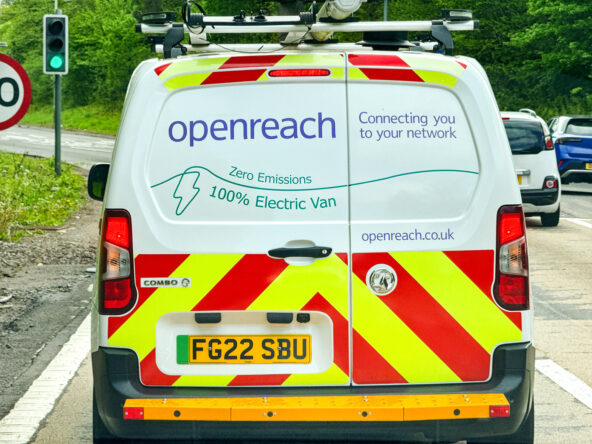
A major agreement with Openreach, worth up to £1.2 billion, is helping deliver full fibre broadband to more than 100 rural towns and villages across England and Wales. This isn’t a small pilot scheme, it’s a large-scale rollout with engineers actively working in multiple regions at once. It’s one of the key reasons the pace has increased so much recently.
Openreach already has a huge existing network and workforce, which makes it easier to scale up quickly compared to smaller providers. Their involvement means upgrades can be rolled out more consistently across different areas, rather than in isolated pockets. It also brings a level of coordination that’s been missing from previous broadband efforts.
Over a million more homes and businesses are already lined up for upgrades.

Beyond what’s happening right now, there’s a significant pipeline of future upgrades already agreed through existing contracts. More than a million additional premises are expected to receive gigabit-capable connections as these plans move forward. That gives a clearer sense of how much is still to come, rather than just focusing on current progress.
There are also more contracts expected to be announced in the coming months, which means the total number will likely grow even further. So even if your postcode doesn’t show anything yet, it doesn’t necessarily mean you’re being left out. In many cases, it simply means your area hasn’t been confirmed in the current phase yet.
The long-term aim is 99% coverage across the UK by 2032.

The government has set a target of reaching 99% gigabit-capable broadband coverage by 2032, which is a big step up from where things stand today. That level of coverage would bring most of the country in line with modern connectivity standards, including areas that have historically struggled to get even basic speeds.
It’s an ambitious target, especially given the challenges of geography and infrastructure in some parts of the UK. However, the current acceleration in rollout suggests there’s a serious push behind it. If progress continues at this pace, the gap between urban and rural connectivity could narrow far more quickly than many expected.
Faster broadband has a real impact on everyday life, not just download speeds.

Gigabit broadband allows multiple devices to run at once without slowing everything down, which matters more than ever in modern households. Streaming, video calls, gaming, and working from home all compete for bandwidth, and slower connections can struggle to keep up. With full fibre, those limits become far less noticeable.
For businesses, especially in rural areas, it can open up opportunities that simply weren’t possible before. Things like cloud services, online sales, and remote collaboration become much more reliable. It’s not just about convenience, it changes what people are able to do day to day, both at home and at work.
Mobile coverage is improving alongside broadband through new mast upgrades.

Alongside broadband improvements, mobile coverage is being expanded through the Shared Rural Network programme. So far, 123 masts have been upgraded or built to provide 4G coverage from all major operators. This includes 50 in Wales, 43 in Scotland, and 30 in England, showing a wide spread of investment.
These upgrades have extended 4G coverage across more than 4,000 square kilometres that previously had limited or no signal. To put that into perspective, that’s roughly the combined size of several major UK cities. Most of this work has involved upgrading existing infrastructure rather than building entirely new masts, which helps reduce visual impact on the landscape.
Some of the most remote areas are seeing coverage for the first time.

One of the clearest examples is the Scottish island of Islay, where a new 4G mast has recently gone live. Parts of the island previously had no reliable mobile signal at all, which made everyday communication far more difficult than many people on the mainland would expect. Even basic tasks like checking messages or using online services could be a challenge.
The new mast now provides coverage from all major operators, which makes a noticeable difference for residents and visitors alike. Popular spots that previously had no signal, including beaches and tourist areas, are now connected. It’s a reminder of how uneven coverage has been, and how much of a difference these upgrades can make.
Local businesses are already seeing practical benefits from better connectivity.

Improved connectivity is already helping businesses in rural areas operate more effectively. For example, visitors can now share photos, post reviews, and interact online while they’re still on site, rather than waiting until they return to areas with signal. That kind of real-time engagement can have a direct impact on visibility and customer reach.
Behind the scenes, it also improves communication with suppliers, staff, and customers, making day-to-day operations smoother. For smaller businesses, especially those reliant on tourism, these changes can make a real difference to growth and efficiency. It’s one of the more immediate benefits of better infrastructure.
If your area isn’t included yet, you can still influence future rollout plans.

If the address checker shows that your property isn’t currently covered, it doesn’t mean the situation is fixed. The tool can direct you to providers operating in your area, allowing you to register your interest in an upgrade. That might seem like a small step, but it can help demonstrate demand in places that providers are still evaluating.
When enough people express interest, it can influence decisions about where to expand next. Combined with upcoming Project Gigabit contracts, there’s still a good chance that more areas will be added over time. It’s not an instant fix, but it gives people a way to be part of the process rather than just waiting.
This rollout is quietly reshaping how the country stays connected.

While it might not grab headlines in the same way as other infrastructure projects, the expansion of high-speed broadband and mobile coverage is just as important. Reliable connectivity now underpins everything from work and education to healthcare and everyday communication. Without it, people are increasingly at a disadvantage.
What’s happening now is a gradual but meaningful upgrade to the country’s digital backbone, especially in areas that have been left behind. As more communities come online with faster, more reliable connections, the overall gap between regions should continue to shrink. It’s the kind of change that builds over time, but has a lasting impact once it’s in place.