If you’ve ever found yourself staring at a postcard and wondering if that crumbling castle is in Cornwall or the Cotswolds, you’re not alone.
We’re lucky enough to live in a country where you can’t throw a stone without hitting a bit of history, but it’s easy to get our wires crossed when everything from Roman ruins to Victorian piers starts looking familiar. It’s not just about the big hitters like Stonehenge or the Tower of London; the UK is packed with hidden gems that have a habit of moving around in our heads the moment someone asks for directions.
Whether you’re a seasoned road-tripper who knows every motorway service station by heart or you’ve not ventured further than the local high street lately, testing your knowledge of our own backyard is a proper bit of fun. Before you start planning your next bank holiday getaway, see if you can actually pin these famous spots to the map without having to reach for your phone.
Landmark 1
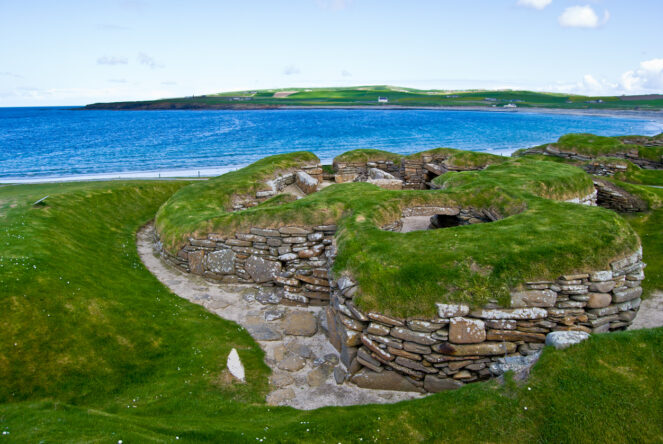
This ancient settlement is older than Stonehenge and the Egyptian pyramids, yet most people couldn’t tell you where it is. It was buried under sand dunes for thousands of years before a storm revealed it in the 1850s, and what was uncovered was remarkably intact. You can still see the stone furniture inside the houses, including beds and shelving, exactly where they were left.
Landmark 2
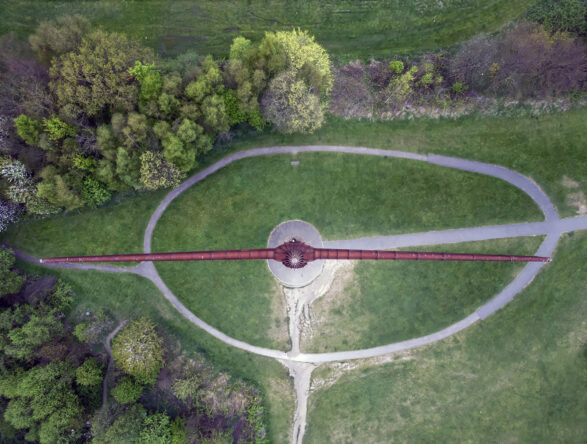
This enormous steel sculpture of a winged figure stands over 20 metres tall and stretches 54 metres wide, making it one of the largest sculptures in the country. It was created by artist Antony Gormley and has become a symbol of the region it watches over. Thousands of drivers pass it every day on the main road below without ever stopping to appreciate quite how big it actually is.
Landmark 3
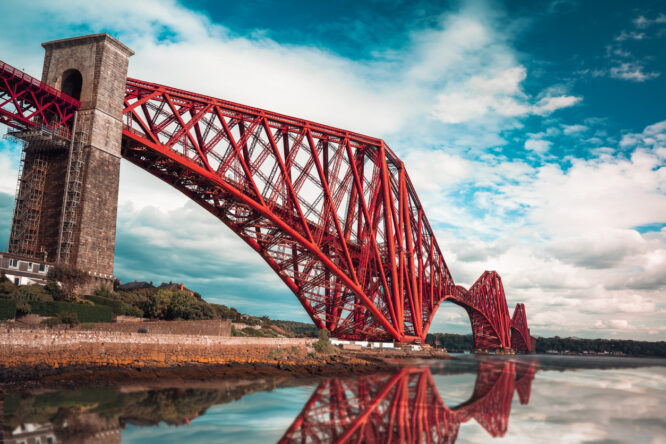
This Victorian railway bridge took seven years to build and was completed in 1890, and it’s been painted almost continuously ever since. A dedicated maintenance team keeps its distinctive red-brown steelwork looking sharp above the water below. It’s a UNESCO World Heritage Site and one of the most impressive feats of Victorian engineering still in regular use.
Landmark 4
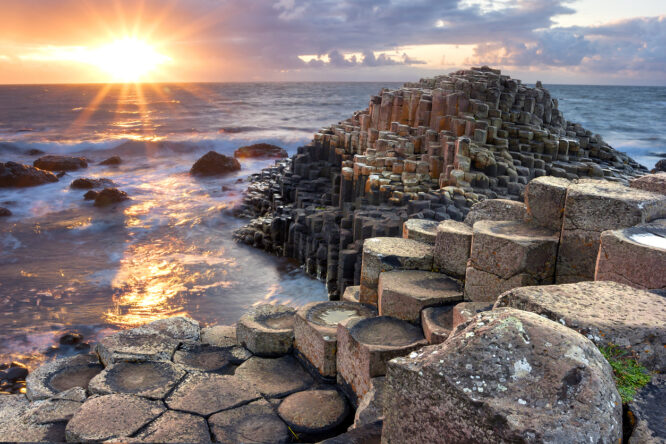
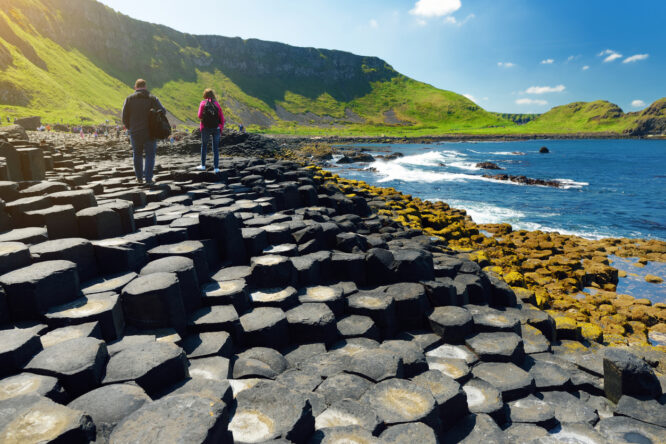
These interlocking basalt columns were formed by ancient volcanic activity around 60 million years ago, and there are around 40,000 of them in total. They fit together so precisely that it looks almost deliberate, which is exactly why the legends about them started. It’s been pulling in visitors and sparking folklore for centuries, and remains one of the most striking natural sights in the British Isles.
Landmark 5
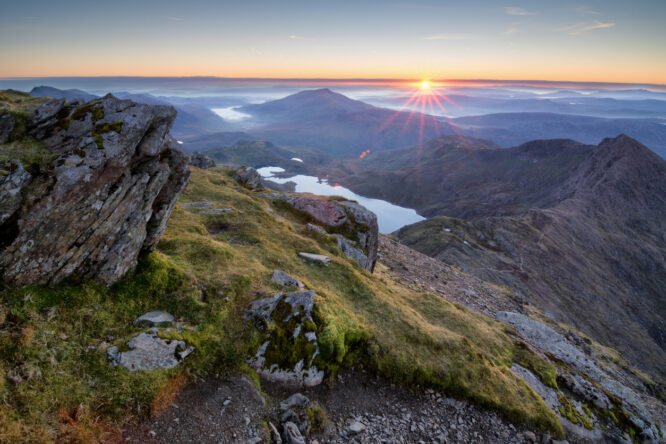
This is the highest peak in its country at 1,085 metres above sea level, and it attracts around half a million visitors a year. You can reach the top on foot via several well-worn routes, or take a mountain railway if the climb isn’t really your thing. On a clear day, the views stretch out over the sea and across to other peaks that seem impossibly far away.
Landmark 6
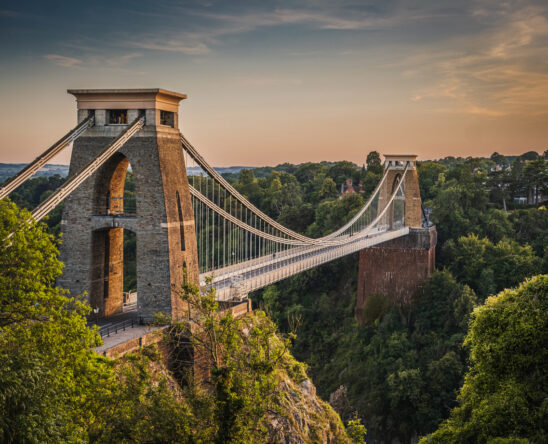
This elegant suspension bridge spans a dramatic gorge and was designed by Isambard Kingdom Brunel, though it wasn’t completed until after his death in 1864. It remains a working road bridge and one of the most celebrated examples of Victorian engineering in the country. Standing on it and looking down at the river far below is a genuinely dizzying experience.
Landmark 7
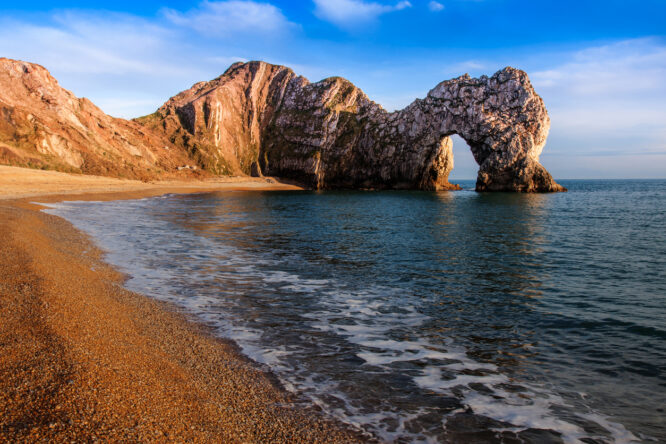
This natural limestone arch juts out from the base of dramatic coastal cliffs and frames a beautiful cove on the other side. It’s been shaped entirely by the sea over thousands of years and is one of the most photographed natural features on the British coastline. Getting to it requires either a steep coastal path or a short swim, which keeps it feeling like a proper discovery.
Landmark 8
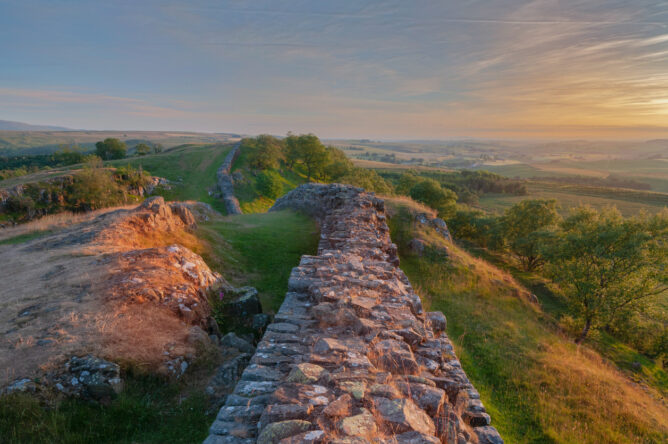
This ancient defensive fortification stretches for 73 miles and was built on the orders of a Roman emperor in the 2nd century AD. Large sections still stand today, and you can walk the entire length across some genuinely wild and exposed terrain. It’s one of the best-preserved examples of Roman infrastructure anywhere in the world.
Landmark 9
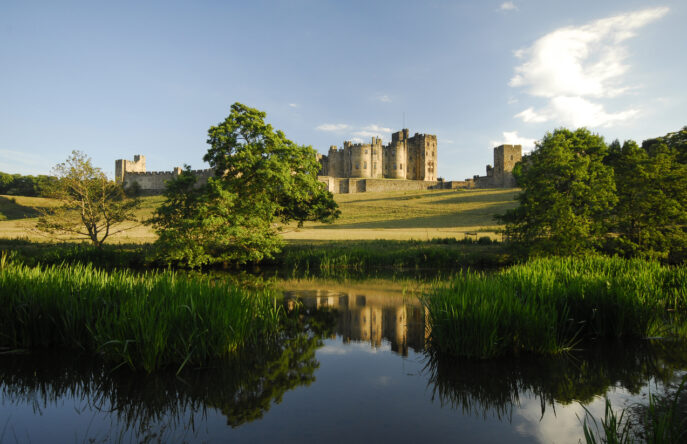
This medieval castle has been home to the same noble family for over 700 years and has appeared in some of the most famous British film and television productions. Its grounds and state rooms are open to visitors, and the castle grounds have a particularly impressive water feature. From a distance, it looks exactly like what you’d draw if someone asked you to picture a proper English castle.
Landmark 10
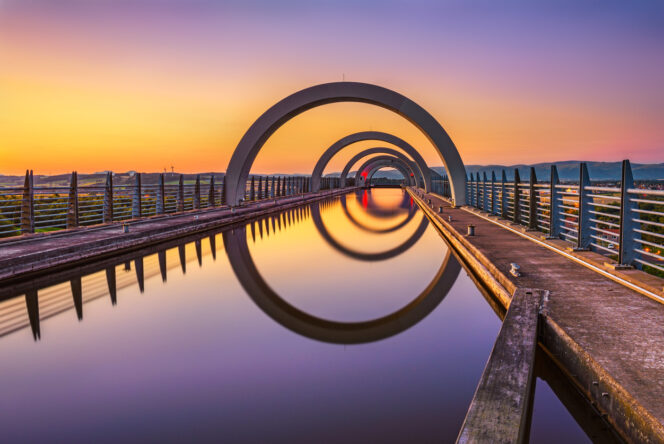
This rotating boat lift is one of the most unusual structures in Britain, designed to carry canal boats between two waterways sitting at very different heights. It turns through 180 degrees balancing the weight of the water in both gondolas, so it needs very little energy to operate. It opened in 2002 and quickly became one of the most visited engineering attractions in the country.
Landmark 11
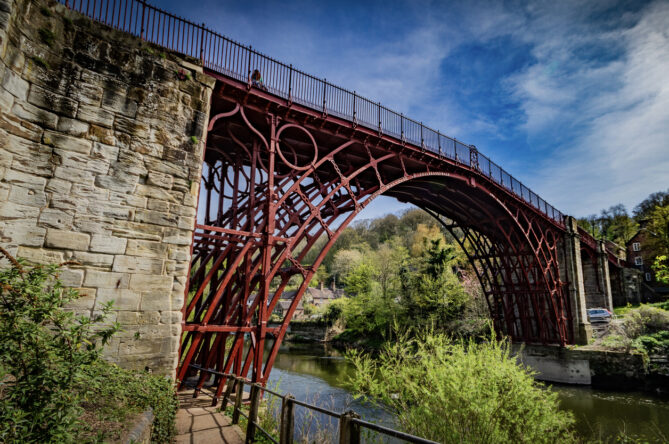
This bridge was the first in the world to be built from cast iron, completed in 1779 across a steep river gorge. It gave its name to the entire town that grew up around it, and the area became one of the birthplaces of the Industrial Revolution. It’s still standing and still crossable, which given its age feels quietly astonishing.
Landmark 12

This sprawling ecological attraction is built inside a series of giant geodesic domes that house plants and environments from across the world. The largest dome recreates a humid tropical climate, while others contain Mediterranean species, and the whole site sits inside a former quarry. It remains one of the most ambitious environmental projects Britain has ever built.
Landmark 13
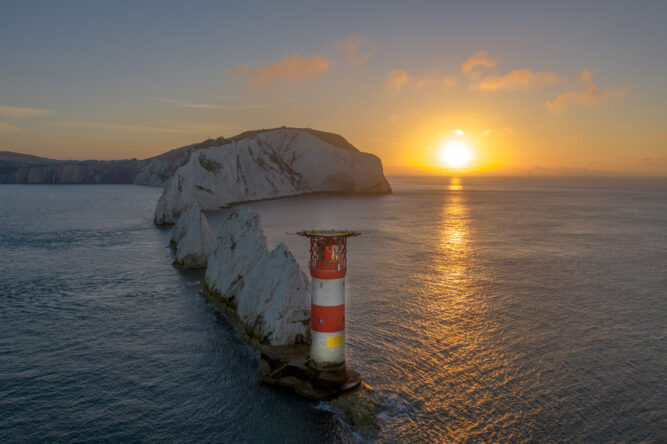
These three distinctive chalk stacks rise from the sea off the western tip of a large island, each one slightly smaller than the last before they reach a lighthouse at the end. They’ve been a navigation landmark for centuries and look particularly dramatic at sunset. The island itself is often overlooked as a destination, which is part of what makes the whole spot feel a bit special.
Landmark 14
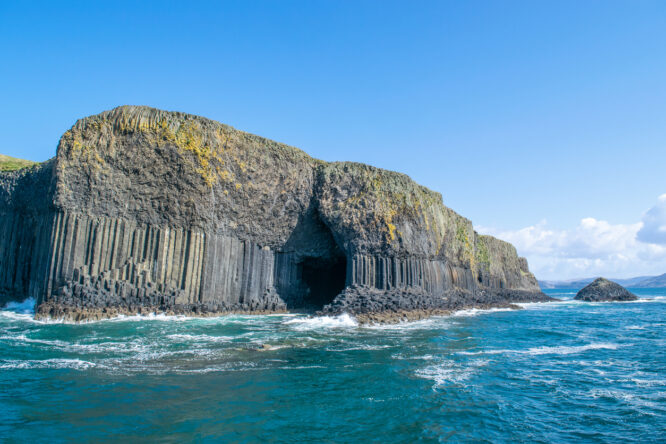
This cave on a remote island can only be reached by boat, and the experience of entering it is unlike almost anywhere else in Britain. Its dark basalt columns rise straight up from the water, and the acoustics inside create an eerie, echoing sound as waves push in and out. The composer Felix Mendelssohn visited in 1829 and was so struck by it that he wrote a concert overture inspired by what he heard.
Landmark 15
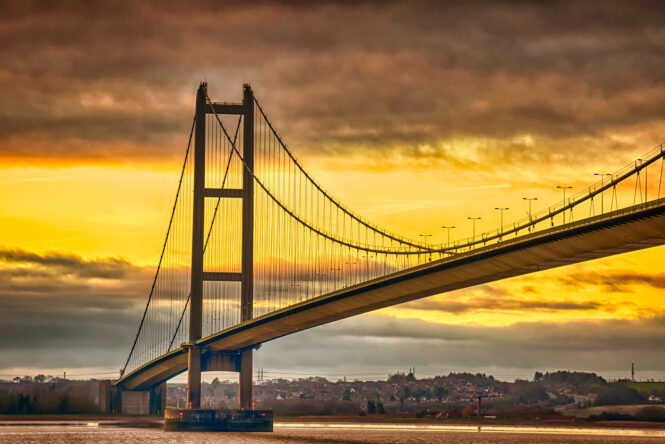
This single-span suspension bridge stretches 1,410 metres across a wide estuary and held the record as the world’s longest bridge of its kind when it opened in 1981. It’s since been surpassed elsewhere, but remains an impressive sight and carries thousands of vehicles across the water every day. For a long time the toll to cross it only applied in one direction, which always struck visitors as a slightly odd arrangement.
The answers
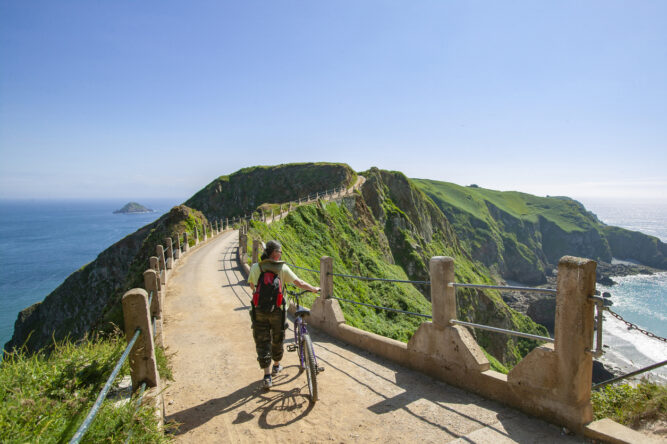
1. Skara Brae, Orkney
2. The Angel of the North, Gateshead
3. The Forth Bridge, Scotland
4. Giant’s Causeway, Northern Ireland
5. Snowdon, Wales
6. Clifton Suspension Bridge, Bristol
7. Durdle Door, Dorset
8. Hadrian’s Wall, Northumberland
9. Alnwick Castle, Northumberland
10. The Falkirk Wheel, Scotland
11. Ironbridge, Shropshire
12. The Eden Project, Cornwall
13. The Needles, Isle of Wight
14. Fingal’s Cave, Staffa
15. The Humber Bridge, East Yorkshire
How many did you get right? Scoring 12 or above makes you a genuine Britain expert, though landing anywhere in double figures is still something to be proud of.