It’s far too easy for the daily grind to turn a relationship into a series of checklists where nobody really feels appreciated.

You’re not alone if you feel like you’re doing the heavy lifting while your partner barely notices the effort. Relationship experts say that getting that spark of value back doesn’t require a total overhaul of your life together. Often, it’s about small changes in how you communicate your needs and where you set your boundaries. Understanding these simple methods can help move the needle from feeling overlooked to feeling like a priority again.
Why feeling undervalued is so common in long relationships

The honest truth is that almost every long-term couple goes through phases of feeling underappreciated by each other. The early days of any relationship are full of effort, attention, and praise, and that level of intensity isn’t sustainable. Over time, the appreciation gets quieter, the thank-yous get fewer, and the gestures fade into the background.
Most of the time, it’s not because your partner has stopped caring, it’s because life has filled up with work, kids, bills, and routines, and the things you do for each other have started to feel invisible. Therapists call it “the takeaway effect,” where you stop noticing the things your partner does because they’ve just become part of the wallpaper of your life. The good news is, with the right approach, it’s usually fixable.
Start by saying it kindly, not pointing fingers.
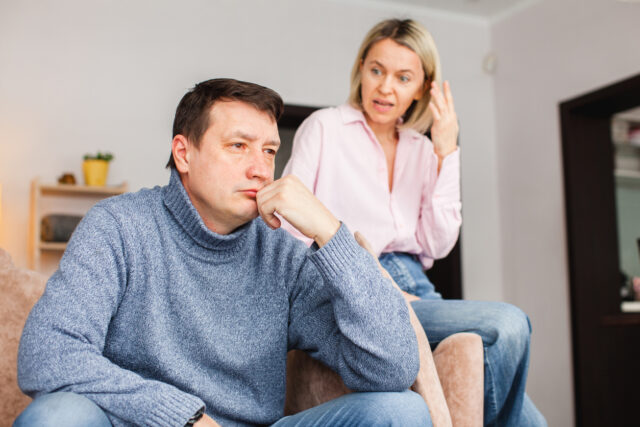
The single most common mistake people make when they’re feeling undervalued is opening the conversation with blame. “You never thank me.” “You don’t appreciate anything I do.” “You only think about yourself.” Even if every word is true, the second your partner hears that tone, they go on the defensive, and the conversation is over before it’s started.
Therapists almost universally recommend leading with how you feel rather than what they’ve done wrong. Something like, “I’ve been feeling a bit invisible lately, and I’d love to talk about it,” gives your partner an opening to actually listen rather than defend themselves. The goal of the conversation isn’t to win, it’s to be properly heard.
Be specific about what you actually want.

Vague requests get vague results. Saying, “I want you to appreciate me more” gives your partner nothing to work with because they don’t know what that looks like in practice. Saying “I’d love it if you’d notice when I’ve made dinner, or sent me a quick text during the day to say hi” gives them something they can actually do.
Most partners aren’t intentionally being thoughtless, they just genuinely don’t know what would land for you. Telling them, in plain words, removes the guesswork. Therapists often suggest naming two or three specific things rather than a long list because long lists feel overwhelming and tend to get half-followed at best.
Show them what appreciation looks like.

One of the most reliable bits of relationship advice is to model the behaviour you want to see. If you want more thank-yous, start saying thank you for the small things they do. If you want more affection, offer it freely. If you want more interest in your day, ask about theirs first. People mirror what they’re around, and partners pick up on patterns surprisingly fast.
That doesn’t mean being a martyr or doing all the work, but gently showing what the dynamic could look like. The bonus is that it usually makes you feel better in the meantime, since actively expressing gratitude has a way of changing your own mood for the better.
Stop quietly doing more in the hope they’ll notice.

This is the trap most people fall into without realising. You feel undervalued, so you start doing more, hoping the bigger gestures will finally get noticed. The trouble is, your partner just gets used to a higher baseline of effort, takes that for granted too, and you end up exhausted and even more underappreciated.
Therapists actually recommend doing the opposite. Step back from the things that aren’t being noticed, just for a bit, and see what happens. Often, the partner who’s been coasting suddenly notices what’s missing once it stops happening, and the conversation becomes much easier. It might seem passive-aggressive, but you’re really just avoiding running yourself into the ground for a return that never comes.
Have a proper sit-down conversation, not a row.

The kitchen at the end of a long day is the worst possible place to bring this up. So is the car, the bed, or any moment when one of you is already tired or stressed. Therapists suggest picking a calm time, ideally somewhere you can both focus, and saying something like, “There’s something I’d like to talk about, when’s a good time?”
That tiny step changes the energy of the conversation completely. It shows that you take it seriously, gives your partner a chance to mentally prepare, and stops it from coming out in a frustrated burst when something tips you over. People listen much better when they’re not feeling ambushed.
Listen to their side properly.

This is the bit nobody likes hearing, but it’s true. If you’re feeling undervalued, there’s a fair chance your partner has been feeling something similar from their side, even if their version of it looks different. Maybe they feel they can’t do anything right. Maybe they feel criticised even when they’re trying. Maybe they’re going through their own stuff that you haven’t quite clocked.
A genuine conversation about appreciation has to go both ways. Ask them how they’ve been feeling. Ask what they’d like more of. The chances are you’ll both come away with something useful, and the relationship will feel more like a partnership than a complaint.
Bring back the small thank-yous.

Long-term couples often slip into a pattern where the only acknowledgement of effort is when something goes wrong. The bins get put out a hundred times and nobody mentions it, but the one time they’re forgotten there’s a little dig. Reversing that pattern is one of the simplest ways to change the dynamic.
Notice the small stuff. Thank your partner for the dinner, the lift, the coffee, the load of washing. Don’t make it sarcastic or pointed, just genuine. Doing this regularly creates a culture in the relationship where appreciation becomes normal again, and it almost always gets reciprocated within a week or two without anyone having to ask.
Spend proper time together without distractions.

One of the easiest ways to start feeling more valued is to actually have time together where neither of you is on a phone, watching telly, or half-distracted. Sit down for dinner together a few times a week. Go for a walk after work. Have a proper conversation in the kitchen with no screens. People feel valued when they feel paid attention to, and modern life makes attention surprisingly rare.
You don’t need fancy date nights, you just need pockets of properly being in the same room together with your faces turned towards each other. Most couples massively underestimate how much this changes the temperature of a relationship.
Look after yourself, separately from the relationship.

This one comes up in nearly every therapist’s advice, and it’s really worth taking seriously. People who are confident, fulfilled, and busy with their own lives tend to be valued more by their partners than people who have folded their entire identity into the relationship. It’s not about playing hard to get, but about being a whole person in your own right.
Keep your friendships up, do the hobbies you love, look after your health, work on the things that matter to you. The partner who is curious about themselves and the world tends to be the partner who keeps being curious about you, and your partner will quietly take notice of you noticing yourself.
Watch out for the bigger pattern.

Sometimes, feeling undervalued isn’t a phase, it’s a pattern. If you’ve tried having the conversation, modelling the behaviour, and stepping back, and nothing has changed at all, that’s information. A partner who genuinely cares will at least try to make changes once they understand how you’ve been feeling.
A partner who refuses to engage, dismisses your feelings, or makes you feel daft for bringing it up is showing you something more fundamental about the relationship. That’s the point at which couples therapy can be really useful, as a third person in the room can often help break a stuck dynamic that you can’t change on your own.
There’s also the bit nobody likes saying out loud.

Some of the best advice from therapists is the most uncomfortable. You can’t actually make anyone value you more, you can only create the conditions where it becomes easier for them to. If they refuse to take those conditions on board, no amount of effort from your side will change their mind.
The point of all of these tips isn’t to manipulate your partner into being different. It’s to give the relationship the best possible chance of growing back into something warm and reciprocal. Most relationships do respond when you put proper, kind, specific effort in. The ones that don’t are telling you something you might need to hear, even if you don’t want to.
Feeling valued in a relationship isn’t an extravagant ask, it’s the basic foundation of being properly loved. If you’ve been feeling like the person you’ve chosen isn’t really seeing you lately, you’re not being needy, you’re being honest about something important. Start with a kind, clear conversation. Show them what appreciation looks like. Look after yourself in the meantime. Most of the time, those small steps are enough to bring the warmth back, and you’ll wonder why you didn’t have the conversation months ago.