Living alone is definitely an eye-opening experience.
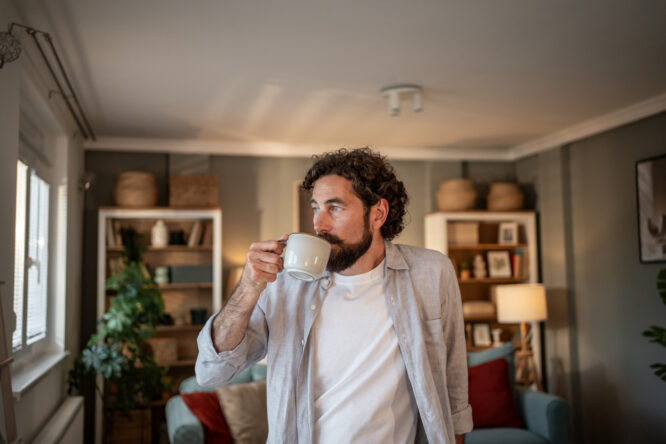
Sure, it’s liberating to have full control of your space and daily routines, but you might also notice some habits creeping in that weren’t there before. It’s a lot easier to get set in your ways when no one else is around to call you out on it. Whether you’re loving the solitude or dealing with the quirks that come with it, you might find these patterns sneaking into your life.
Your routines are very specific.
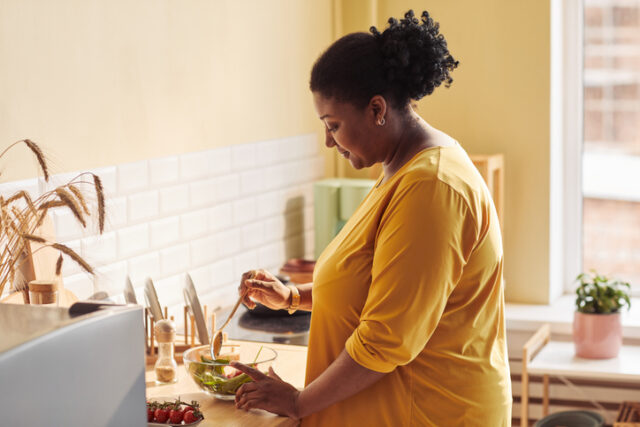
When there’s nobody else in the house to nudge your timetable out of line, your habits quickly settle into rigid little rituals. You develop an exact, unshakeable method for making morning coffee, a preferred spot on the floor where you like to stretch, and a Friday night routine that runs like clockwork.
Because you never have to adjust your timing to suit someone else, these habits stop being casual choices and turn into sacred household rules. They bring a deep sense of comfort, turning your four walls into a predictable haven where everything happens on your terms.
Talking to yourself all the time becomes a thing.

Going through hours of silence naturally gets your vocal cords moving, whether you mean to or not. You begin narrating your cooking steps, talking directly to the kettle while it boils, or having heated debates with yourself about what to watch on the telly.
You might give running commentaries on your work emails or ask yourself rhetorical questions out loud just to break up the silence. It sounds odd to anyone peering through the window, but externalising your thoughts becomes an easy way to think things through without needing an audience.
You get weirdly territorial about your space.

After you’ve spent months arranging every mug, cushion, and coaster into its ideal place, having visitors round can feel like an invasion. When a mate pops round and casually moves an armchair, leaves a wet glass directly on the bare coffee table, or rearranges things in your fridge to make room for beer, you feel a tiny internal twitch. You’ve invested effort into building your own little kingdom, and having someone disrupt your layout reminds you just how protective you have become over your territory.
You eat whatever, whenever.

Cooking for one strips away all the usual social expectations around breakfast, lunch, and dinner. You don’t have to put on a show of making balanced meals every evening just to keep up appearances. If you fancy a bowl of cereal at 10 p.m., cold leftover pasta straight from the fridge for breakfast, or toast for dinner three nights in a row, there is not a single person around to judge you. Eating becomes entirely tied to what you actually want at that exact second, leading to some delightfully bizarre food combinations.
You become way more aware of household sounds.
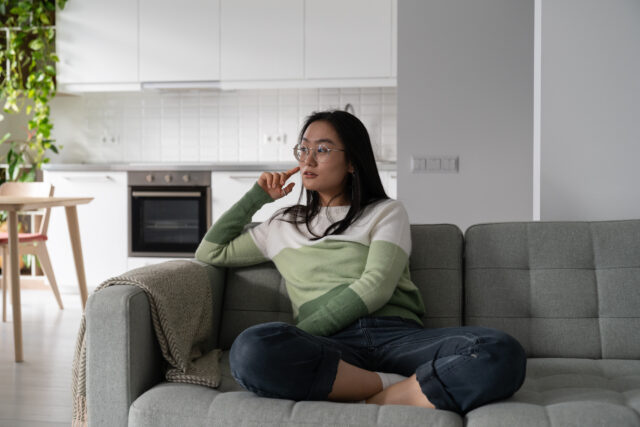
Living alone turns you into an accidental acoustic expert of your own home. You quickly learn the precise hum of your fridge motor, the exact pitch of your pipes when the heating kicks in, and the specific squeak each floorboard makes under your socks. When a strange thump or unfamiliar tap happens late at night, your brain immediately goes into overdrive. You freeze on the spot, waiting to figure out whether it is just the wind against the guttering or someone attempting a break-in.
You embrace your “home gremlin” self.

The standards you keep for the outside world completely vanish the second the bolt slides shut. Wandering around in mismatched loungewear at 2 p.m., wrapping yourself in a massive blanket like a cocoon, or leaving your hair messy for three days straight becomes standard practice. When nobody’s watching, there’s no reason to keep up appearances. You can be as unapologetically comfortable, scruffy, and lazy as you like, treating your living room as a private zone where social dignity is completely optional.
You lose track of time easily.

Without the natural markers of someone else coming home from work, asking about dinner, or heading up to bed, hours simply melt away. You sit down to watch an episode of a documentary, fall down an internet rabbit hole, and suddenly realise the clock reads 3:30 in the morning. Weekends can easily dissolve into a blur where you realise you have spent half the day sitting in bed reading without checking the time once. When your schedule answers to nobody, the boundary between daytime and nighttime gets very blurry.
Your home is a mix of tidy and messy.

Because there’s nobody else around to help make a mess or tidy it up, the state of your place sits entirely on your shoulders. Some weeks you are on top of everything, vacuuming skirting boards and keeping surfaces gleaming. Other weeks, an ironing pile takes over the spare chair, washing-up stacks up in the sink, and empty cardboard boxes linger by the front door for days. The balance between order and chaos is completely up to your mood, and you don’t have to answer to anyone when you simply cannot be bothered.
You get creative with your free time.

Having long stretches of uninterrupted free time pushes your brain to find new ways to stay stimulated. You might suddenly decide on a Tuesday night to repaint a bookcase, reorganise your entire wardrobe by colour, or spend three days trying to master baking sourdough from scratch. When you have total control over the room and no one questioning what you are doing, you can leave half-finished projects spread out across the floor for days on end without anyone complaining.
You become fiercely independent.

When a tap starts dripping or a flat-pack wardrobe needs building, there’s nobody down the hall to pass the job over to. You quickly learn how to bleed radiators, use a cordless drill, unblock drains, and carry ridiculously heavy parcels up flights of stairs on your own. Tackling practical emergencies without backup can be daunting at first, but sorting them out builds a quiet, stubborn confidence in your own abilities that you carry everywhere else.
You notice your own quirks more.

Living with other people usually forces you to suppress your weirdest habits, but living on your own brings them out into the open. You realise you have an oddly specific way of organising tins in the larder, a strange song you sing while scrubbing the frying pan, or a bizarre habit of pacing around the kitchen island while on the phone. Without anyone around to give you an odd look, you get to know yourself properly, eccentricities and all.
Your decor is very much you.
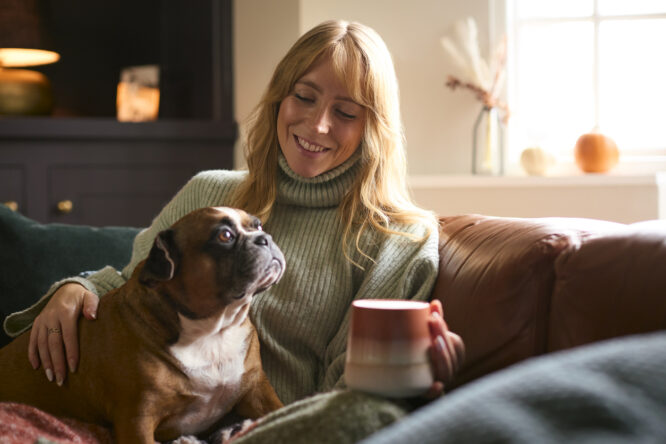
Shared flats are usually a messy compromise of clashing tastes and neutral compromises, but your own place is pure, unfiltered you. If you want to cover every windowsill in houseplants, hang framed movie prints in the hallway, or keep the entire place stripped-back and minimalist, nobody can veto your choices. Every single cushion, mug, and piece of artwork is there because you personally chose it, making your home feel like a genuine reflection of who you are.
You become a pro at entertaining yourself.

Long stretches of your own company can feel intimidating if you are used to a busy household, but you quickly learn how to enjoy your own headspace. You discover which books keep you hooked, which podcasts make doing the chores fly by, and how to enjoy a quiet evening without feeling an itch to be somewhere else. You stop relying on other people to keep you entertained, finding plenty of comfort in simply pottering around your own space with some music on.
You experience a new level of peace and quiet.

The absolute highlight of having your own place is the silence that greets you when you walk through the door. There is no background chatter, no television blaring from the next room, and no intrusive footsteps overhead. That unbroken calm gives your brain a chance to fully decompress after dealing with busy offices, noisy transport, and social demands all day. It provides a rare kind of mental breathing room that’s impossible to replicate when you share a roof with other people.
You learn the importance of reaching out.

When you live with family or flatmates, social contact happens automatically in the kitchen or hallway. Living alone forces you to realise that if you do not actively make plans, you could easily go an entire weekend without speaking to another human soul. It makes you much more intentional about sending messages and keeping in touch with the people who matter. You learn to appreciate your solitude without letting it turn into isolation, striking a healthy balance between your private space and the outside world.