Nobody likes admitting they judge others, but if we’re completely honest, everyone does it to some degree.

It’s rarely the big moral flaws that catch our attention day to day; more often, it is the tiny, inconsequential quirks that get under our skin, from how someone signs off an email to the way they hold a shopping basket.
A recent survey asking people to confess their pettiest, most irrational grievances opened the floodgates, drawing in thousands of brutally honest replies about the micro-annoyances that grate on our nerves. These are some of the most common examples people shared, alongside a look at why these bizarrely specific pet peeves get such a strong reaction from so many of us.
Standing up the second the plane lands
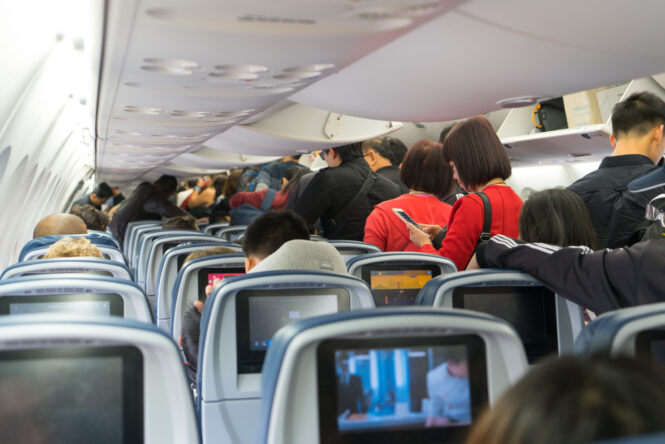
This one came up again and again, and it’s easy to see why. The seatbelt sign has barely switched off before half the cabin is up, reaching for the overhead locker, despite the fact the doors haven’t even opened yet. There’s nowhere to actually go until the aircraft has properly stopped, the crew have checked everything is safe, and the doors are physically open, so all that standing achieves is a cramped aisle and a stiff back from crouching under the lockers for 10 unnecessary minutes.
It also tends to hold everyone else up too, since once one row stands, the people behind them often feel obliged to do the same, creating a domino effect of impatience that serves absolutely nobody. The people who stay seated and let things happen in order are usually off the plane just as quickly, minus the neck ache.
Not saying ‘thank you’ when someone holds a door open

It takes less than a second to acknowledge someone holding a door, whether that’s a quick nod, a smile, or an actual word. Skipping it entirely, especially when the other person has clearly gone out of their way to wait for you, is one of those tiny moments that says a surprising amount about someone’s manners. It’s rarely about the door itself, and more about what the gesture represents, a small acknowledgement that another person did something considerate, however minor.
People who consistently ignore it aren’t necessarily rude in every other way, but in that specific moment, it can leave a lasting impression that colours how they’re perceived going forward. Given how little effort it takes, it’s easy to understand why this one bothers people so consistently, since the fix genuinely costs nothing.
Drivers who indicate far too late, or not at all

A turn signal only serves its purpose if it’s used before the manoeuvre, not halfway through it or not at all. Late indicating catches other drivers off guard and can turn an otherwise smooth junction or roundabout into a moment of sudden braking and frustration, particularly at busier junctions where several cars are trying to read each other’s intentions at once.
It’s a habit that costs the driver nothing to fix, since indicators exist purely to communicate, which is probably why it grates on so many people who actually do signal properly and rely on others doing the same. Beyond the irritation factor, it’s also a genuine safety issue, since other drivers, and pedestrians, are constantly making split second decisions based on what they think a car is about to do.
Toilet roll hung the “wrong” way around
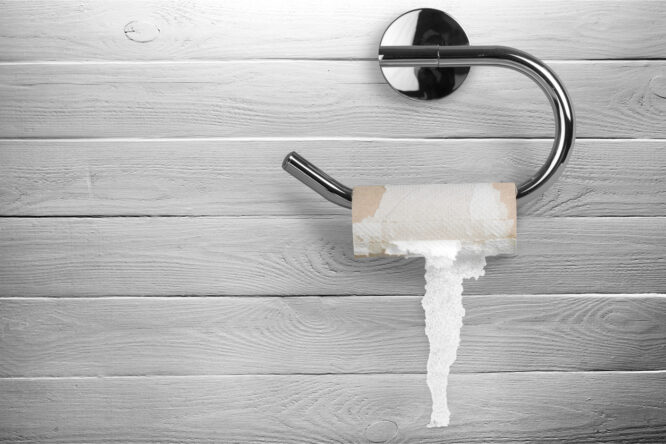
This is a genuinely divisive household debate, and people feel strongly about which way the roll should face. For those in the “over” camp, seeing a roll hung the other way in someone else’s bathroom is apparently enough to silently judge the entire household, even if nothing else about the visit was remotely disappointing.
It’s one of those preferences that seems to split fairly evenly down the middle, with both camps convinced their way is simply more practical or more visually correct. What makes it so persistently divisive is that there’s no obvious functional difference between the two, which somehow makes people even more committed to their particular side of the argument.
Grown adults calling their stomach a “tummy”

There’s something about hearing a fully grown adult reach for baby talk in everyday conversation that quietly grates on people. Words like “tummy” tend to get a pass from small children, but from another adult, particularly in a professional or semiformal setting, it can come across as oddly childish or overly cutesy for the context.
It’s a small linguistic habit, but it’s clearly one that sticks out to a lot of people once they notice it, and once noticed, it’s hard to unhear in future conversations with the same person. Language like this tends to divide opinion sharply, with some finding it endearing and others finding it genuinely difficult to take someone seriously afterwards.
Saying “I seen” instead of “I saw” or “I have seen”

Grammar slips are usually forgiven in casual conversation, but this particular one seems to draw an unusually strong reaction. Swapping “saw” for “seen” without the necessary “have” in front of it is common enough in everyday speech, but for people who notice it, it’s apparently hard to un-hear once it’s been pointed out, to the point where some admit it colours how they perceive someone’s overall communication skills.
It’s worth noting this kind of judgment often says more about regional dialect and background than anything else, since certain phrasings are simply more common in some parts of the country than others. Even so, it remains one of those small verbal habits that some people quietly can’t get past, however unfair that might be.
Using speakerphone in public for a long conversation

Nobody sitting nearby signed up to hear an entire phone call, yet plenty of people seem happy to hold lengthy conversations on speaker in shared spaces like trains, waiting rooms or cafes. Beyond the obvious lack of privacy for the person on the call, it forces everyone around them into an unwanted audience for a conversation that has nothing to do with them, often including personal details nobody nearby particularly wanted to hear.
It’s one of those habits that seems to have become more common since phones got easier to use hands free, but the etiquette hasn’t quite caught up with the technology. A quick pair of headphones would solve the problem entirely, which is probably why it’s such a consistent source of quiet frustration for commuters and café regulars alike.
Wearing pyjamas and slippers to run errands

There’s comfortable, and then there’s stepping out to the shop in full sleepwear. For some people, this crosses a line from relaxed to simply not making an effort, even for a quick errand that only takes a few minutes. Others see nothing wrong with it at all, arguing that comfort should always win over convention, particularly for a five-minute dash to buy milk.
That gap in opinion is probably why this one splits people so sharply whenever it comes up, since it touches on a slightly bigger question about how much effort we owe to public appearances, even in passing.
Blocking the entire supermarket aisle with a trolley

Pausing to check a shopping list or compare products is completely normal, but doing it while leaving a trolley stretched across the full width of the aisle is a different matter entirely. It’s rarely intentional, but the effect is the same either way: other shoppers are left waiting, squeezing past, or doing an awkward loop around to get to what they need.
A quick glance around before stopping, or simply pulling the trolley to one side against the shelving, would solve the problem entirely, which is exactly why it frustrates people who just want to get past and get on with their shop.
Standing far too close in a queue
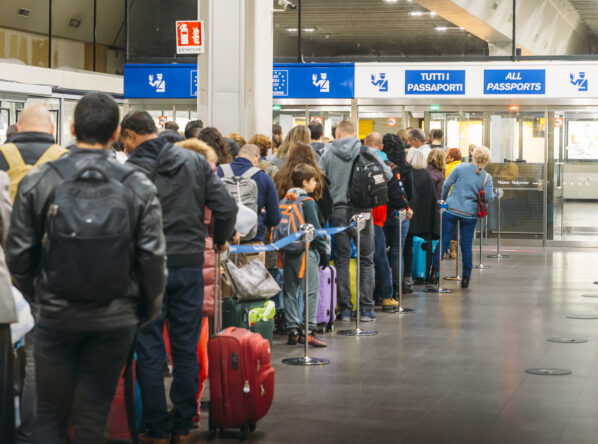
Personal space matters, particularly in a queue where there’s rarely any genuine need to stand right behind the person in front. Being crowded from behind while queuing is one of those small but consistent irritations that quietly puts people on edge, even if they don’t say anything about it in the moment.
It can make an already tedious wait feel more stressful than it needs to be, and in busier settings like a post office or pharmacy, it often builds up over several minutes rather than being a single fleeting moment. Most people don’t expect a huge gap, just enough room to comfortably shift or check their phone without someone hovering directly behind them.
Pushing onto a train or lift before letting people off first
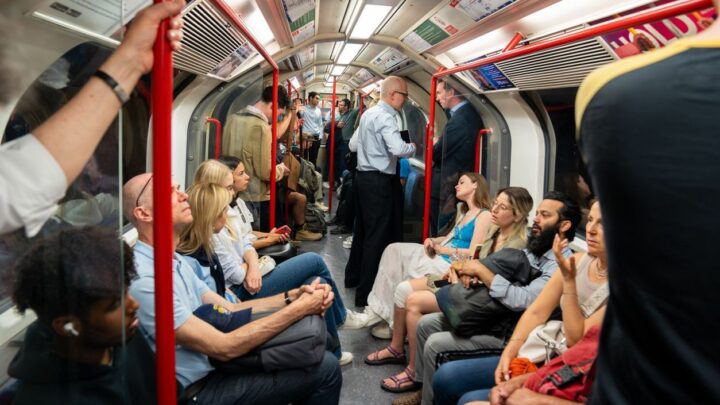
Letting people out before getting in seems like an obvious enough rule, yet it’s one that gets ignored constantly, particularly during busy commuting hours when everyone is in a rush. Pushing straight on while others are still trying to exit only slows the whole process down for everyone involved, including the person doing the pushing, since it often creates a bottleneck at the doors that takes longer to clear than if people had simply waited their turn.
It’s a small courtesy that, once broken by one person, tends to trigger the same behaviour from everyone else nearby, turning a minor inconvenience into a genuinely chaotic few seconds at rush hour.
Breaking traffic rules to be “polite”

Waving another driver through at a junction or on a motorway slip road might feel like a kind gesture, but it can also catch other drivers off guard and create a genuinely dangerous situation. What’s intended as politeness can end up being the opposite, particularly when it happens somewhere unexpected, like waving someone out of a side road into moving traffic, since other drivers aren’t anticipating the gap being created.
This is likely why so many people find this particular habit more irritating, and occasionally alarming, than charming, especially those who’ve had a near miss because someone else’s well-meaning gesture disrupted the normal flow of traffic they were relying on.
Sitting right next to someone in an otherwise empty waiting room

Walking into a waiting room with rows of empty seats and choosing to sit directly next to the one other person already there tends to raise eyebrows. Most people appreciate a bit of space in these situations, whether they’re at the doctor’s, a garage, or an appointment of any kind, so this one tends to prompt a quiet, confused reaction rather than outright annoyance. It’s rarely meant as anything strange, but it does tend to leave the other person wondering whether there’s a reason behind the choice, when in most cases there simply isn’t one at all.
Whether you recognised yourself in a few of these or you’re now side-eyeing everyone around you, one thing’s for sure: pettiness really is a universal language.