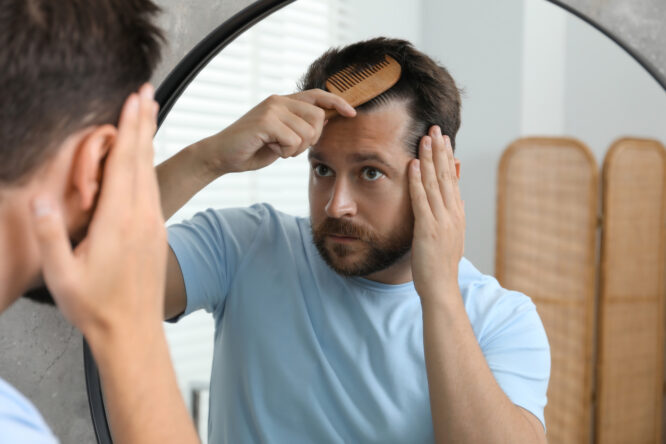
Staring at a fitness tracker and realising you still need another 5,000 steps before bed is a special kind of exhausting, especially when your day has already been packed.

It might feel like hitting a high daily step count requires spending hours power-walking in the rain or living on a treadmill. In reality, the people who consistently hit big numbers without breaking a sweat aren’t doing marathon gym sessions; they’ve just mastered the art of sneaking movement into the cracks of their normal routine.
By making a few tiny tweaks to how you handle your commute, your lunch break, and even your evening television time, you can rack up miles without your brain ever registering it as a proper workout. If you want to boost your daily activity without upending your entire life, changing how you approach these ordinary moments makes hitting your target feel automatic.
The right trainers play a big part in getting those steps in.

High step counts expose footwear problems quickly. Trainers that look great but feel flat start dragging by mid-afternoon, and once your feet are unhappy, every remaining step feels like an effort. Look for something lightweight with a bit of natural spring in the sole, since a shoe that’s too stiff or too heavy works against your stride rather than with it over a long day.
A slightly wider, more supportive midsole helps when your legs get tired and your form starts to slip towards the end of the day. It’s worth trying a few pairs in person and walking around the shop properly rather than just standing in them, since comfort at standstill doesn’t always translate to comfort after hour six.
Socks are the most underrated upgrade you can make.

A blister will end a walking habit faster than almost anything else, and cheap socks are usually to blame. The difference between a basic cotton sock and something built for movement is noticeable within the first hour, particularly on longer days across unforgiving city pavements.
Look for socks designed for running rather than general everyday wear. The features that matter are a snug heel that won’t slip mid-stride and a seamless toe seam that won’t rub. Synthetic or merino blends that wick moisture also help, since damp feet blister far more easily than dry ones.
Insoles can upgrade every pair of shoes you already own.

Hard city pavements offer no cushioning, and that constant impact adds up in the heels, knees, and hips over time. A good shock-absorbing insole softens that relentless pounding without needing to replace every pair of shoes in your rotation.
The practical advantage of insoles over new shoes is that one purchase upgrades multiple pairs at once, making your whole footwear rotation more walk-friendly without spending a fortune. They’re particularly worth considering if you’ve got a pair of shoes you love the look of, but that have never quite felt comfortable underfoot.
Staying hydrated keeps your energy levels steady all day.

Dehydration makes everything feel harder, including legs that are already tired from a long day of walking. The problem is that most people don’t drink enough water consistently, and a bottle that’s gone warm by midday makes it tempting to skip drinking altogether.
An insulated bottle that keeps water cold for several hours really helps, simply because cold water is more appealing to drink than warm water sitting in a hot bag. Filling it with ice in the morning and still having cold water in the afternoon removes one of the most common reasons people reach for caffeine instead, which never quite delivers the same steady energy that proper hydration does.
A packable jacket removes weather as an excuse.

There are plenty of days when you’d happily walk if it weren’t for unpredictable weather threatening to soak you halfway through. A lightweight jacket that lives permanently in your bag, takes up almost no space, and can go on and off in seconds removes that barrier almost entirely.
Look for something water-resistant rather than fully waterproof if you want it to stay light and packable, since fully waterproof fabrics tend to be heavier and stiffer. An adjustable hem and elasticated cuffs help keep wind out without adding bulk, and the best ones genuinely fold down small enough that you forget you’re carrying them until you need them.
A fitness tracker turns walking into something worth engaging with.
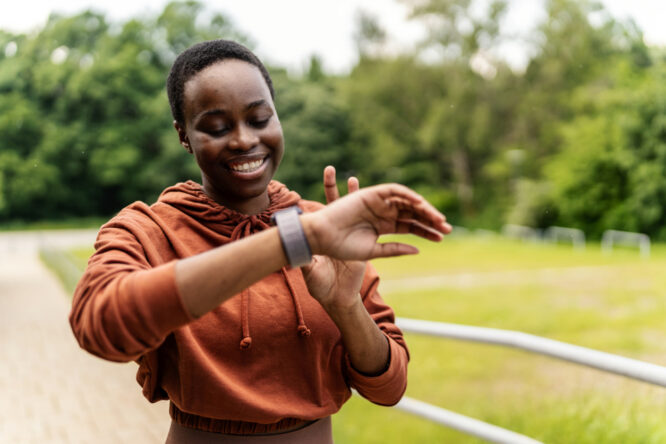
Knowing roughly how many steps you’ve done is one thing, but having data that nudges you and keeps walks interesting is another. A tracker with built-in GPS lets you vary routes, track pace, and get a clearer picture of what a high step day actually costs your body in terms of effort and recovery.
Look for decent battery life so you’re not charging it daily, and features that integrate into your actual routine rather than just counting steps in isolation, things like maps or music controls. The only real warning is that checking health stats every morning can become its own slightly obsessive habit, so it’s worth keeping an eye on whether the data is motivating you or just adding pressure.
Earbuds change how distance feels.
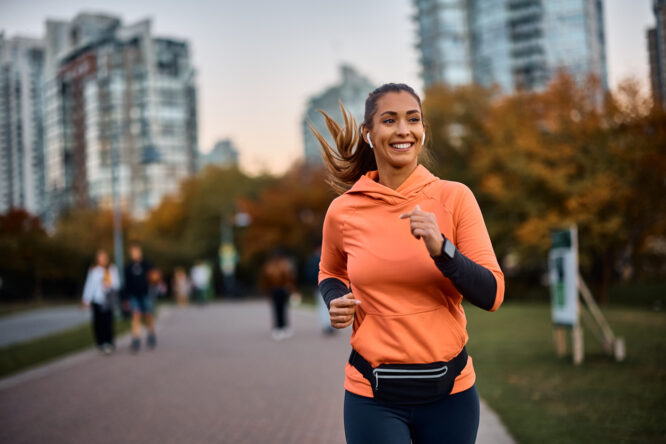
A good podcast or playlist changes the relationship between you and distance in a way that’s hard to quantify, but impossible to ignore. Walks that might feel like a chore become something you’re genuinely happy to extend, and “just 20 minutes” has a way of quietly turning into an hour.
For walking specifically, look for a secure fit that won’t need constant adjusting and decent battery life so you’re not caught out mid-walk. Sweat and water resistance is worth having too, since brisk city walks can get warmer than expected even on a mild day.
Recovery makes the next day’s steps easier.
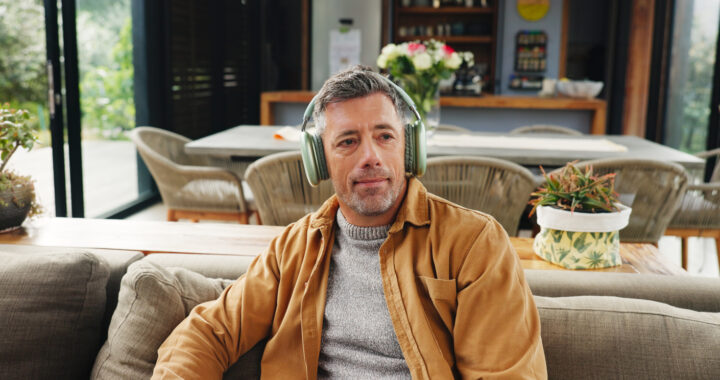
Consistently hitting high step counts only works long term if your body gets some attention in between. Legs that are stiff and sore from the day before make it harder to keep the habit going, and recovery doesn’t have to mean anything complicated or expensive.
Simple things make the biggest difference: a few minutes of stretching the calves and hamstrings before bed, elevating your feet for ten minutes if they’re swollen, and making sure you’re getting enough protein and sleep to actually repair muscle tissue overnight. None of it needs to be elaborate. Consistency in recovery matters far more than any single product or routine.