If it feels like the UK is jumping from one version of extreme weather or another, you’re not alone.
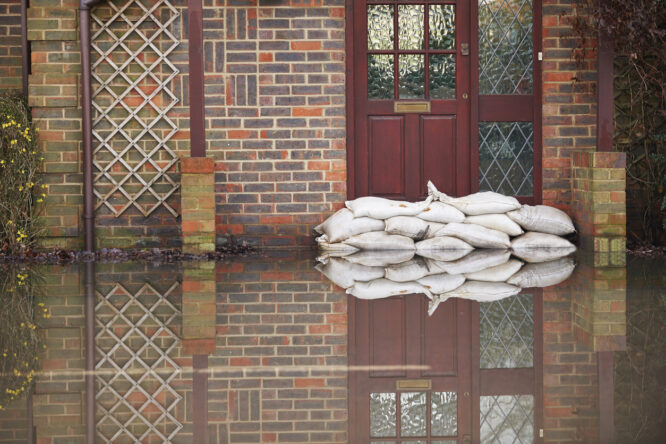
With this year’s heatwaves barely behind us, households across the UK’re already being warned to brace for a winter packed with storms and relentless downpours, putting millions of properties in danger of flooding. It’s becoming an all-too-familiar autumn headache, with saturated ground and swollen rivers threatening to turn roads into waterways and ruin ground floors overnight.
Proper long-term flood defences ultimately need major funding and muscle at a national level, but waiting around for infrastructure projects won’t keep rising water away from your doorstep this season. There’s a fair amount people and local communities can do in the meantime to protect their homes, shore up vulnerable spots, and make entire neighbourhoods far more resilient before the worst of the weather arrives.
Start by getting your community organised.
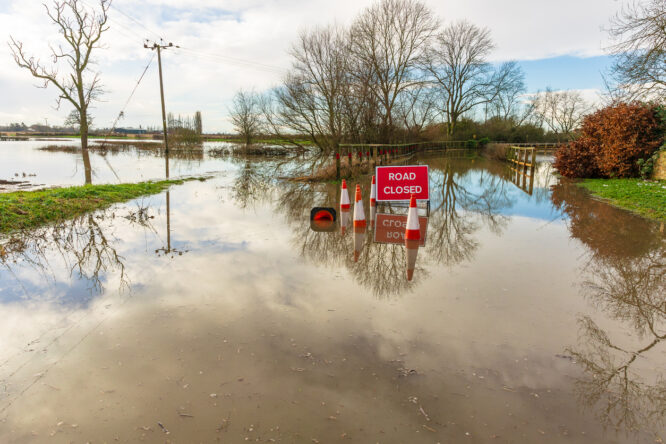
The first sensible step is checking whether your home or local area is officially listed as at risk of flooding, which is easy enough to look up online. If it is, it’s a good idea to find out whether your council runs a flood alert scheme and making sure you and your neighbours are signed up, alongside registering for the national flood warning system too.
Joining a local flood group, or starting one with neighbours if none exists, can make a difference, as can approaching your council directly to find out what flood plans are already in place. This is also a good opportunity to push for practical improvements like more permeable surfaces, rain gardens or additional tree planting nearby. Identify any vulnerable neighbours who might need extra support too, and putting together a simple street level plan so everyone knows what to do if flooding does hit.
Give your garden and outdoor space some attention.
According to flood prevention experts, protecting a home properly starts outside rather than in. Now is a sensible time to check brickwork and mortar on external walls for cracks or weak spots, since damaged mortar can act almost like dozens of tiny gaps letting floodwater straight through. Any cracks should be repaired, and treating outer walls with a breathable, waterproof sealant adds another layer of protection.
Clearing out gutters and making sure they’re working properly is equally important, and installing a water butt is a simple, relatively inexpensive addition too. Catching rainwater before it reaches the ground means you can empty the butt ahead of a flood warning, freeing up its full capacity right when it’s needed most.
Rethink how your garden handles rainwater.

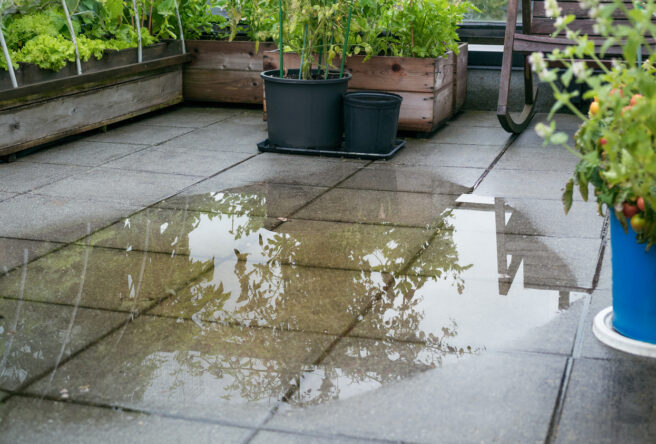
How a garden or driveway is laid out has a real impact on how quickly rainwater ends up overwhelming local drainage systems. Surfaces like concrete, paving slabs and artificial grass all stop water soaking away naturally, pushing more of it straight into drains that are already under pressure during heavy downpours.
Adding planted areas, a rain garden, or swapping in permeable paving allows water to drain away far more effectively. Even lifting just one or two paving slabs and planting something thirsty in their place can help, and improving overall soil health and plant coverage in a garden gives rainwater more places to be naturally absorbed rather than running straight off.
Prepare your home before flooding becomes a real threat.
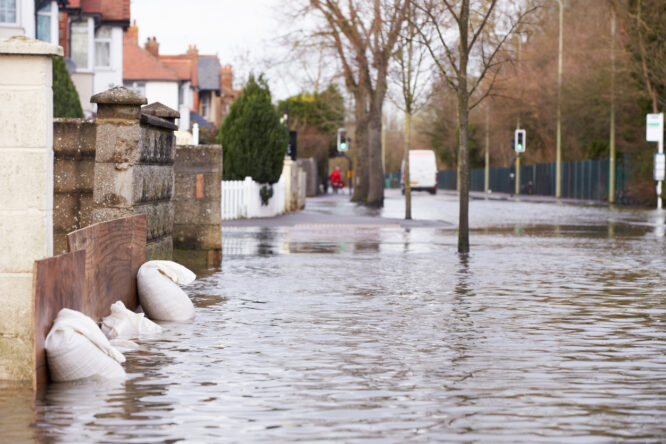
Because flooding can happen quickly and become incredibly stressful, it helps to have a clear plan written down in advance, covering things like how to safely turn off gas and electricity, and which belongings need moving first if water starts rising. Alongside this, putting together a dedicated flood box with essentials like a head torch, flood tape, plastic sheeting and absorbent cushions means you’re not scrambling to find things at the last minute.
Nobody can predict exactly what a given winter will bring, but there’s no need to wait for an official flood warning before getting prepared. Having your plan and supplies ready in advance means you won’t be searching for insurance documents or debating which belongings to save while water is already creeping into the house.
Know how to stop water getting in during an emergency.
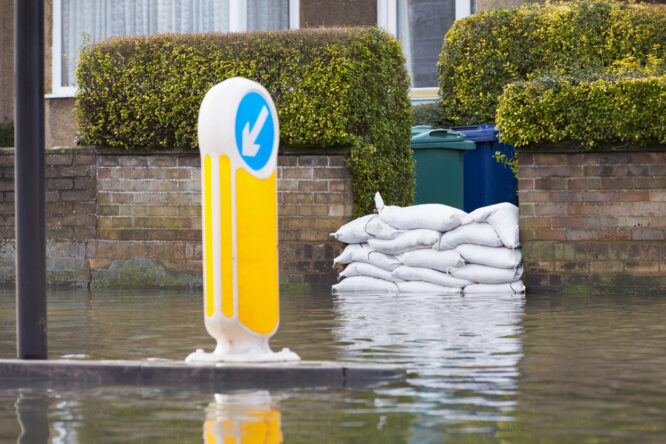
A standard airbrick can let in thousands of litres of water every hour during a flood, so you should know exactly where yours are and having a plan for dealing with them if the worst happens. Ideally, they should be swapped for certified self-closing airbricks that seal automatically once floodwater reaches them, though temporary covers are also available if you need to fit something manually beforehand.
Doors and windows are another common entry point for floodwater. Dedicated flood doors offer strong protection, though they can be a costly investment, while external floor barriers offer a cheaper alternative provided they’re put in place before water arrives. Keeping flood tape or aluminium tape in the house is a useful, low-cost backup too, since it can be used to seal airbricks, doors and window gaps quickly in an emergency, and tends to work out considerably cheaper than relying on sandbags alone.
Dealing with the risk of sewage backing up.
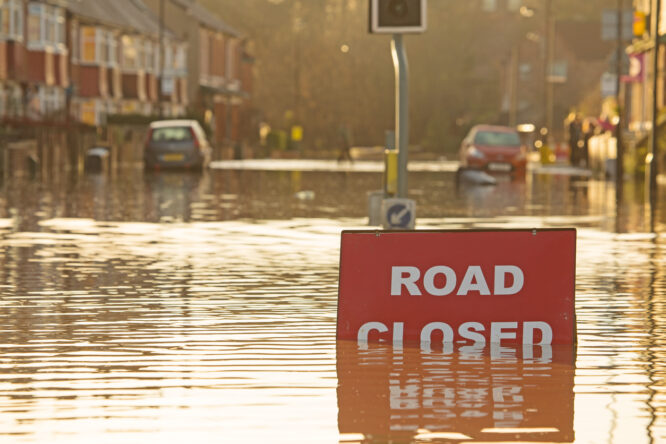
One of the more unpleasant consequences of flooding is wastewater or sewage getting forced back up through the toilet system into the house. Properties in flood risk areas are generally better off having a non-return valve fitted to the drainage system to prevent this happening in the first place.
Where that isn’t an option, toilet bungs or stoppers offer a manual alternative. In a real emergency, a deflated children’s football can even be pushed into the toilet bowl and reinflated to block it temporarily, with the seat then taped down using flood or aluminium tape. It’s not an elegant solution, but it’s an effective one when time is tight and proper equipment isn’t available.
Other practical steps for flood prone homes.
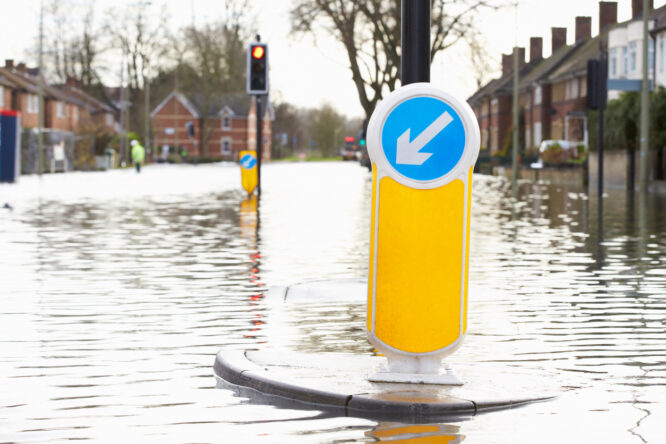
Raising furniture off the floor using upturned buckets or decorators’ trestles is a simple way to limit damage if water does get in, and curtains can be tied up out of harm’s way using scarves or old tights. Table legs can be propped up in buckets, or even a spare pair of wellies, while precious smaller items are best moved into sealed plastic boxes and relocated somewhere safer.
Walking through a room and considering everything sitting below waist height is a useful exercise, helping identify what actually matters most if water starts rising. In homes that flood repeatedly, it’s also important to consider moving plug sockets higher up the wall and fitting more flood-resilient flooring and materials, both of which can make cleanup considerably faster and cheaper in the long run.
There’s no way to predict exactly where or when flooding might strike this winter, but taking a few practical steps now can make a difference, both in protecting what matters most and in making it easier to get life back to normal if the worst does happen.