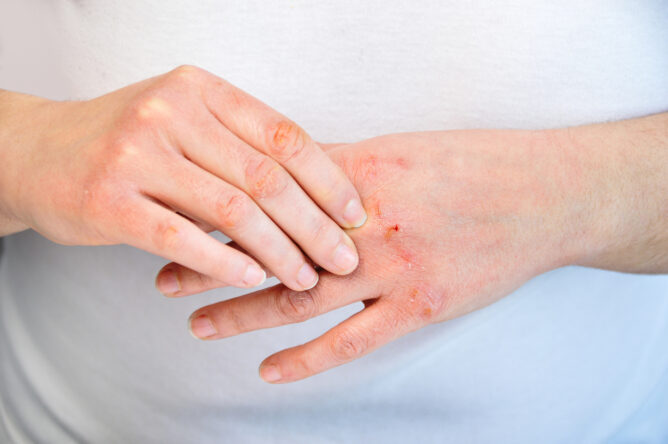
Losing weight, especially when intentional, is generally a good thing, but it’s not without its downsides.
Most conversations about rapid weight loss and the rise of GLP-1 medications tend to skip over one crucial detail: what actually happens to your skin while the pounds are dropping off.
It’s an important oversight given that our skin’s elasticity can’t always keep pace when body fat vanishes at breakneck speed. Without the right support, dropping weight that quickly can leave you dealing with sagging, crepey patches, and a hollowed-out look around the cheeks that catches people completely off guard. Shedding the weight is only half the battle, and knowing how to look after your skin’s structural bounce makes all the difference to how you actually look and feel on the other side.
Skin struggles to keep up with rapid weight loss.

According to one dermatologist, it helps to picture a tablecloth stretched smoothly over a table. If the table suddenly shrinks, the fabric starts to wrinkle and sag rather than shrinking neatly along with it. Skin behaves in a similar way. When the fat underneath disappears quickly, skin simply doesn’t have enough time, or enough collagen and elastin, to properly contract and bounce back.
The faster and more dramatic the weight loss, the more noticeable this becomes, particularly around the face, neck, abdomen, and arms. Beyond just losing volume, the collagen, and elastin fibres within the skin actually become thinner and less well-organised during rapid fat loss, essentially weakening the structural support sitting underneath the skin’s surface.
Dehydration makes the problem noticeably worse.

On top of the loss of structural support, dehydration compounds the issue further. GLP-1 medications specifically tend to reduce activity in the skin’s oil producing cells, which can help with acne, but also makes dryness considerably worse in the process.
Dry skin tends to look more crepey and dull as a result, adding another layer to the problem. The good news is there are several ways to address this through a properly considered skincare routine.
There are a few ingredients experts say actually make a difference.

No skincare product on the market can fully prevent loose skin caused by major volume loss, and every expert is clear about that. What the right ingredients can do is support ongoing collagen production, protect what skin quality you already have, and keep skin as healthy as possible throughout the process.
Retinoids come up as the consistent first recommendation across the board, considered a cornerstone ingredient thanks to solid evidence around collagen remodelling. Vitamin C follows closely behind, supporting collagen production while offering antioxidant protection against the kind of oxidative stress that speeds up collagen breakdown. Peptides are frequently recommended too, acting as signalling molecules that encourage skin to produce more collagen and elastin naturally.
Hydration and barrier support matter more than usual.

Since skin tends to run drier than usual during rapid weight loss, barrier support becomes especially important. Ingredients like ceramides and hyaluronic acid are widely recommended additions to help keep the skin barrier intact and properly hydrated throughout the process.
For the body specifically, an area often overlooked compared to facial skincare, ingredients like urea and lactic acid can help address the crepiness that frequently develops there too, often just as dramatically as it does on the face.
What a solid morning routine should actually include.

A practical morning routine centred around weight loss support typically starts with a gentle cleanser, followed by a vitamin C serum, then a moisturiser containing ceramides or hyaluronic acid if skin needs extra hydration, finished off with a broad spectrum sunscreen rated SPF 30 or higher.
Sun exposure remains one of the biggest contributors to collagen breakdown generally, which makes sunscreen arguably the single most important anti-ageing product in any routine, and especially one specifically designed to protect skin during a period of rapid weight loss. A hydrating serum can also be layered in between the antioxidant step and moisturiser on particularly dry days, which tend to come up often given how GLP-1 medications affect oil production.
Building an evening routine that actually prevents crepiness.

Every expert consulted builds their evening recommendations around a retinoid, applied after cleansing and followed by a nourishing moisturiser containing ceramides, glycerin, or hyaluronic acid to support the skin barrier and offset any dryness the retinoid itself might cause.
For particularly dry skin, applying hyaluronic acid to slightly damp skin immediately after cleansing, before any other product, can help lock in extra moisture. A simple, occlusive overnight product can also work well as a finishing step, helping seal in everything layered underneath it while you sleep. You should also extend the evening routine beyond just the face, since crepey skin from weight loss commonly affects the neck, chest, arms and abdomen too, areas that often get far less attention.
In-office treatments should be discussed with a dermatologist.
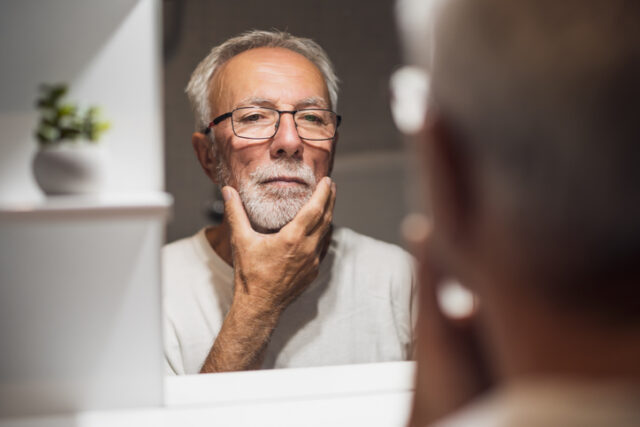
According to the experts, in-office treatments aimed at tightening loose skin work best when started before weight loss is fully complete, rather than waiting until afterward to address it.
One particularly well regarded procedure works at two depths of the skin simultaneously, tightening and lifting the deeper structural layers while also heating the surface to stimulate fresh collagen production and gradual skin thickening. Microneedling is another commonly recommended option, using controlled micro-injuries to trigger the skin’s natural healing response, gradually improving texture, firmness, and resilience across a series of sessions.
Other treatment options depend on individual needs.

Beyond these two main options, several other treatments are worth discussing with a provider depending on how much laxity has developed and what someone’s specific goals are. Some dermatologists see patients referred early on in their weight loss journey specifically to get ahead of these skin changes before they fully develop, often combining injectable treatments that stimulate collagen production with energy-based tightening devices across the face, neck, chest, arms, abdomen, and legs.
Resurfacing lasers can also help address skin thickening and textural changes tied to fine lines and wrinkles that develop alongside laxity. Across every expert consulted, the general consensus is clear: in-office treatment works best as an ongoing, ideally tailored strategy throughout the entire weight loss process, rather than something reserved purely for after the fact.