These days, it’s easy to feel like the travel world has run out of genuine surprises.
With social media turning every famous viewpoint into an overcrowded queue for the exact same photo, finding places that still feel untouched and truly magical is getting harder by the day. If you’re fed up with the usual tourist traps and fancy something different for your next getaway, the travel experts at Lonely Planet have pulled together a line-up of incredible spots that fly completely under the radar.
From tucked-away natural marvels to extraordinary ancient sites that barely see a tour bus, these nine hidden gems prove there are still plenty of wild, breathtaking corners of the planet waiting to be explored.
Pamukkale-Hierapolis, Turkey
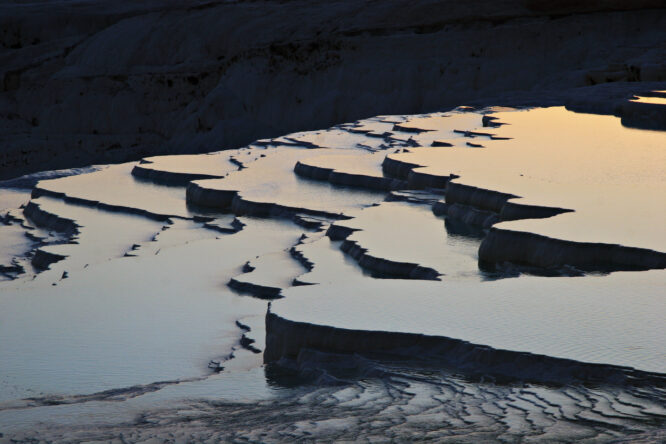
Nestled in southwestern Turkey, this location offers one of the most striking natural spectacles you’ll ever lay eyes on. Layers of stark white travertine terraces, formed by mineral-rich thermal waters flowing down the hillside over centuries, sit right alongside the sprawling ruins of the ancient Greco-Roman city of Hierapolis. Unlike many fragile natural wonders where you’re strictly forbidden from touching anything, Pamukkale actively invites visitors to wade right into the warm, turquoise pools.
You can paddle along the shallow cascading formations or take a dip in the famous Cleopatra Antique Pool, where you’ll find yourself swimming directly above submerged marble columns left behind by an ancient earthquake. It’s a brilliant mix of deep history and natural relaxation, and if you turn up early in the morning before the tour buses arrive, you’ll get to experience the site without bumping into thousands of other holidaymakers.
Zhangye Danxia National Geopark, China
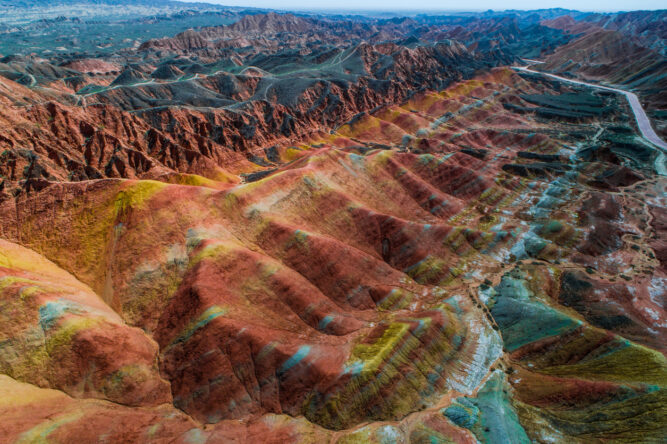
Out in the Gansu province of China, this vast mountainous geopark looks like someone took a giant paintbrush to the earth. The landscape bursts with vibrant bands of green, pink, purple, and intense orange layered across the rock face, created by millions of years of sandstone and mineral deposits pressing together and shifting under tectonic pressure.
Authorities have built a network of dedicated boardwalks and viewing platforms so visitors can take in the enormous scale of the painted valleys without damaging the fragile terrain. Timing your visit makes a massive difference to what you’ll see. Heading there during the wet season, roughly between May and September, brings out the most vivid, saturated colours in the stone, especially when a light afternoon shower pairs with the golden glow of early morning or evening light.
Beehive Huts, Ireland
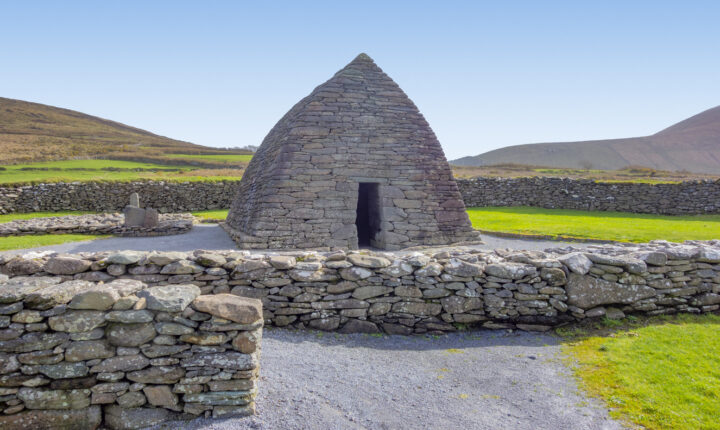
Tucked away on the rugged southwest coast of Ireland, the Dingle Peninsula hides dozens of ancient stone structures known as beehive huts, or clochán. Dating back to the 8th century, these remarkable dry-stone buildings were constructed without a single drop of mortar, relying entirely on clever overlapping stone architecture to keep out the fierce Atlantic gales and store grain safely.
Walking among them gives you an incredible window into early monastic life in Ireland. The Fahan cluster is particularly easy to reach from the main road, with entry costing around £2.56. Because they sit right on the edge of the coastline, you get sweeping views of the crashing ocean alongside the historical ruins, making it a fantastic stop if you’re driving the Wild Atlantic Way and want to escape the busier tourist hubs further north.
Campanile de Curon, Italy
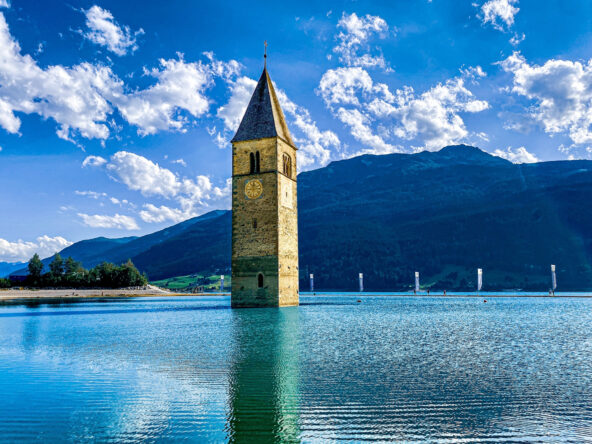
Deep in northern Italy, a solitary 14th-century church steeple rises straight out of the middle of an alpine lake, creating one of the most hauntingly beautiful sights in Europe. This lonely tower marks the exact spot of a village called Curon Venosta, which was completely swallowed up and submerged when local authorities merged 3 separate lakes into one massive reservoir back in the 1950s.
While the water surrounds the tower for most of the year, winter brings a brilliant twist. When the lake freezes completely solid during the colder months, visitors can actually walk right across the thick ice to reach the base of the bell tower. Standing next to the weather-beaten stone bricks gives you an eerie, up-close connection to a lost community that you wouldn’t get during the summer months.
Chiricahua National Monument, USA
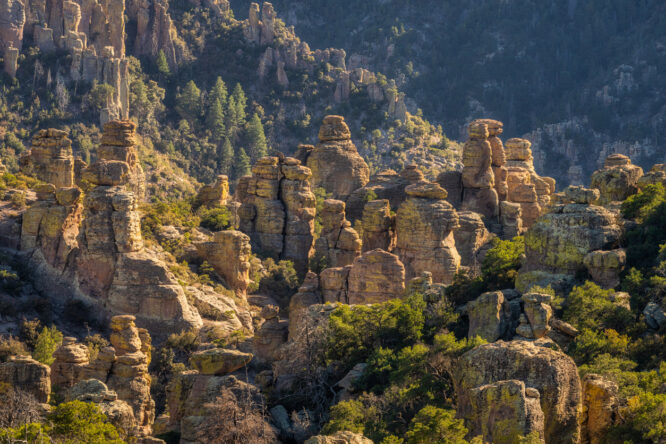
Spanning 12,000 acres of protected wilderness in southeastern Arizona, this site earns its nickname as a wonderland of rocks for good reason. The landscape is packed with towering columns of volcanic stone, precarious balancing rocks, and hidden grottoes carved out by a massive volcanic eruption that shook the region millions of years ago.
You can spend hours hiking through the network of shaded canyons and oak-filled creeks. The absolute highlight of any trip here is walking out to Big Balanced Rock, an enormous boulder that sits perched on a ridiculously narrow stone pedestal. It defies all logic and looks like it’s about to tumble down any second, making it an incredible spot for anyone who loves raw, untouched American landscapes away from the standard national park crowds.
Chicken, Alaska

Hidden deep within the wild interior of Alaska, you’ll find a tiny former gold mining settlement with an unforgettable name. Back in the early 1900s, the miners living there wanted to name their town after the local ptarmigan bird, but nobody could agree on how to spell the word. To keep things simple, they voted to call it Chicken instead, and the name stuck.
Today, the town operates as a quirky living museum of the gold rush era, complete with historic dredge machinery and old log cabins. If you time your trip for June, you can catch the annual Chickenstock folk music festival, where visitors join in local dancing and celebrate the town’s strange history. Keep in mind that the settlement is only accessible between April and September because heavy winter snow shuts down the connecting highway entirely.
Völklinger Hütte, Germany
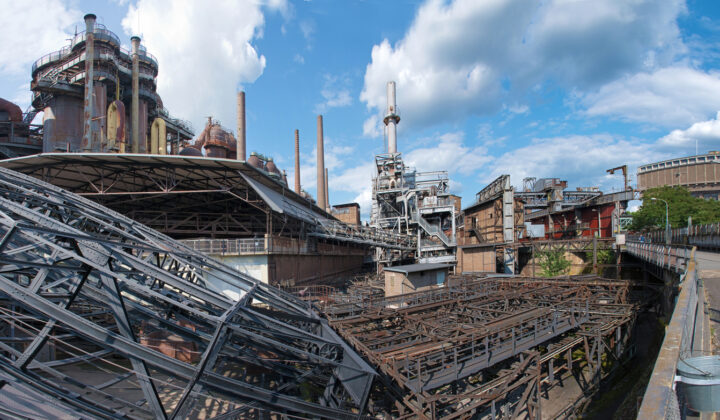
Located in southwestern Germany, this massive former ironworks looks like something straight out of a science fiction film set. Featuring a sprawling maze of rusted pipes, soaring blast furnaces, and towering steel gantries, it stands as the only fully preserved ironworks anywhere in the world from the golden age of European heavy industry.
Operations stopped decades ago, but the site has been brilliantly repurposed as a cultural museum and contemporary art space, with entry priced at roughly £14.52. You can wander through the colossal engine halls and climb up the industrial staircases for panoramic views over the Saar valley. It’s an atmospheric, heavy-hitting slice of European history that gives you a genuine appreciation for the sheer scale of early manufacturing.
Quinta da Regaleira Wells, Portugal
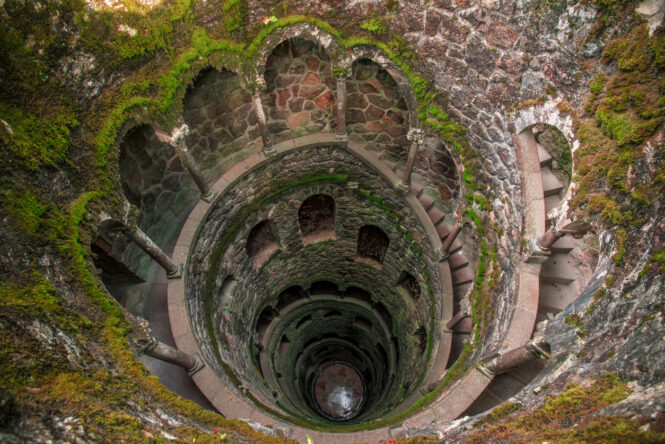
Just a short drive from central Lisbon in the historic town of Sintra, you’ll find one of the most atmospheric properties in Europe. Within the sprawling, UNESCO-protected gardens of Quinta da Regaleira sit 2 mysterious subterranean towers, often called initiation wells. Despite their name, they were never used to supply water.
Instead, these 9-story spiral staircases plunging deep into the earth were historically used for secret Masonic ceremonies and tarot rituals. Walking down the damp stone steps feels like descending into a labyrinth, with hidden tunnels branching off into dark grottoes and secret gardens. You can book a guided tour or explore the grounds independently, making it an absolute must-see if you’re looking for something more mysterious than your standard European palace tour.
Moray, Peru
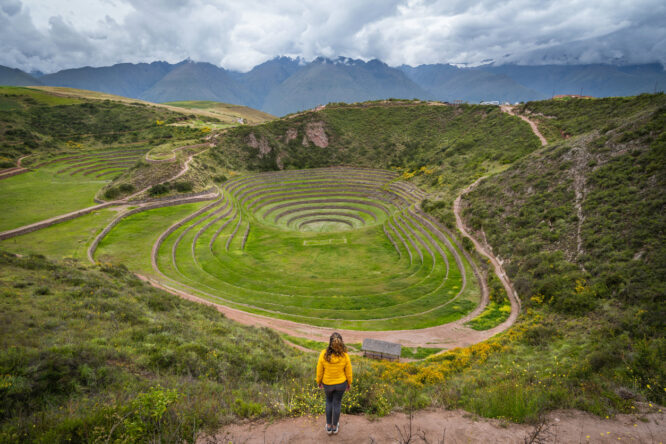
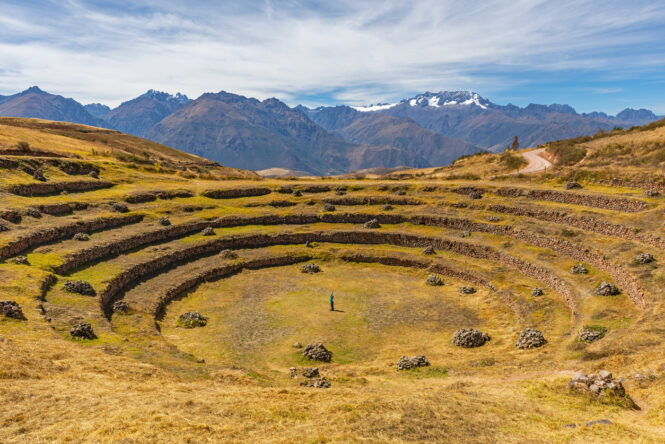
Perched high in Peru’s Sacred Valley at roughly 11,500 feet above sea level, Moray features an extraordinary series of deep, circular agricultural terraces carved directly into the high-altitude earth. Built by the Inca Empire centuries ago, these sunken amphitheatres aren’t just visually stunning; they were actually an advanced agricultural laboratory.
Because of the unique design and depth of the terraces, each ring creates a distinct microclimate, with temperature differences of up to 15 degrees Celsius between the top and the bottom. The Incas used these varying temperature zones to test how different crops adapted to new climates before rolling them out across the empire. A single tourist ticket covers entry to Moray alongside 15 other historic ruins in the region, making it an easy and fascinating addition to any Andean itinerary.