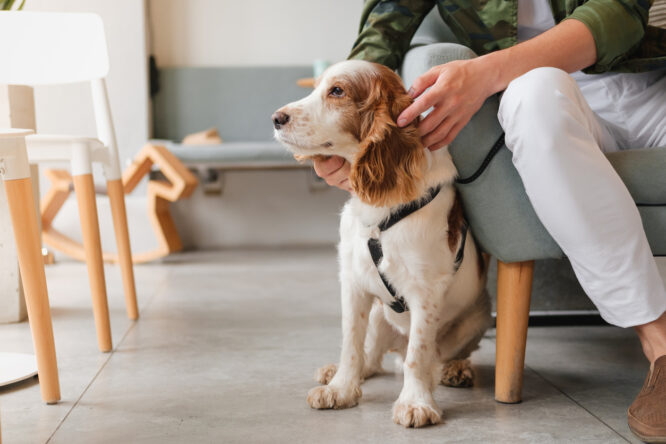
Dogs have been part of our families for thousands of years, sharing our homes, and, it turns out, quite a lot of our germs, too.

Most of us spend a fair amount of time trying to keep our living spaces clean, especially when there’s a newborn crawling around on the carpet. However, fascinating new medical research is flipping that sterile mindset completely on its head. It seems the everyday microbes our four-legged mates track in from the garden might actually play an unexpected, protective role in how our bodies develop from the earliest months of life.
The new study was in-depth and eye-opening.
Researchers tracked 368 newborn babies in Finland, following them from around nine weeks old right through to their first birthday. Parents kept notes on things like ear infections, fevers and antibiotic use throughout that first year, and also reported whether their household included a pet dog.
When each baby reached two months old, researchers collected dust from the living room floor of every home involved. That dust sample gave them a way to measure exactly which bacteria and fungi each baby was actually being exposed to day-to-day essentially capturing a snapshot of the invisible microbial world each child was growing up in.
So, what did the study find?

The results showed something truly interesting. Specific bacteria and fungi linked to dogs, found in household dust, could explain up to a quarter of the connection between having a dog and babies having fewer respiratory infections during that first year of life.
It’s worth being upfront that this kind of study can’t prove dogs are directly causing better health outcomes, since it’s based on observing an existing situation rather than testing cause and effect directly. Still, it’s a promising lead, especially given how long humans and dogs have lived side by side, sharing more than just a home. Healthy dogs themselves tend to carry a wide range of different microbes, which may partly explain why their presence in a household seems to change the microbial makeup of the dust around them so noticeably.
This might also be important for asthma.

Respiratory infections in early childhood are considered a major risk factor for developing asthma later on. If dog-associated microbes really can help prevent some of those early infections, that could potentially lower a child’s risk of asthma down the line too, according to the study’s lead researcher, who noted that preventing early respiratory infections through dog-associated microbes could carry benefits well beyond just that first year of life.
It’s an encouraging possibility, though far from a settled conclusion. Other research digging into dogs and asthma has actually found a more complicated picture.
The picture gets more complicated with older children.

A separate study looked at nearly 100,000 Swedish children, all diagnosed with asthma and airway allergies between the ages of three and sixteen, comparing their health against whether they’d grown up around dogs. That research found that for children who already had asthma, ongoing exposure to a dog didn’t appear to raise their risk of developing severe asthma.
There was, however, a modest increase in asthma flare-ups linked to continued dog exposure in that group. Interestingly, removing dogs from the home later on didn’t seem to change asthma outcomes much either, at least when looking across the wider population, suggesting dogs might not be the deciding factor for asthma that some assume them to be. Taken together, the early-life protective effect and the more mixed picture in children who already have asthma suggest a dog’s influence on the respiratory system may depend heavily on timing, with those first months of life appearing to matter most.
Pets might help our immune systems more broadly.

A separate study published last year found that growing up with pets, particularly for people living in cities, might help protect against a kind of chronic low-level inflammation. One theory behind this involves something scientists call “old friends”, the microbes humans have evolved alongside for thousands of years.
Being exposed to these old, familiar microbes appears to interact with our immune system in a helpful way, encouraging the body to produce more of a specific type of immune cell responsible for keeping inflammation properly regulated. Without enough of that exposure, our bodies may struggle to keep inflammation in check, leading to inflammation that’s either inappropriate or simply doesn’t resolve properly. Researchers involved in that work have pointed out that modern city living tends to reduce our everyday exposure to these old friends in the first place, which is partly why a pet in the home may end up playing a more meaningful role for urban families specifically.
What this all means for families with dogs

According to one of the paediatricians involved in the Finnish research, the microbial environment a child grows up in plays an important role in how their immune system develops, and dogs are clearly part of that picture. There’s even discussion around whether homes could eventually be deliberately designed to support a healthier microbial environment, potentially by adjusting building materials, ventilation or even encouraging certain kinds of everyday household dust.
For now though, this research suggests dog ownership may already be doing exactly that, quietly shaping a healthier start for children growing up in a home with a dog, even if scientists are still working out precisely how and why it happens. As more studies build on these findings, the hope is to eventually pin down exactly which microbes matter most, and whether that knowledge could one day be applied even in homes without a dog at all.