Summer heatwaves might feel like the perfect excuse to soak up the sun, but for the millions of people living with varicose veins, rising temperatures bring far more than just mild discomfort.

While swollen, aching legs are a familiar annoyance during the warmer months, experts are now warning that extreme heat can significantly increase the risk of serious (and potentially life-threatening) vascular complications. Heat causes blood vessels to expand, putting extra strain on already struggling veins and dramatically increasing the chances of dangerous blood clots forming.
If you or someone you know deals with varicose veins, here is why you need to take extra care during hot weather, the warning signs you should never ignore, and simple steps to protect your health when the mercury rises.
Varicose veins affect a huge number of people.

Varicose veins are the swollen, twisted veins that show up under the skin, most commonly on the legs. They’re thought to affect up to 20 million people across the UK at some point in their lives, making them a relatively common condition rather than a rare one.
They develop when the tiny valves inside your veins weaken, which means blood struggles to move through properly. Instead of flowing smoothly, it pools in place, gradually building up pressure inside the vein. Most of the time, this isn’t serious on its own, though it can sometimes require treatment if it causes real pain, swelling, or changes to the skin.
Hot weather adds a serious extra risk on top.
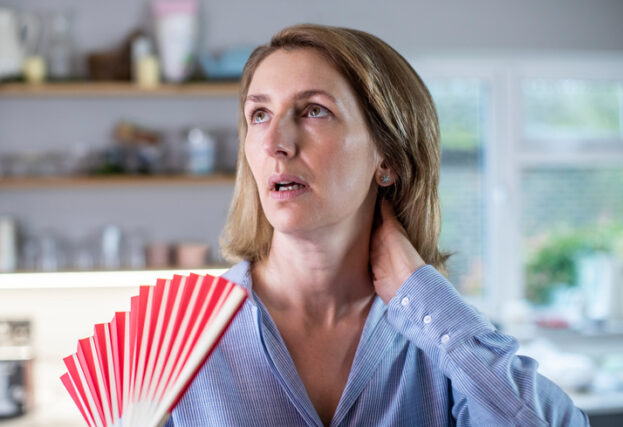
A venous surgeon has warned that people with varicose veins could face a higher risk of dangerous blood clots, specifically during hot weather. Left untreated, these clots can lead to deep vein thrombosis, and in more serious cases, a pulmonary embolism, where a clot ends up blocking an artery in the lungs entirely.
Some research suggests that very small clots building up gradually within the vein valves may cause local inflammation, and could actually play a part in varicose veins forming in the first place. Either way, experts are clear that heat, dehydration, and simply not moving enough can combine into a very risky mix.
Your body reacts to heat in ways that affect your veins directly.
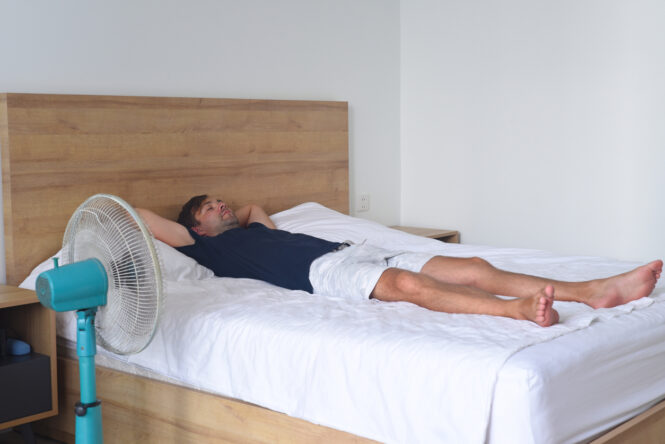
When your body starts overheating, your veins actually widen to help release excess heat, particularly around your head and scalp. This is exactly why your face can look flushed and your veins more visible during hot weather, your body is quite literally trying to cool itself down through them. It’s a normal response on its own, but combined with everything else heat does to your body, it becomes part of a bigger picture that’s important to pay attention to for anyone already dealing with weakened veins.
Dehydration makes your blood thicker, and that’s a real problem.
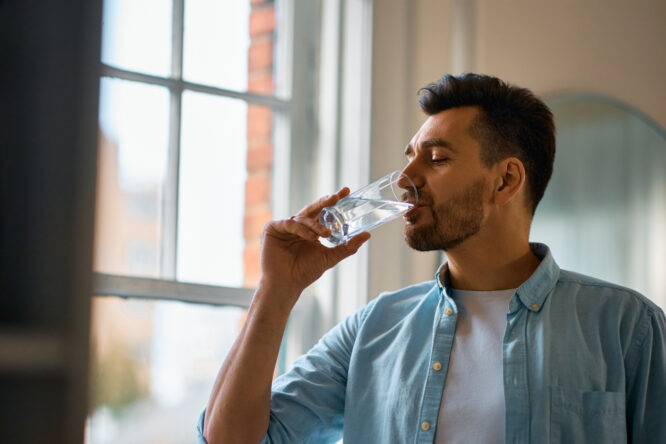
It’s far easier to become dehydrated during hot weather, and plenty of people simply don’t drink enough water without even realising it. Once you’re dehydrated, your body loses water through sweat, which leaves your blood more concentrated and noticeably thicker than usual.
Thicker blood increases the risk of clotting. Add in reduced movement, something that happens naturally when people try to stay still and avoid overheating, or simply end up lounging around more in hot weather, and blood flow slows down even further, pushing that clot risk up even more.
Alcohol makes an already risky combination even worse.

If you’re dehydrated, drinking alcohol on top of that, and already living with varicose veins, your chances of developing a clot rise significantly. It’s a combination that’s easy to fall into during summer, a hot day, a couple of drinks, and not quite enough water throughout. If a clot does form and travels to the lungs, it can cause a pulmonary embolism, a life-threatening blockage that stops oxygen circulating well around the body, and in serious cases, can even lead to a heart attack.
It’s important to know the warning signs of a blood clot.
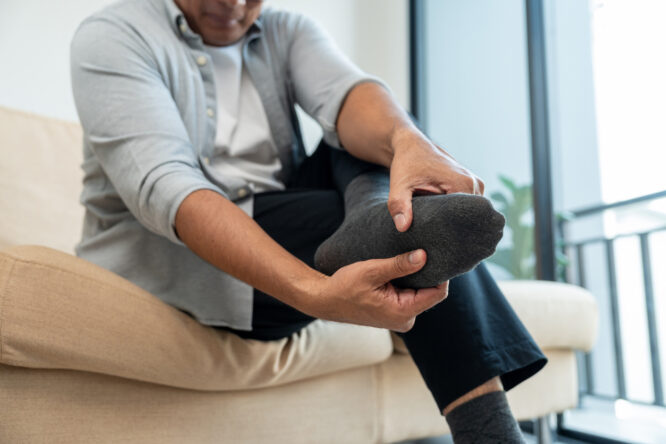
Blood clots are gel-like masses that form inside your arteries and veins. While they play a normal role in controlling bleeding, they can also cause serious problems, including deep vein thrombosis, pulmonary embolism and heart attack.
Signs of DVT in the leg include throbbing pain in one leg, usually in the calf or thigh, along with swelling, and skin that looks red, blue, or noticeably darker around the painful area, something that can be harder to spot on brown or black skin. Swollen veins are another sign worth watching for, and these same symptoms can sometimes show up in an arm instead, depending on where the clot has formed.
You should also know the point at which a clot becomes an emergency.
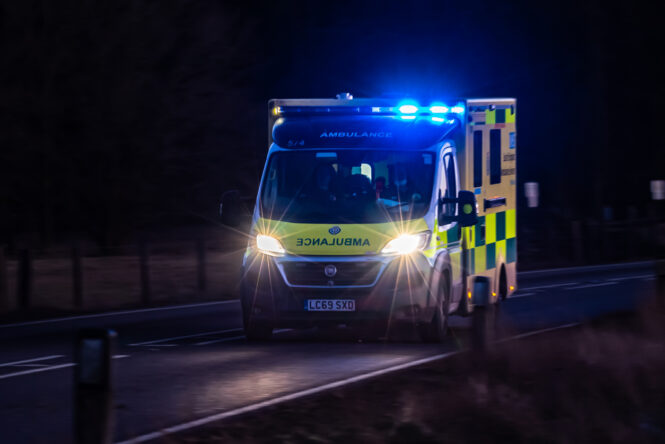
If you think you might have DVT, it’s vital to book an urgent GP appointment or contacting NHS 111 for guidance. However, if DVT symptoms appear alongside shortness of breath or chest pain, that’s a genuine emergency, and you should call 999 or head straight to A&E. Those particular symptoms can mean a clot has travelled to the lungs, and a pulmonary embolism needs treatment immediately. It’s not something to wait out or monitor at home, acting quickly matters here.
Staying hydrated is one of the simplest ways to reduce your risk.
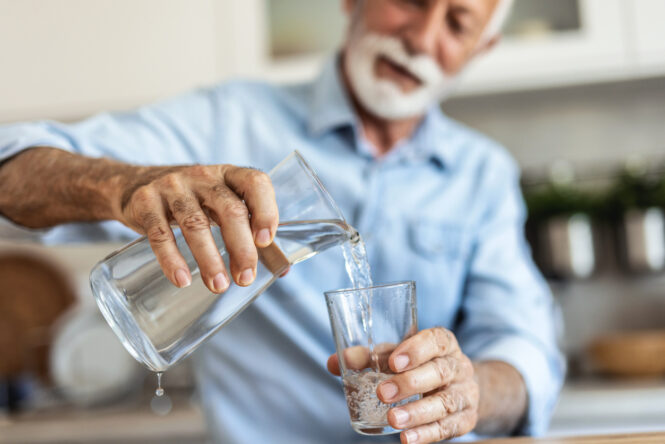
Aiming for around six to eight glasses of fluid a day helps keep your blood at a healthier consistency, reducing the risk of clotting. Water remains the most effective option, though squash, fruit juice and herbal teas can all help top up your fluid levels too.
Sip regularly throughout the day rather than waiting until you feel thirsty, since thirst often kicks in after you’re already a bit dehydrated. Just be mindful that too much caffeine or alcohol can quietly undo your efforts, even if you’re drinking plenty of water alongside them.
Movement is more important than ever in hot weather.

Even light movement helps keep blood flowing properly. Avoid sitting or standing in the same position for long stretches, and if you’re working at a desk or travelling somewhere, try to get up and walk around roughly once an hour. Simply flexing your ankles and calves while seated helps too, giving your blood a gentle nudge to keep circulating even when you can’t get up and move around.
Avoid the hottest part of the day if you can.
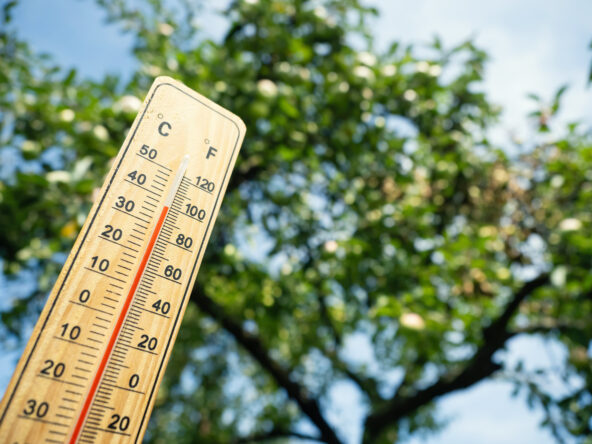
Try to avoid strenuous activity during the hottest hours, roughly between 11 a.m. and 3 p.m., opting for early morning or evening instead when temperatures are noticeably more manageable. Staying in the shade during the peak of the day, using fans or air conditioning where you can, and cooling down with lukewarm showers or a cool cloth on your skin all help your body regulate its temperature more safely.
Overheating is something to be avoided at all costs.
Your body’s internal enzymes only function well within a fairly narrow temperature range. If you get too hot, those enzymes and the structures within your cells actually start to break down, in a similar way to how an egg white turns solid and opaque once it’s cooked. That kind of change is irreversible. Once your body overheats to that point, it simply can’t function correctly anymore, and that’s ultimately what makes extreme heat so dangerous, not just uncomfortable.
Know if you fall into a higher risk group.

You may be at a higher risk of blood clots if you’ve had one before, including a previous DVT or pulmonary embolism, or if you’re pregnant or have recently given birth. Having varicose veins, whether visible or hidden beneath the skin, also raises your risk.
Other risk factors include recent surgery or a major injury, having cancer or undergoing cancer treatment, taking certain hormone-based medications like some contraceptive pills or HRT, being over 60, particularly alongside other risk factors, and having prolonged periods of immobility or a family history of blood clots. If several of these apply to you, be extra mindful during hot weather specifically.