If you’ve driven past a local primary school around drop-off or pick-up time recently, you’ve probably noticed a change.
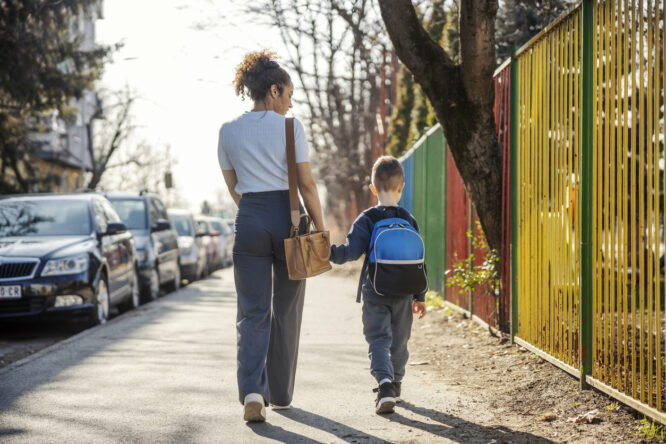
Suddenly, there are metal barriers pulled across the road, high-vis volunteers, and fresh signs banning motor traffic. School Streets have quietly taken over UK neighbourhoods, turning the usual chaotic mess of idling cars and dangerous three-point turns into temporary pedestrian zones.
They’re designed to keep kids safe and cut down on toxic exhaust fumes, but they also tend to spark fierce debates among residents and commuting drivers who suddenly find their usual routes blocked off. Here’s how these restrictions actually work in practice, whether they actually clean up the air, and what it takes to get one set up outside your own local school.
School Streets restrict traffic during the busiest times of day.

The idea behind a School Street is fairly simple. During drop-off and pick-up times, the road directly outside the school gets closed to most through traffic, creating a calmer, safer space for children arriving and leaving. Fewer cars in that immediate stretch also makes it noticeably easier for more families to walk, cycle or wheel to school instead of driving.
These schemes have spread well beyond a handful of pilot streets, too. London alone now has hundreds of School Streets in operation, and more than a thousand exist across the UK as a whole, showing just how far the idea has travelled since it first started.
The evidence suggests that they do actually help.
Air pollution around schools is a real concern, with World Health Organization data suggesting around 93% of children under 15 worldwide breathe air polluted at levels that put their health and development at risk. Given how many children pass through a school gate twice a day, that statistic makes the case for cleaner air outside schools specifically.
Research from City Hall in London found that School Streets reduced nitrogen dioxide levels by up to 23% during the morning drop-off period. Beyond the pollution figures, these schemes also tend to be popular with parents and carers, even though the exact design and impact varies depending on the specific street and school involved.
There are some downsides to the schemes, of course.
Not everyone is fully convinced these schemes solve the underlying problem. Critics argue that restricting one road can simply push traffic and pollution onto neighbouring streets instead, rather than reducing the overall amount of driving happening nearby.
There are also concerns about accessibility. Some residents, business owners, and parents who rely on driving, whether because of a long commute or a real accessibility need, say these restrictions can make getting around more difficult than before.
They’re part of a much bigger conversation right now.
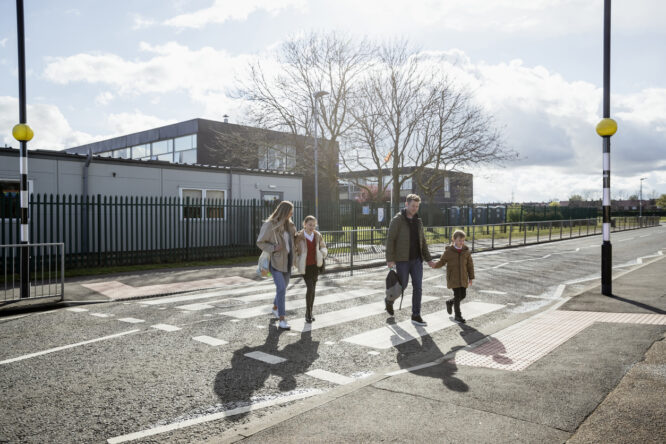
School Streets have become tied into a wider discussion about what people actually want their neighbourhoods to look and feel like day to day. The UK government confirmed in June that a new strategy aims to deliver thousands of new walking, wheeling and cycling routes, along with safer crossings, over the next five years, with schools specifically highlighted as places the government wants to connect more safely.
This same conversation featured prominently during London Climate Action Week in June too, reflecting how closely School Streets are now linked to broader questions about cleaner air, safer streets and how children get to school in the first place.
There are ways to get involved either way.

If your local school already has a School Street in place, it’s worth finding out exactly how the scheme works and sharing your own thoughts and experiences directly with the school or your local council. Feedback like this helps shape how these schemes get refined over time.
If your school doesn’t have one yet, parents, teachers and local residents can start a conversation with the wider school community and local authority about whether a scheme could realistically work on your street. The Clean Cities Campaign also offers resources specifically for communities interested in getting a School Street set up locally.