Everyone feels a bit hurt when someone criticises them or doesn’t want to spend time with them.
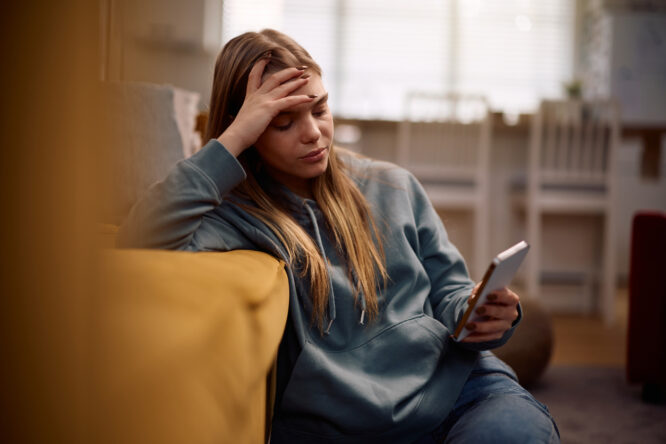
However, for some people, that feeling goes way beyond an ordinary bad moment. A friend forgetting to text back, a slightly harsh comment at work, or even a joke that comes across wrong can bring on something that feels truly awful: a wave of shame, sadness or anger that seems far too big for what actually happened.
This kind of reaction has a name—Rejection Sensitivity Dysphoria—and knowing about it might help explain something you’ve been struggling to understand about yourself. Here’s what it actually is, why it happens, and what actually helps.
Some people feel rejection far more intensely than others.

Most of us feel a little hurt when someone criticises us or seems unhappy with us, but Rejection Sensitivity Dysphoria, often shortened to RSD, describes something much bigger than that, a reaction that goes well beyond what most people would feel in the same moment.
Doctors haven’t officially made RSD its own diagnosis yet, but more and more people are recognising themselves in the description, and more psychologists are taking it seriously too. One researcher who first wrote about it said he’d seen around 300 patients dealing with exactly this, and his colleagues had seen similar numbers too.
The feeling tends to follow the same pattern each time.

According to the researcher who first described RSD, it usually plays out the same way. Something triggers it first, maybe being teased, criticised, turned down, or just feeling like you’ve failed at something. Then comes a sudden, complete mood change, bringing on emotional pain that feels unbearable in the moment.
People have described this feeling in really physical terms, saying it feels like their insides dropped to the floor, or like being punched right in the chest. It’s not just feeling a bit sad, it’s a full-body reaction that can wreck someone’s entire day.
Being scared of rejection can change how someone lives their whole life.
For a lot of people with RSD, it’s not just the reaction itself that’s the problem, it’s being scared it might happen again. That fear can push people into avoiding anything that might lead to rejection, even if it means missing out on things that actually matter to them.
One patient said he’d chosen to keep away from people entirely, explaining that letting people get to know him just wasn’t worth the pain if things went wrong. By the age of 29, he’d never once asked anyone on a date or applied for a job, purely because he was scared of being turned down.
Trying to avoid rejection can sometimes make things worse.
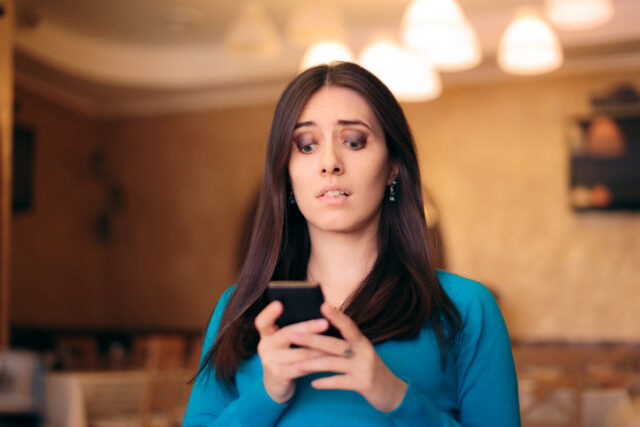
Staying away from people isn’t the only way this shows up. Some people react by snapping at those around them instead, which can end up creating exactly the kind of conflict they were trying to avoid in the first place.
One woman said she believed her husband was constantly making fun of how she managed the house and kids, which would make her either lash out angrily or burst into tears and leave the house. Over time, this pattern put real strain on her marriage, showing how RSD can spill into close relationships in ways that feel completely out of someone’s control.
Some people cope by becoming perfectionists instead.

Rather than avoiding people or snapping at them, some people deal with their fear of rejection by trying to be perfect at everything, constantly working to stay one step ahead of any possible criticism. In the long run, this can lead to exhaustion or burnout.
One 17-year-old girl got help after stress-related headaches started stopping her from going to school. Even while missing so many classes, she was still determined to be the perfect student who never made a single mistake and always came top of the class, all tied back to her fear of being judged.
RSD shows up a lot in people with ADHD.

One of the clearest things that sets RSD apart from ordinary sensitivity is how closely it’s linked to ADHD. Several studies have found that other common ADHD traits, like struggling to concentrate, forgetfulness and acting on impulse, tend to show up alongside RSD too.
Research looking at both children and university students found that the stronger someone’s ADHD traits were, the stronger their reaction to rejection tended to be. Interestingly, the same research found people with ADHD also got less of an emotional boost from praise and good feedback, which one psychologist described as a double hit, feeling criticism harder while getting less benefit from the good stuff.
Growing up with ADHD might explain part of this link.

Some research suggests that by the time they turn 10, kids with ADHD have typically heard around twenty thousand more negative comments than other children their age. Because of how ADHD often shows up in kids, fidgeting, talking over people, struggling to sit still, it tends to draw a lot of correction from parents, teachers and other kids.
Hearing that much criticism throughout childhood could easily lead to a much stronger urge to avoid it later in life. It’s not hard to imagine how years of being told off more than everyone else might shape someone into reacting far more strongly to even small signs of disapproval as an adult.
The brain itself may work a little differently, too.

Beyond just childhood experiences, certain parts of ADHD seem to make emotional reactions bigger on their own. Feeling emotions more strongly and reacting to them more quickly is already a recognised part of ADHD, meaning people are naturally more likely to have bigger emotional responses in general.
People with ADHD may also be more likely to keep replaying upsetting moments over and over in their heads, which can drag out how long the bad feeling lasts. Brain scans have even found real differences in how people with ADHD process emotion, including stronger reactions specifically to unhappy or angry faces, suggesting the brain itself is working a bit differently.
RSD can actually be treated.

As overwhelming as RSD can feel, it responds well to a lot of the same things that help with other emotional struggles. Talking therapy, mindfulness, and simple grounding techniques can all help, especially by teaching someone to be a bit kinder to themselves when negative thoughts creep in.
For people who also have ADHD, medication can help too, not just with focus and concentration, but by helping calm down the emotional reactions tied to RSD directly. It’s worth talking to a doctor about this option if RSD feels like it’s getting in the way of everyday life.
Real people have seen big changes after getting help.

The man who used to avoid dating and job applications altogether was later diagnosed with ADHD, and within two years he’d finished university, started working as an engineer, and had a girlfriend. He still has RSD moments sometimes, but now he has tools from therapy to help talk himself through them.
Another woman said starting ADHD medication changed her life, saying she hadn’t realised just how scared she’d actually been of being hurt by people, especially her husband. The teenage girl with the stress headaches also started medication, and her headaches dropped from several times a week to about once a month, letting her go back to school properly.
Just having a name for it can help too.

Not everyone with RSD needs medication to feel better. For some people, simply finding out there’s a name for what they’re going through, and that other people feel it too, makes a huge difference on its own.
Knowing the name can also help friends and family understand what’s happening and respond with more patience during tough moments, rather than confusion or frustration. Having a name for something, and having other people take it seriously, seems to open the door to being a lot kinder to yourself, which matters just as much as any other kind of help.