Hitting a deep pothole can do serious damage to a car, sometimes shredding a tyre or bending a wheel completely out of shape.
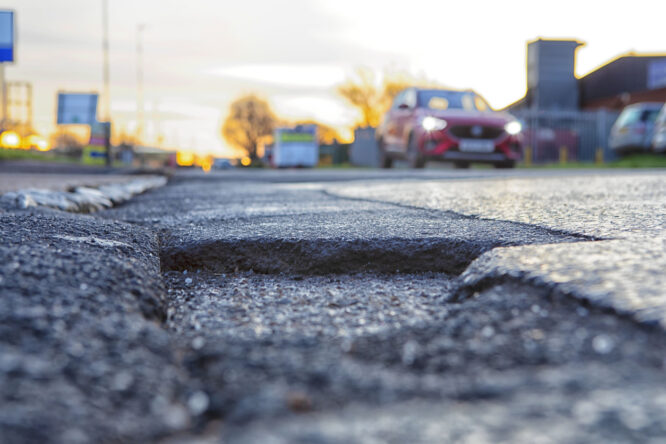
What’s worse is that repairs can quickly run into hundreds of pounds. The good news is drivers aren’t necessarily stuck covering that cost themselves. Councils can be held responsible in certain circumstances, though making a successful claim isn’t always straightforward. Here’s what actually determines whether a claim is likely to succeed, and how to give yourself the best possible chance.
The size of the pothole is important here.
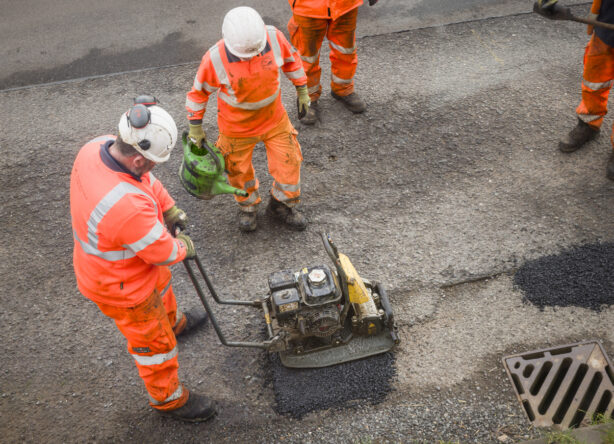
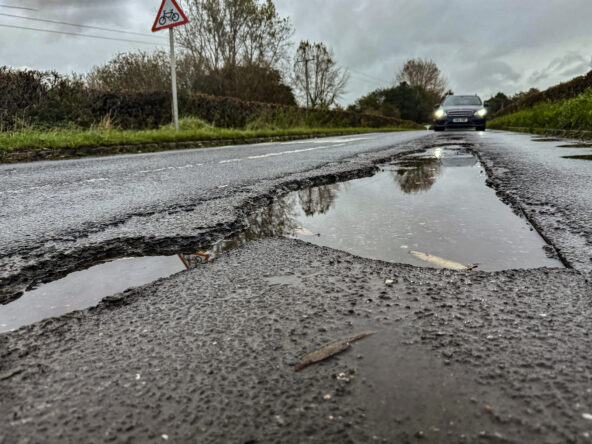
For a claim to have a realistic chance of success, the pothole generally needs to be at least forty millimetres deep, roughly the size of a golf ball, and ideally around three hundred millimetres or more in length. This isn’t an arbitrary number, as since courts and councils have accepted forty millimetres as the standard threshold for what counts as a major defect.
Anything shallower than that tends to be treated as a minor imperfection rather than a serious hazard, meaning the road is still considered reasonably safe under the law even if a shallow pothole causes some damage. The length matters too, since the hole needs to be large enough for a wheel to actually sink into, rather than simply rolling straight over it without much impact.
Whether the pothole had already been reported changes everything.
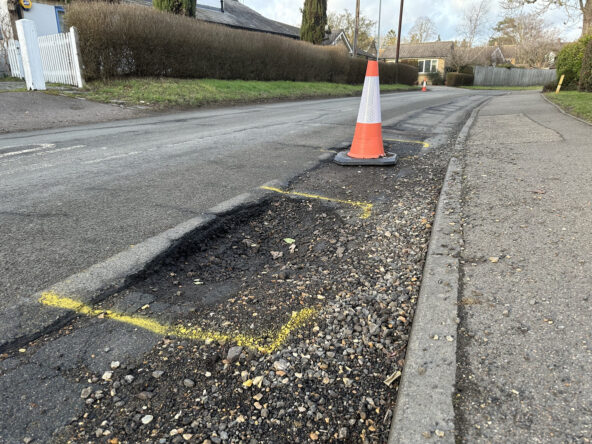
Councils and highway authorities are generally expected to maintain roads to a reasonable standard, but they can’t be held responsible for a defect they didn’t know existed. If a pothole has already been reported and the authority failed to act within a reasonable timeframe, usually around 28 days, a claim becomes considerably stronger.
Taking action doesn’t necessarily mean a full repair straight away, either. Simply marking the defect with paint while a proper fix is scheduled can count as a reasonable response, though this can’t drag on indefinitely without an actual repair eventually following.
Finding out who’s actually responsible for the road comes first.

Most potholes appear on local roads maintained by the relevant council, and fortunately, checking whether a defect has already been reported is usually fairly straightforward. Local authorities generally run map-based websites where existing reported problems can be viewed, alongside the option to report something new.
A charity funded website called Fix My Street offers an even simpler route, letting drivers check for reported issues based purely on their current location, without needing to first work out which authority is responsible. For motorways and major A roads specifically, responsibility shifts to a national body instead, which varies depending on which part of the UK the road is actually in.
A new rating system gives drivers a useful clue.
A relatively new government service now rates local authorities across England using a traffic light system, based on how well they maintain their roads. An authority rated red suggests poor maintenance standards, which works strongly in a driver’s favour if a claim ends up being disputed.
On the other hand, an authority rated green makes it considerably harder to convince a court that negligence took place. Checking this rating before submitting a claim gives drivers a realistic early sense of how strong their case is likely to be.
Gathering solid evidence makes a real difference.
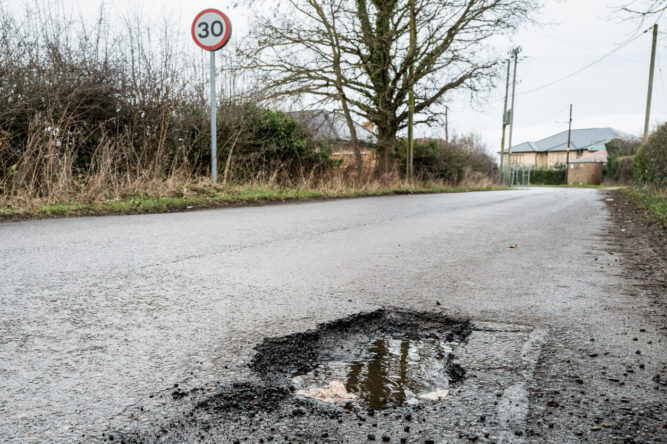
Photos of the pothole are essential, ideally including something like a ruler in the shot to clearly show its size, though nobody should put themselves in danger trying to get the perfect picture on a busy road. Measurements, witness statements, and a written report from a garage confirming exactly what damage occurred, and that it was actually caused by the pothole in question, all strengthen a claim considerably.
Anecdotal evidence suggests that many claims actually get rejected the first time round, only to succeed later on appeal, particularly when the supporting evidence is strong. Getting everything properly organised before submitting the initial claim gives drivers a much better chance of the council simply agreeing to pay without needing to escalate things any further.
Rejected claims can still be taken further.

If an initial claim gets turned down, drivers do have the option of pursuing the matter through the small claims court. Councils will typically rely on a specific legal defence found in Section 58 of the Highways Act 1980, arguing they had a reasonable inspection and repair system in place at the time.
To succeed at this stage, drivers need to prove the authority either lacked such a system entirely, or was negligent in allowing a known, reported pothole to go unrepaired for too long. It’s worth sending a formal final letter before taking court action, clearly setting out the evidence gathered, since this alone can sometimes persuade a council it isn’t worth the cost of contesting the claim.
Going to court comes with its own risks worth considering.

If a small claims case doesn’t succeed, drivers may end up covering some of the council’s own costs, including court fees and reasonable travel expenses. These costs tend to be relatively modest in small claims court specifically, since judges are generally reluctant to award large costs against an individual, particularly when the other side is a much larger organisation like a council.
Even so, it’s worth weighing up the strength of the evidence honestly before deciding whether court action is worth your time. For a larger repair bill, pursuing the claim is often worth the effort, but for smaller amounts, many drivers understandably decide the process simply isn’t worth the time and hassle involved.