Nobody enjoys sitting in a boiling hot car, but there’s a real cost to reaching for the air con button every single time you get in.

Because the air con system is powered by your engine, using it means your car has to work a little harder, which uses more fuel in the process. The good news is there are plenty of simple ways to keep your car cool without draining your fuel tank unnecessarily. Here’s everything worth knowing about how air con affects your fuel use, and when it’s actually better to just wind the windows down instead.
How much extra fuel does your air con really use?
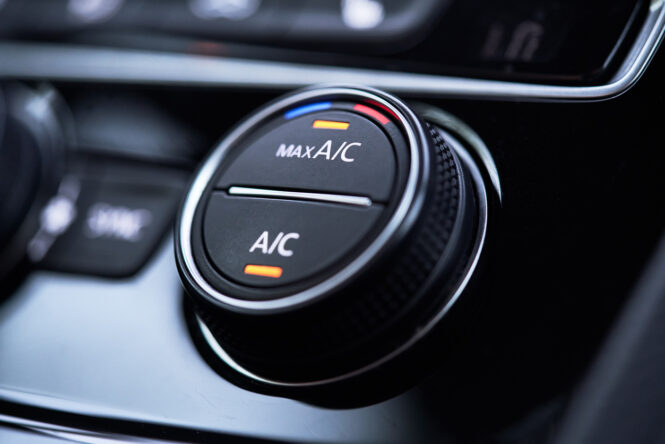
Using your car’s air conditioning typically increases fuel use by around eight to ten percent, which works out to roughly zero point two to zero point four litres of fuel every hour it’s running. That might not sound like much on a single short trip, but it adds up noticeably over weeks and months of regular driving.
This happens because the air con compressor, the part that actually moves cool air through your car, is powered directly by your engine through a belt. Switching the air conditioning on forces your engine to work harder to keep everything running, and that extra effort translates directly into extra fuel being used.
Whether windows or air con saves more fuel depends on your speed.

It’s tempting to assume that opening the windows is always the cheaper option, but that’s not quite true. Driving with the windows down actually creates extra drag, forcing your engine to work harder to push through the added air resistance, which uses more fuel too.
The better choice really comes down to how fast you’re driving at the time. Below around 50 miles an hour, opening the windows tends to be the more efficient option, but once you’re travelling faster than that, the air con usually ends up being the better choice, since drag from open windows becomes a bigger problem the faster you go.
Certain elements affect how much fuel your air con burns through.

A handful of different factors influence exactly how much fuel your air con ends up using on any given trip. Smaller cars tend to feel the impact more noticeably than larger ones, and how well maintained your air conditioning system is plays a role too, since a system that’s overdue for a service has to work harder to do the same job.
Hotter days, larger cabins, and stop start traffic all make your air con work harder as well, since more heat needs to be removed, and the system rarely gets a break to settle at a steady pace. Turning the AC up to its highest setting also reduces efficiency, since the system has to push much harder to keep up with the demand.
Simple habits can cut down how much your air con works.

If your car’s been sitting in the sun and feels like an oven inside, opening the doors or windows briefly before setting off lets the trapped hot air escape before you even start driving. This small step means your AC doesn’t have to work nearly as hard once you do switch it on.
Once the cabin has cooled down, turning the air con down a notch or switching it off can save a surprising amount of fuel over time. Switching to recirculation mode once things have cooled off also helps, since the system only needs to keep recycling air that’s already cool rather than constantly cooling fresh, warm air from outside.
Parking smart makes a bigger difference than you’d expect.

Where you park before a journey matters as well. A car left in direct sunlight heats up far more than one parked in the shade, meaning the AC has to work considerably harder just to bring the temperature back down to something comfortable once you set off.
Using a simple windscreen sunshade when you’re parked up can help keep the cabin noticeably cooler while you’re away from the car. Combined with parking in the shade whenever it’s an option, this small habit alone can meaningfully cut down how hard your air con needs to work later.
Keeping your AC system properly maintained matters just as much.

Regular servicing plays a bigger role in fuel efficiency than most drivers realise. Most manufacturers recommend having the air conditioning system serviced roughly every two years, mainly because the refrigerant gas inside gradually leaks away over time, even without any obvious fault.
As refrigerant levels drop, the whole system becomes less efficient and has to work harder just to produce the same cooling effect it used to manage easily. Staying on top of servicing, along with simple habits like clearing debris away from the air intake and changing the cabin filter when it’s due, keeps everything running as efficiently as possible.
Air con isn’t just useful for hot summer days.

It’s easy to think of AC as something only worth switching on during a heatwave, but it actually plays a useful role all year round. In colder months, it helps demist your windows quickly, which matters just as much for visibility and safety as staying cool in summer does.
Because of this, keeping your air con system running efficiently isn’t really a seasonal job at all. Using it regularly throughout the year, rather than letting it sit unused for months at a time, actually helps keep the whole system working properly whenever you do need it.