Most of us rely on GPS for pretty much everything now.

Even familiar routes get the sat nav treatment, just in case. It’s efficient and ensures we get where we want to go, but there’s a growing body of research suggesting that all that outsourcing of navigation to our phones might not be doing our brains any favours in the long run. A large study looking at hundreds of different jobs found something unexpected sitting at the top of the list for dementia protection, and it turns out to be the people who spend their working lives finding their way around.
The results of the study were unexpected, but not all that surprising.

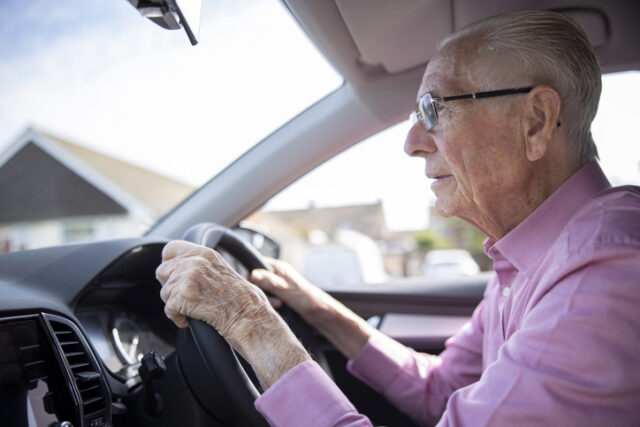
Researchers looked at the working lives and causes of death of millions of people across around 400 different occupations. When they compared the results, taxi and ambulance drivers came out as the least likely to die from Alzheimer’s disease. That’s not a small or obscure study, it’s a substantial piece of work that produced a fairly striking result. The thing that sets these jobs apart is that they require constant, active navigation, finding the best route, adapting when something changes, building up a mental map of an area over years of driving.
Bus drivers, by comparison, didn’t show the same level of protection. The likely reason is that bus routes are fixed. You drive the same roads in the same order every day, which means the navigational challenge is essentially gone after you’ve learned the route. It’s the act of actively working out where you are and where you need to go that seems to matter.
The part of the brain that navigation uses is also the first hit by Alzheimer’s.

There’s a region of the brain called the hippocampus that plays a central role in spatial awareness and navigation. It’s also, notably, the first area to start deteriorating when Alzheimer’s begins to develop. Research into London taxi drivers, who have to pass one of the most demanding navigation tests in the world before they can get a licence, found that training for that test actually caused their hippocampus to grow larger. Regular, active navigation was physically changing the brain in a beneficial way.
If the hippocampus is bigger and more developed, the thinking goes, there’s more of it to lose before things start going wrong. It creates a kind of buffer. That’s not a guarantee against dementia, but it may mean the point at which it becomes noticeable is pushed back, and that matters enormously for quality of life.
There’s a catch to the findings, of course.

The study isn’t entirely straightforward, and it’s important to be honest about the complication. Taxi and ambulance drivers were also found to be more likely to die younger than other occupations, for various reasons related to the demands of the job. That matters because Alzheimer’s is a disease that becomes more likely the older you get. If people in those jobs aren’t living long enough to reach the age where Alzheimer’s typically develops, that could partly explain why fewer of them die from it.
Researchers were aware of this and reran their analysis taking age into account, and still found a considerable protective effect. So the navigation aspect does seem to be doing something real, even when you factor out the age difference. But it’s a nuance worth knowing rather than taking the headline finding entirely at face value.
What does this mean for those of us who aren’t taxi drivers?

The interesting question is whether the same principle applies to ordinary life, not just to people whose jobs revolve around navigation. The evidence suggests it does. If keeping the hippocampus active through navigation is actually protective, then the habits of everyday life that involve finding your way around without being told where to go are probably contributing to that too.
The problem is that GPS has removed most of those moments from daily life. You leave the house, open an app, and follow instructions. You don’t build a mental map of where you’ve been, you don’t remember landmarks, you don’t problem-solve when you take a wrong turn. You just do what the voice says. That’s very convenient and almost certainly not great for the part of your brain you’d most like to keep healthy.
Getting lost on purpose might be one of the better things you can do.
Research into brain health in older adults consistently points to a combination of physical activity, nature exposure, social connection, and mental engagement. Walking somewhere without GPS, especially somewhere unfamiliar like a forest or a new part of a city, ticks several of those boxes at once. You’re moving, you’re outside, and you’re actively processing your environment rather than passively following directions.
The advice isn’t to abandon navigation tools entirely, particularly if you’re driving somewhere unfamiliar and need to arrive at a specific time. But building in regular walks where you leave the phone in your pocket and rely on your own sense of direction is a low-effort habit that might be more valuable than it sounds. Even getting slightly lost and working out how to get back is the kind of challenge that keeps the relevant part of the brain engaged.
Navigation is part of a broader picture of cognitive reserve.

The protection that taxi drivers seem to have from dementia is probably best understood as part of the wider concept of cognitive reserve, the idea that the more you use and develop your brain throughout life, the more of it you have in reserve before things start to decline. Education, mentally demanding work, learning new skills, staying socially active, all of these contribute to the same thing.
Navigation is one specific input into that broader picture. It’s not a magic bullet any more than any other single lifestyle factor is. But it’s a meaningful one, and the fact that it maps so specifically onto the part of the brain most vulnerable to Alzheimer’s makes it particularly interesting. You’re essentially exercising the exact muscle that the disease attacks first.
The GPS question is going to get more relevant over time.

The study looked at historical data, which means many of the drivers included in it were working before GPS was widely used. They were building mental maps of their cities and towns through daily experience. It’s an open question whether the same protective effect would show up in drivers today who are navigating primarily by sat nav rather than by knowledge.
That uncertainty cuts both ways. It might mean the benefit is smaller now than it was for that generation of drivers. However, it also raises the question of whether the widespread adoption of GPS across everyday life is something future research will connect to changes in brain health at a population level. Nobody knows the answer to that yet, but it’s the kind of thing you should think about when you’re deciding whether to actually learn the route or just follow the phone.
Try some small changes to how you get around.

You don’t need to do the Knowledge or drive an ambulance to get some of this benefit. Walking a familiar route without checking your phone. Trying to describe to someone how to get somewhere rather than just sending them a pin. Exploring a new area on foot with only a rough idea of where you’re headed. These are all small ways of keeping that navigational part of the brain doing something.
Going somewhere new with friends rather than alone adds the social element on top, and socialising is itself associated with lower dementia risk. A walk in a new place, with people you enjoy spending time with, where you’re actively navigating rather than following a screen, turns out to combine several of the things that research consistently points to for long-term brain health. It doesn’t have to be anything more complicated or effortful than that.