If you’ve ever killed a houseplant and felt vaguely guilty about it, here’s something that might put things in perspective.
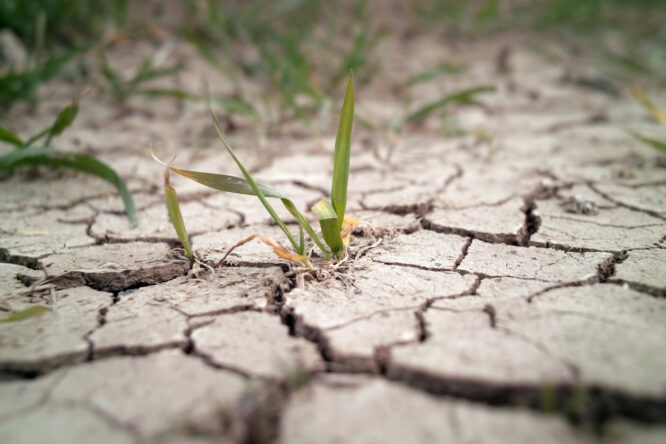
Plants as a whole are going to be absolutely fine for quite a long time. We’re talking nearly two billion years, which is so far beyond anything the human brain can process that it almost stops being a real number. However, scientists have actually sat down and worked out when the very last plant on Earth might die, and the answer is fascinating.
The sun is the thing that will eventually do it.
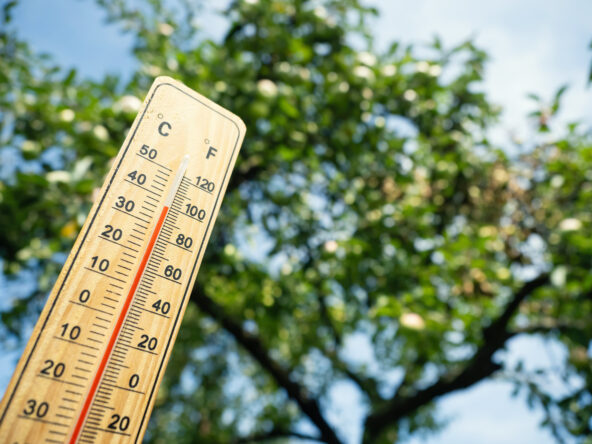
The sun isn’t a fixed, stable thing. It’s been slowly getting brighter over billions of years, and it’s going to keep doing that. In about 1.87 billion years it’ll be around 20% brighter than it is now, and that extra heat and light is what’s predicted to finally push plants to their limit. Either the temperature on land becomes too extreme for anything to survive, or something else happens to the carbon dioxide in the atmosphere that plants need to live. Either way, the sun is at the centre of it.
What’s interesting is that researchers ran two different versions of how this plays out. In one, the planet’s natural carbon cycle strips so much carbon dioxide out of the atmosphere over time that plants basically starve. In the other, carbon dioxide stays steady, but the temperature just keeps climbing until land becomes uninhabitable. Both scenarios put the end of plant life at roughly the same point, around 1.84 to 1.87 billion years from now.
The carbon cycle has a lot to do with this.

There’s a natural process where carbon dioxide gets absorbed into the oceans, gradually settles on the seafloor, turns into rock, and eventually gets released back into the atmosphere through volcanic activity. It’s a cycle that’s been running for billions of years, and it keeps carbon levels relatively balanced. The uncertainty is around how much the rate of that process changes as temperatures rise, which is why the researchers ran two versions rather than one definitive model.
In the scenario where the cycle runs strongly, it pulls so much carbon dioxide out of the atmosphere that plants can’t photosynthesise properly. They need carbon dioxide the way we need oxygen, so if it drops below a certain threshold, they just can’t function. It’s a slow process spanning hundreds of millions of years, not something dramatic, just a gradual fading out.
This is actually longer than most previous estimates.
Earlier research had generally put the end of plant life on Earth at a somewhat shorter timeline, so this study extends things a bit. The finding that plants might still be alive at the point the oceans start to evaporate is particularly striking. It essentially means that as long as Earth has liquid water on its surface, some form of plant life might still be clinging on somewhere. That’s a whole other way of thinking about the outer limit of life on this planet.
Obviously, none of this is certain. These are models based on current understanding of how stars age, how carbon cycles work, and how plants tolerate different conditions. The actual future will depend on countless variables that are impossible to predict precisely. However, the broad picture is probably in the right ballpark, and the broad picture is that plants are doing fine for an extraordinarily long time.
Plants might not even stay on the ground.
The researchers noted that their predictions don’t account for evolution, and over nearly two billion years, plants could change in ways that are unimaginable right now. One possibility they raised is that as conditions on land become more extreme, plants might adapt to survive in higher altitudes or even the upper atmosphere. Life finds ways to keep going in conditions that seem impossible, and there’s no reason to assume plants are at their evolutionary limit today.
There’s also speculation, and it is very speculative, about life eventually dispersing beyond Earth altogether. Spores or other biological material reaching the moon, comets, or floating in space. It sounds far-fetched, but the researchers included it as an actual possibility over these kinds of timescales. Evolution doesn’t care about what seems reasonable to us right now.
Humans could theoretically change the outcome.

The study was also run without accounting for any technological intervention, which is a major caution given that humans or whatever comes after us could theoretically do quite a lot to alter the trajectory. Ideas like putting reflective material in the upper atmosphere to reduce how much solar energy reaches Earth’s surface, or engineering ways to regulate the planet’s temperature, have been discussed in scientific circles for years. Whether any of that would be feasible or wise is a separate question.
Even more outlandish ideas exist, including ways to gradually move Earth’s orbit further from the sun as it brightens, or to somehow slow the sun’s own evolution. These are so far beyond current technology that they barely count as plans, but the point is that the timeline isn’t necessarily fixed. It’s the maximum lifespan, assuming things continue as they are and nothing intervenes. That’s a meaningful distinction.
This says a lot about how resilient life actually is.
One of the things worth sitting with here is just how persistent life on Earth has been. It’s survived mass extinctions, asteroid impacts, dramatic changes in climate, and conditions that would have seemed apocalyptic at the time. Plants specifically have been around for hundreds of millions of years and have adapted to an enormous range of environments. The idea that they’ll still be here in some form nearly two billion years from now feels almost absurd, but it’s consistent with everything we know about how stubbornly life holds on.
The researchers made a point of saying that what we observe about plants today might not reflect the hard limits of what plants can become. The biosphere we see now is a snapshot of one moment in an enormously long story, and there’s no particular reason to assume the story ends here or that the characters in it stay the same.
This is important to think about, even if it seems far away.
There’s something deeply calming about this kind of research, even though it’s describing the eventual end of everything green. It puts human timescales into a perspective that’s hard to hold onto, but worth trying. We worry a lot, understandably, about what’s happening to the planet right now, and those worries are legitimate and urgent. But the Earth itself, and the life on it, operates on a scale that dwarfs anything in human history by such a margin that it almost becomes philosophical.
The natural end of plant life on Earth isn’t coming because of anything we do or don’t do. It’s an astronomical inevitability tied to the life cycle of the star we orbit. What we do in the much shorter term, the next few hundred years rather than the next two billion, is a different conversation. But occasionally zooming out this far is a strange kind of reminder that life, on the whole, is doing remarkably well.
The very last plant scenario is oddly moving.
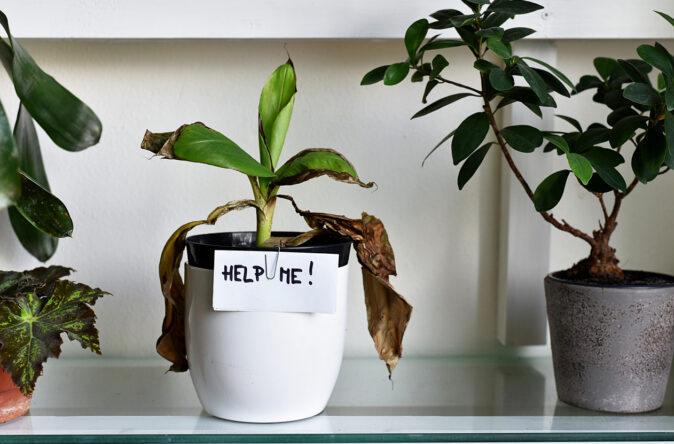
Think about what that looks like, an Earth where the last plant is alive somewhere. Maybe in some cooler corner of a rapidly heating world, or clinging on at altitude where conditions are still just barely tolerable. It’ll have no idea it’s the last one. There won’t be a ceremony. It’ll just be doing what plants do, converting light into energy, growing towards whatever light is available, and eventually stopping.
That might happen nearly two billion years from now, or it might happen differently because of evolution or intervention or something nobody has thought of yet. Either way, the distance between now and then is so vast that every generation of every species between here and there will live out its entire existence without being anywhere near that ending. That’s both humbling and, in a quiet way, quite reassuring.