Menopause is being talked about much more these days, which is a good thing, but it’s not all positive news.
It’s misrepresented in the media, and surrounded by a market full of products promising to fix things they don’t really understand. Years of limited conversation about midlife women’s health have left a lot of myths firmly in place, and some of them are doing real harm, either making the transition feel scarier than it needs to be, or leading people to dismiss symptoms that actually deserve attention and support.
Understanding what’s happening during the menopause transition makes it easier to navigate, easier to talk to a doctor about, and easier to spot when something being sold to you is more marketing than medicine. Here are six of the most common myths, and what experts actually say instead.
It doesn’t happen at the same age for everyone—not even close.

The average age of menopause in most Western countries sits around 52, but that average covers an enormous range of individual experience. Perimenopause, which is the transition period leading up to menopause itself, can begin in a woman’s early 40s, sometimes even earlier, and the symptoms that come with it don’t wait for any particular birthday.
Menopause is technically defined as the point at which someone hasn’t had a period for twelve consecutive months, which means it’s a single moment in time rather than a process. Everything leading up to that point is the transition, and that’s where most of the experience actually happens.
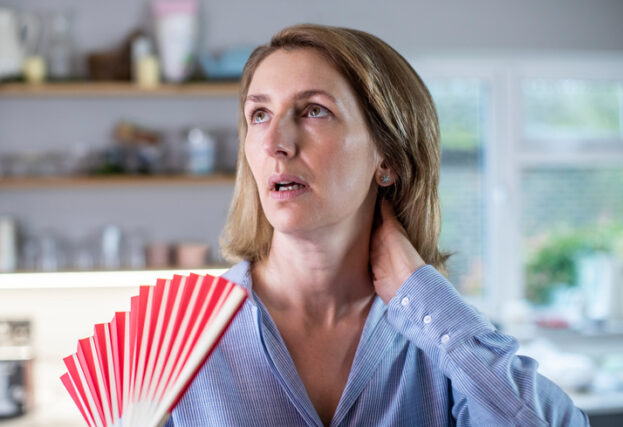
Expecting it to arrive on a set schedule is one of the reasons so many women are caught off guard when symptoms start earlier than anticipated. Irregular periods, disrupted sleep, mood changes, and hot flushes can all be part of perimenopause years before menopause itself arrives, and knowing that is useful so you don’t spend time looking for another explanation for what’s going on.
It doesn’t mean the end of a satisfying relationship.
 Getty Images

This myth has more to do with cultural attitudes about ageing women than it does with biology. The idea that menopause marks a loss of vitality or sexuality has been shaped largely by decades of limited conversation and a tendency to frame midlife as decline rather than transition. The reality is more complicated and considerably more encouraging than that narrative suggests.
Hormonal changes during the transition can affect things. Declining oestrogen can cause dryness down below, changes in sensation, and sometimes discomfort during intimacy, and disrupted sleep or mood can impact desire. Those are real effects and worth addressing. However, effective treatments exist for all of them, and many women find that their experience of intimacy during and after menopause is shaped far more by their relationship, their overall health, and their own attitude than by their hormone levels. It’s a transition, not a full stop.
You can still fall pregnant during perimenopause.

This one catches people out more than you’d think. Fertility does decline with age, but irregular periods during perimenopause don’t mean ovulation has stopped. As long as periods are still occurring, even sporadically, conception remains possible, which means contraception is still relevant. Methods that rely on cycle timing become particularly unreliable during this phase precisely because the cycle is unpredictable, so it’s worth discussing options with a doctor if this is something that matters to you.
The assumption that perimenopause equals infertility is understandable given that it’s the beginning of the end of the reproductive years, but it’s not accurate enough to rely on. Until menopause is confirmed, which happens 12 full months without a period, the possibility of pregnancy is still there.
A blood test isn’t usually how perimenopause gets diagnosed.

Many people assume there’s a definitive test that confirms whether you’re in perimenopause, but for most women that’s not how it works. Symptoms and menstrual changes are the main indicators, particularly for someone who has had regular cycles and isn’t using hormonal contraception that might mask what’s happening naturally. Irregular periods combined with typical symptoms like hot flushes, sleep disruption, and mood changes are usually enough for a doctor to identify what’s going on without needing bloodwork.
Blood tests can be useful in specific situations—for example, if someone has missed periods at an unusually young age, or if there’s another medical reason to investigate hormonal changes. However, the idea that you need a blood test to confirm perimenopause before taking your symptoms seriously isn’t accurate, and it sometimes leads to women being sent away without the support they actually need.
No supplement is going to cure menopause symptoms.

The supplement market aimed at midlife women is enormous and largely unregulated, which is a combination worth being cautious about. Supplements don’t go through the same rigorous testing for safety, effectiveness, and accuracy of claims as licensed medications, which means something can be widely sold and confidently marketed without any solid evidence that it does what it says. Some products aimed at menopausal women are essentially standard supplements repackaged with menopause-specific branding and sold at a higher price.
That doesn’t mean every supplement is useless, but it does mean the burden of proof matters and that a product being popular or expensive isn’t evidence that it works. If you’re struggling with symptoms, the conversation is better had with a doctor who can talk through evidence-based options, including hormone replacement therapy, which is one of the most effective treatments available and is underused partly because of outdated fears that don’t reflect current understanding of the evidence.
Menopause doesn’t directly cause weight gain, but ageing does.
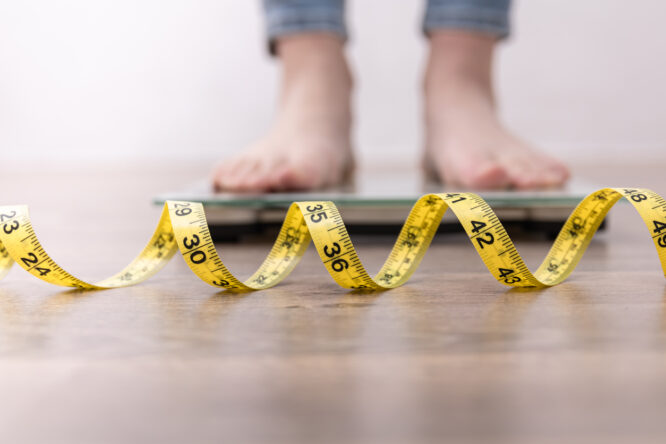
This is a nuanced one because the frustration women feel about weight changes during midlife is completely valid. It’s just that the cause is more complicated than menopause alone. Hormonal changes during the transition do affect where the body stores fat, often shifting it towards the abdomen, and that change is real and noticeable. However, research looking at metabolic rate in midlife women found that after accounting for age, body composition, and physical activity, perimenopause and postmenopause weren’t directly linked to a reduction in the number of calories burned at rest.
Ageing itself is the bigger driver. As the body gets older, muscle mass gradually decreases and the metabolic rate slows, which means the same habits that maintained a stable weight in your 30s don’t automatically work in the same way in your 40s and 50s. The solution isn’t to resign yourself to it. Strength training is particularly effective during this period because it directly counters that muscle loss and supports bone density at the same time. Understanding the actual cause makes it easier to address it in a way that works.
There are things that help during the menopause transition.

Sleep, stress management, and regular movement come up consistently in the evidence as the habits that make the most meaningful difference to how the transition feels. Sleep problems are among the most common complaints during this phase, and they’re also among the most treatable. Cognitive behavioural therapy has good evidence behind it for menopausal insomnia, and physical exercise has been shown to help with sleep quality too. As little as ten minutes a day of mindfulness, meditation, or breathing practice has been found to make symptoms more manageable for some women.
Exercise, and strength training in particular, is worth prioritising if you’re not already doing it. Alongside the metabolic and bone density benefits, regular movement has been shown to improve hot flushes, mood, and overall wellbeing during midlife.
If symptoms are really affecting your quality of life, it’s worth having a conversation with your doctor about all available options, including HRT, which remains one of the most effective treatments available. The menopause transition is normal, it’s manageable, and no one should be expected to simply push through it without support.