Counterfeit banknotes might sound like the stuff of crime dramas, but they pop up in everyday British life pretty often.
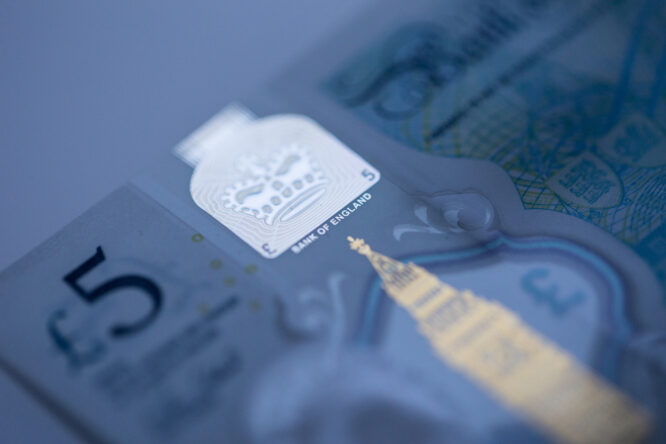
Pubs, shops, car boot sales and second-hand transactions are all places where fake notes occasionally turn up, and once you’ve got one, you’re the one out of pocket. The good news is that modern UK banknotes are clever, with layers of security features built in to help anyone spot a fake in seconds. Here’s exactly how to check a banknote, what to do if you end up with a dodgy one, and why it’s worth knowing the difference.
Why do counterfeit notes still circulate?

You’d think in an age of contactless payments and bank transfers, fake cash would be a problem of the past. But while card use has soared, cash is still used regularly across the UK, particularly in pubs, markets, taxis, and small independent shops. That keeps the door open for counterfeiters, who target busy environments where notes are handed over quickly and not always thoroughly checked.
Polymer notes, which have now fully replaced the old paper versions in the UK, are far harder to fake than the old style. But counterfeiters have got more sophisticated too, and convincing fakes still slip into circulation. The trick is knowing exactly what to look for, since one quick check before you accept a note can save you from being out of pocket later on.
Check the serial number first.
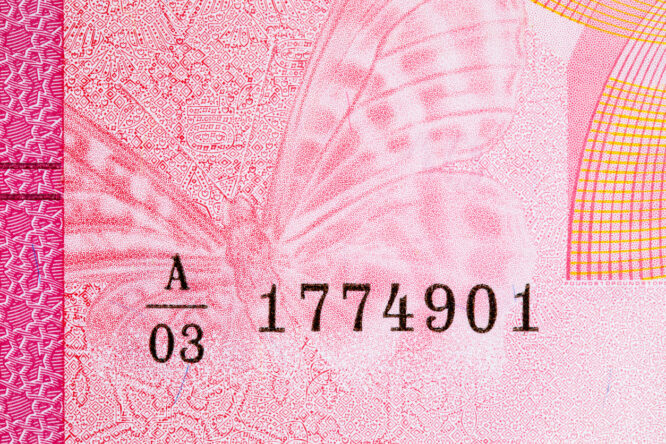
Every genuine UK banknote has a unique serial number printed on it. If you happen to have two notes side by side with the same serial number, at least one of them is a fake. This is one of the easiest checks to do, and it only takes a few seconds.
Counterfeiters often reuse the same serial number across multiple notes, especially when producing fakes in batches. So if you receive several notes at once, comparing the serial numbers is a quick way to spot if something’s wrong. Pubs, shops, and businesses that handle large quantities of cash often train their staff to do this as standard practice.
Look for the foil and colour-change features.
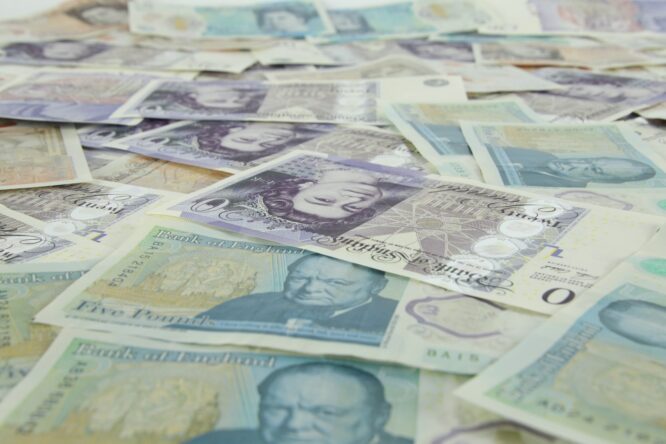
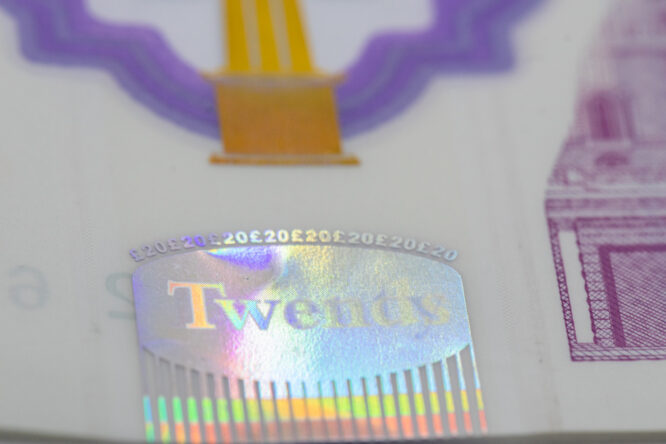
Tilt a genuine banknote in the light, and you’ll see the colours shift, the foil shimmer, and certain images change. The Queen’s portrait on older notes and the King’s on newer ones, the famous figure on the reverse, and various small icons are all designed to react to movement. A genuine note catches the light, while a counterfeit usually looks flat and lifeless when tilted.
Foil features in particular are tricky for counterfeiters to replicate. They use complex layering and metallic finishes that ordinary printers can’t reproduce. If the foil looks dull, doesn’t change colour, or seems painted on, that’s a serious red flag. Always tilt the note in good light to see the security features do what they’re supposed to.
Feel the texture.

Genuine UK banknotes have a distinct feel to them. Polymer notes are smooth and slightly waxy, with raised printing in certain areas that you can actually feel with your fingertips. Run your fingers over the front of the note, particularly around the lettering and main portrait, and you should feel a slight roughness where the ink has been raised during printing.
Counterfeit notes often feel completely flat, like a normal photocopy or printout. The polymer itself can also feel wrong, with cheaper fakes using paper-like material or thin plastic that doesn’t have the same heft as a genuine note. A real note also makes a satisfying snap when flicked, while fakes tend to feel limp or flimsy.
Spot the clear window.

One of the easiest security features to check on polymer notes is the clear window. Every genuine polymer note has at least one transparent window with intricate detail printed inside it. The £20 note has a window shaped like Turner’s lighthouse, while the £50 has one featuring a steam engine and clouds. The £10 note has a circular window with the Queen’s or King’s portrait inside it.
Counterfeit notes often skip the clear window entirely or include a poor imitation, with the design printed onto a sticker or piece of clear plastic that’s been stuck onto the note. Hold the note up to the light and look closely at the window. If the detail inside it looks blurry, doesn’t line up properly, or appears to be added on rather than part of the note itself, you’ve likely got a fake on your hands.
Look for the microtext.
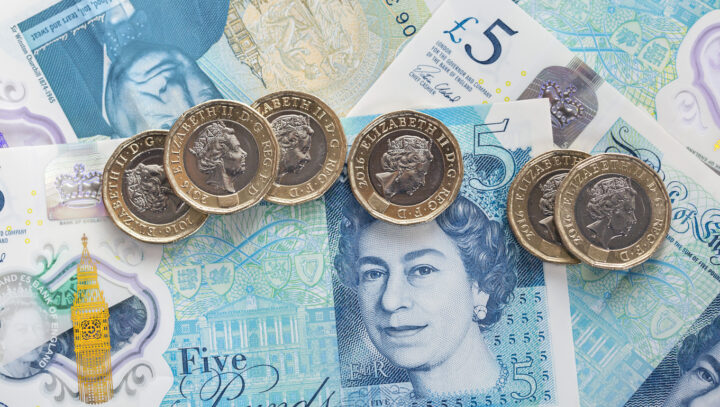
Tucked away in tiny corners of every genuine banknote is microtext, which is small printing only visible under a magnifying glass or with a sharp eye in good light. The lettering is so tiny and detailed that counterfeiters often skip it entirely or replace it with a smudged dot pattern. On polymer notes, you’ll find microtext around the main portrait and along certain edges of the design.
If you’ve got the chance, having a quick look at the microtext is a great extra check. On a genuine note, even though it’s tiny, the text is sharp, with each letter clearly defined. On a counterfeit, the same area usually looks like a blurred line or a series of dots. A magnifying glass or even a phone camera zoomed in can reveal a fake in seconds.
Check the UV features.
Genuine UK notes have hidden features that only show up under ultraviolet light. The value of the note often appears in a bright colour, and various designs and patterns light up in places you’d never spot under normal lighting. Many shops, pubs, and supermarkets keep small UV pen lights or counterfeit-detector machines under the till specifically for this purpose.
If you’re regularly handling cash, picking up a basic UV torch is a worthwhile investment. They’re cheap, often less than £10, and they let you do a check in seconds. If you hold a suspicious note under UV light and nothing shows up, or the wrong colours appear, you can be sure the note is fake.
Examine the printing quality.
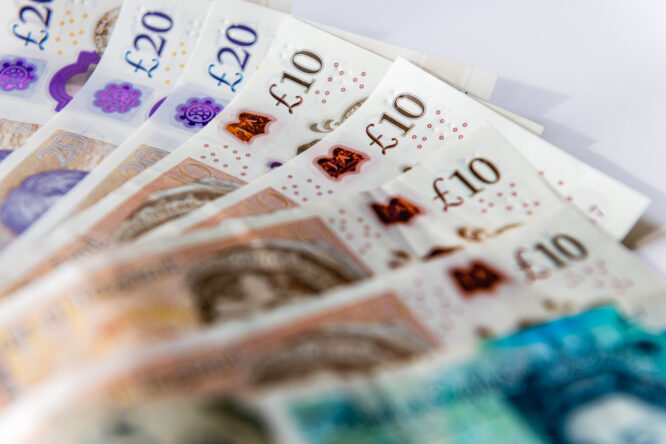
One of the clearest tells of a counterfeit is the quality of the printing itself. Genuine notes have sharp, well-defined lines and bright, distinct colours. The print looks crisp and clean, with no blurred edges, no hazy patches and no spots where the colours bleed into one another.
Counterfeit notes often look slightly off when you compare them to a genuine one. Lines might be fuzzy, the colours might look washed out or oddly saturated, and certain fine details might be missing altogether. Holding a suspicious note next to one you know is real is the simplest way to spot the difference, since the contrast becomes immediately obvious once you put them side by side.
Don’t rely on just one check.
The most important advice from banking authorities is to never rely on a single security feature alone. Counterfeiters can sometimes mimic one or two features convincingly, but they almost never manage to replicate them all. So if you’re checking a note that feels off, run through several checks rather than just one or two. The combination of serial number, feel, clear window, foil, microtext, and UV features makes it hard for any fake to pass scrutiny.
For shops and businesses, this layered approach is part of standard cash-handling training. Tills are often equipped with counterfeit detector pens, UV lights and a quick reference card showing genuine security features. For individuals, knowing two or three of the easier checks is usually enough to catch most fakes you’d come across in everyday life.
What to do if you spot a fake
If you find yourself with a banknote you suspect is counterfeit, the rules are clear. If you don’t know who gave you the note, take it straight to your local bank branch. They’ll fill out a Retention of Counterfeit Currency Form, give you a copy for your records, and forward the note to the National Crime Agency for analysis. The bank won’t reimburse you for the fake unless it turns out to be genuine after all.
If you do know who gave you the note, take it to the police rather than the bank, since a crime has potentially been committed. Don’t try to pass the note on to someone else, even unknowingly. Knowingly passing on a counterfeit banknote is a criminal offence in the UK, even if you didn’t make the fake yourself. The honest thing to do is hand it over to the proper authorities and accept the loss.
How to avoid getting one in the first place
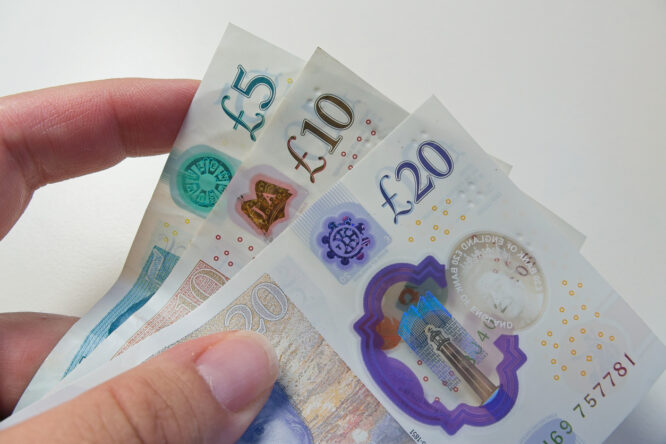
Prevention is genuinely the best defence. Be cautious when accepting large notes from people you don’t know, especially in private transactions like buying or selling on Facebook Marketplace, Gumtree or at car boot sales. Always check notes in good light before you complete the deal, and don’t be embarrassed to do so. Most honest people won’t mind at all if you take a few extra seconds to check.
If something feels off about a transaction, trust your instincts and ask to be paid by bank transfer instead. With instant transfers now available across most UK banks, there’s almost never a real need to accept cash from strangers. A few seconds of caution before handing over the car keys, the phone or the vintage handbag can save you from a painful financial hit afterwards.